[PA] Should a revocable trust be titled in the grantor’s name or the beneficiary’s name?

I titled my trust with the beneficiary's full name. Is that sufficient?

14

4

Randy M.
Randy M.

1,694 satisfied customers

View context
Solved

If you are the grantor, the trust should be titled in your name, not your son’s (20 Pa.C.S. § 7731).

Correct examples:

  • “The [Your Name] Family Trust”
  • “The [Your Name] Revocable Living Trust”

Your son should be named inside the trust as a beneficiary (or successor trustee if applicable), but not in the title (20 Pa.C.S. § 7701). Using his name could cause confusion about ownership and authority with banks or tax authorities.

0

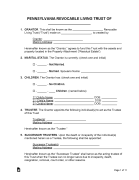
Pennsylvania Revocable Living Trust Form
Full Conversation


I titled my trust with the person’s full name. Is that sufficient?

Lexi

Lexi, Chatbot

I understand your concern. Has the trust been formally established and documented?

I’m getting ready to have it notarized.

Lexi

Lexi, Chatbot

Have you included specific provisions for assets or beneficiaries?

Yes.

Lexi

Lexi, Chatbot

Is there anything else the lawyer should know before I connect you?

I did a certificate of trust and a revocable one.

Randy M.

Randy M.

Using your full legal name in the title of your trust is usually legally sufficient. What matters most is that the trust is properly executed and clearly identifies the trustee, beneficiaries, and terms.

However, while a simple name can be valid, best practice is to include more detail so banks and title companies can easily identify the trust. A commonly accepted format is: “John Smith Revocable Living Trust, dated September 5, 2025.”

When transferring assets into the trust, they are typically titled in your name as trustee, for example: “John Smith, Trustee of the John Smith Revocable Living Trust dated September 5, 2025.”

You mentioned creating a Certificate of Trust—that’s exactly right. This document allows third parties to verify the trust without seeing private details. Since requirements vary by state, it’s important to confirm compliance locally. What state are you located in?

Pennsylvania. Do I need to record it with the state?

Randy M.

Randy M.

No. Trusts are private documents and are not recorded with the state. Only assets transferred into the trust (like deeds) may be recorded.

So my only question now is how it should be titled—the person’s name and family trust?

Randy M.

Randy M.

Pennsylvania follows the Uniform Trust Code. Common and valid trust titles include:

  • “The John Doe Revocable Living Trust”
  • “The Doe Family Trust”
  • “The John Doe Family Trust”

All are legally acceptable.

Thank you. Sorry—one more question. I am the grantor, and the trust is for one of my adult sons. Should I list it as his name and then Family Trust?

Randy M.

Randy M.

If you are the grantor, the trust should be titled in your name, not your son’s (20 Pa.C.S. § 7731).

Correct examples:

  • “The [Your Name] Family Trust”
  • “The [Your Name] Revocable Living Trust”

Your son should be named inside the trust as a beneficiary (or successor trustee if applicable), but not in the title (20 Pa.C.S. § 7701). Using his name could cause confusion about ownership and authority with banks or tax authorities.

Disclaimer


By messaging AskaLawyer.com, you agree to our Terms and have read our Privacy Policy.

The information provided on AskaLawyer.com is for general informational purposes only and does not constitute legal advice. While we strive to ensure the accuracy and timeliness of the information presented, we make no guarantees regarding its completeness or applicability to your specific circumstances.

Use of this website does not create an attorney-client relationship between you and AskaLawyer.com or any of its attorneys. Communications through this website, including any responses from attorneys, are not privileged or confidential. For advice tailored to your individual situation, we recommend consulting a licensed attorney in your jurisdiction.

AskaLawyer.com disclaims any liability for actions taken or not taken based on the content of this site. We are not responsible for any third-party content that may be accessed through this website. Reliance on any information provided herein is solely at your own risk.

Ask a Lawyer Logo
Ask a Lawyer Logo
Intake Questions
Step  of 3
Loading...

How do you like to pay?

By proceeding with payment, you agree to our Terms and Privacy Policy. You authorize us to charge $ today and $ thereafter until canceled. You may cancel anytime in the My Account section to stop future charges.

Total Due:

After purchasing, your chat will begin with an attorney.

By proceeding with payment, you agree to our Terms and Privacy Policy. You authorize us to charge $ today and $ thereafter until canceled. You may cancel anytime in the My Account section to stop future charges.

Total Due:

After purchasing, your chat will begin with an attorney.

It looks like you already have an account with Ask a Lawyer.

We have sent you a magic link to . Click the link in your email to sign in and continue your chat.

spin

Step of 6 •

You'll receive an email at as soon as the lawyer joins the conversation 🙏🏻😊

Over 90% of lawyers connect within 5 minutes. If you're not online at that moment, don't worry — the lawyer will reply to your message while you're away.

You're also welcome to stay in the chat while waiting to be connected 💬✨

Waiting for lawyer