How can I structure my estate to avoid challenges?

Melissa R. Esq.
Melissa R. Esq.

2,012 satisfied customers

View context
Solved

Let’s address your first concern regarding the disposition of tangible personal property.

If your goal is to ensure that all of your tangible personal property passes solely to your mother upon your death, the most reliable method is through a properly executed Last Will and Testament. A will allows you to clearly state that you leave “all tangible personal property” to your mother. Because a will is a formal estate planning document executed with statutory formalities, it provides legal enforceability and reduces the risk of disputes.

In most states, wills must comply with specific execution requirements (for example, being signed by the testator and witnessed by two competent witnesses). These requirements are typically governed by the state’s probate code. Proper execution is critical—failure to comply can invalidate the document.

Another option, depending on your state, is a personal property memorandum incorporated by reference into your will. Many states permit this under statutes similar to Uniform Probate Code § 2-513, which allows a will to reference a separate written list disposing of tangible personal property (excluding money, real estate, or securities). The benefit of a memorandum is flexibility—you can update the list without executing a brand-new will, provided your state allows this structure and your will properly incorporates the memorandum.

However, if you want all tangible personal property to pass to your mother without itemization, the simplest and cleanest approach is to state that directly in the will rather than relying on a separate list.

Keeping these instructions within formal estate planning documents is strongly advisable. Informal writings, emails, or verbal statements are often unenforceable and can lead to conflict among heirs.

If you would like, tell me your state and I can explain the exact statutory requirements that would apply to making this valid and enforceable where you live.

0

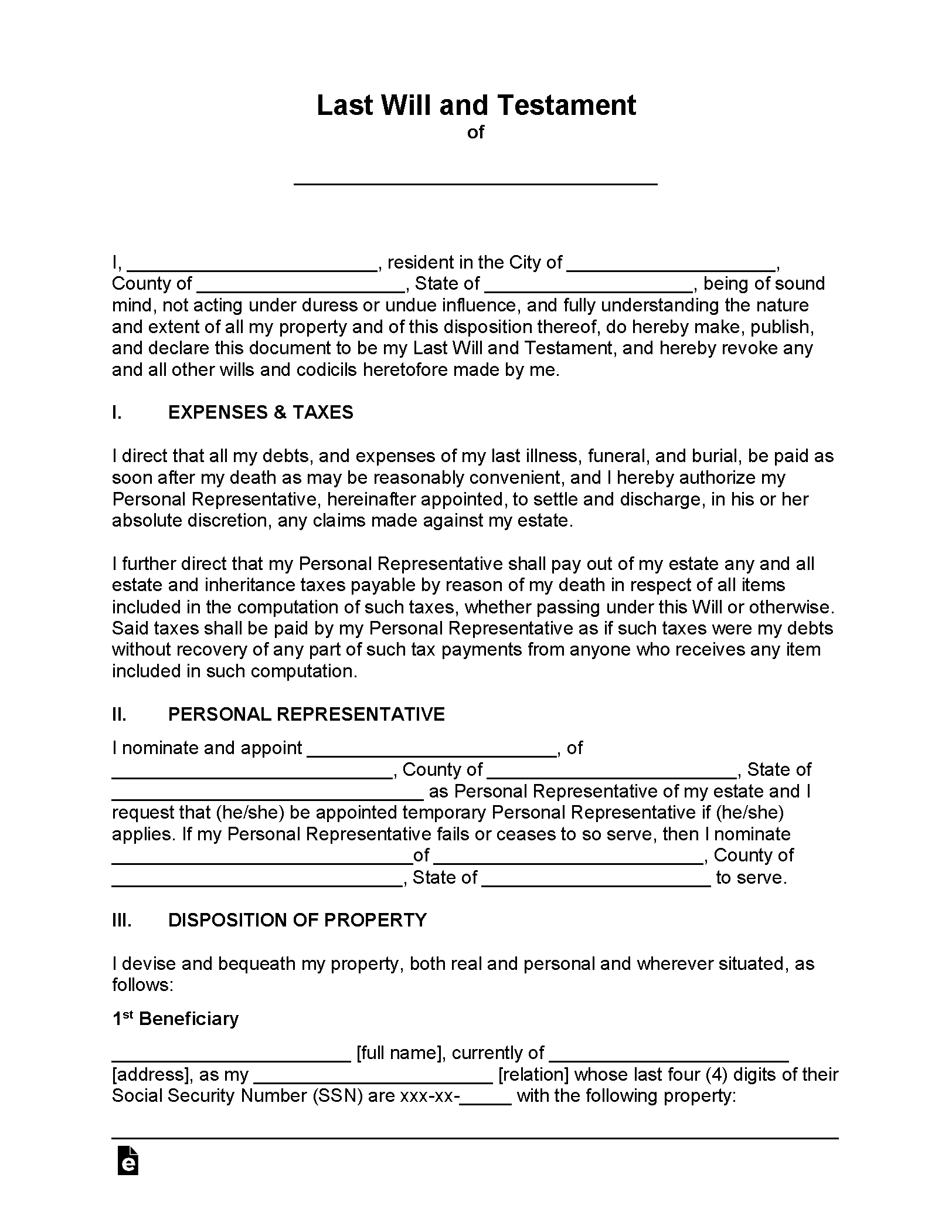
Last Will & Testament Form

Full Conversation


hey! I have several questions to consult a lawyer about, actually.

Lexi

Lexi, Chatbot

I understand that you have multiple questions, and that can be overwhelming. What specific legal issue or topic do you need assistance with first?

I don’t know specifically how to categorize them.

Lexi

Lexi, Chatbot

Have you already consulted with any other legal professionals regarding these questions?

Yes.

Lexi

Lexi, Chatbot

Is there anything else the Lawyer should know before I connect you? Rest assured they'll be able to help with your legal questions.

This is related to family stuff.

Melissa R. Esq.

Melissa R. Esq.

Hi there! My name is Melissa and I have been an attorney for over 20 years. I am excited to help you with your question today. What can I assist you with?

Hi Melissa! I have several legal concerns I’d like to outline with you.

  • 1. Disposition of Personal Property
    • How can I legally direct that all tangible personal property (including clothing, jewelry, art, electronics, vehicle, sentimental items, and any other personal effects) passes solely to my mother upon my death?
    • Should this be handled through:
    • A will,
    • A personal property memorandum incorporated by reference,
    • Or both?
    • Is it advisable to keep personal property instructions consolidated within formal estate documents rather than separate letters?

  • 2. Status of an Existing “Declaration of Property” Letter
    • I have drafted a “declaration of property” letter that I intended to send to my father, along with a preceding good-faith letter.
    • Should I:
    • Proceed with sending these letters,
    • Hold them until after formal documents are executed,
    • Or replace them entirely with legally binding instruments?
    • Could sending such letters before formal execution create ambiguity or risk later challenges?

  • 3. Express Disinheritance / Exclusion of a Specific Heir
    • How can I explicitly and affirmatively exclude my sister from:
    • Inheriting any property or assets,
    • Receiving any proceeds (directly or indirectly),
    • Exercising any control, influence, or access related to my estate?
    • What language best minimizes ambiguity and reduces the risk of challenge under state law?

  • 4. Authority to Dispose of Property
    • How can I grant my mother full discretionary authority to:
    • Retain items for personal use,
    • Offer items to my friends at her discretion,
    • Pawn, resell, donate, or auction remaining property?
    • How can this authority be protected from interference by excluded parties?

  • 5. Allocation and Ownership of Proceeds
    • How should documents clarify that all proceeds from sale, pawn, resale, donation credit, or auction:
    • Belong solely to my mother?
    • How do we ensure proceeds are not treated as part of a distributable residue to other heirs?

  • 6. Non-Binding Wishes for Use of Proceeds
    • I have personal wishes regarding how my mother may use proceeds (e.g., charitable donations, creative projects, professional assistance, supporting her quality of life).
    • How can these be included as non-binding expressions of intent (not fiduciary obligations)?
    • Should these wishes be placed in:
    • A letter of wishes,
    • An informal attachment,
    • Or excluded from the will entirely?

  • 7. Use of Proceeds for Personal Benefit
    • How can I explicitly authorize my mother to:
    • Use proceeds for her own living expenses and quality of life,
    • Support herself and her partner at her discretion,
    • Voluntarily assist with paying off my medical or student debt if she chooses?
    • How can documents prevent any requirement that funds or records be preserved, tracked, or justified to other family members?

  • 8. Payment of Debts and Estate Expenses
    • How are lawful debts (including medical and student debt) typically paid from estate assets?
    • How can we ensure:
    • Debt payment does not override my exclusions,
    • No excluded party gains access or benefit through the debt-payment process?
    • I own a fully paid vehicle; can this pass directly to my mother along with other personal property?

  • 9. Executor Authority and Enforcement
    • Should my mother:
    • Serve as executor, or
    • Be sole beneficiary with a neutral executor?
    • What structure best minimizes conflict and ensures enforcement of exclusions?
    • What powers should the executor have to prevent interference by disinherited parties?

  • 10. No-Contest / Anti-Challenge Clause
    • Is a no-contest (in terrorem) clause advisable in my state?
    • How enforceable are such clauses?
    • Should my sister be expressly named in such a clause?

  • 11. Funeral and Post-Death Control
    • Should exclusion of my sister extend to:
    • Funeral arrangements,
    • Disposition of remains,
    • Post-death decision-making?
    • Is a separate funeral agent / disposition of remains designation required?
    • What steps ensure excluded parties have no involvement or access?

  • 12. Capacity and Intent Safeguards
    • What language should be included to confirm:
    • Capacity at time of execution,
    • Voluntary intent,
    • Absence of coercion or undue influence?
    • Are there recommended safeguards (e.g., witnesses, medical confirmation) to reduce vulnerability to later challenge?

  • 13. Healthcare Decision-Making if Incapacitated
    • How should I structure a Healthcare Power of Attorney so that:
    • My mother and father have decision-making authority if I am mentally incapacitated?
    • Should this be:
    • Joint authority, or
    • Primary/secondary authority?
    • Can mental-health-specific instructions be included?

  • 14. Medical Records Access (While Alive and After Death)
    • How can I authorize my mother to have decision-making authority and appropriate access to my medical records:
    • While I am alive but incapacitated,
    • And after death?
    • How can access be limited to necessary medical information without full disclosure of psychotherapy notes, if desired?

  • 15. Life Insurance (Where I Am Not the Policyholder)
    • I believe I am not the policyholder on an existing life insurance policy on my life.
    • What (if anything) can be done to:
    • Understand how this policy interacts with my estate plan,
    • Ensure my sister does not indirectly benefit?
    • Should my estate planning assume this policy is outside my control?

  • 16. Coordination and Next Steps
    • Which documents are essential vs. optional for my situation?
    • In what order should they be executed?
    • Should any informal letters be sent after execution, and if so, how should they be labeled to avoid legal effect?

Melissa R. Esq.

Melissa R. Esq.

Let’s address your first concern regarding the disposition of tangible personal property.

If your goal is to ensure that all of your tangible personal property passes solely to your mother upon your death, the most reliable method is through a properly executed Last Will and Testament. A will allows you to clearly state that you leave “all tangible personal property” to your mother. Because a will is a formal estate planning document executed with statutory formalities, it provides legal enforceability and reduces the risk of disputes.

In most states, wills must comply with specific execution requirements (for example, being signed by the testator and witnessed by two competent witnesses). These requirements are typically governed by the state’s probate code. Proper execution is critical—failure to comply can invalidate the document.

Another option, depending on your state, is a personal property memorandum incorporated by reference into your will. Many states permit this under statutes similar to Uniform Probate Code § 2-513, which allows a will to reference a separate written list disposing of tangible personal property (excluding money, real estate, or securities). The benefit of a memorandum is flexibility—you can update the list without executing a brand-new will, provided your state allows this structure and your will properly incorporates the memorandum.

However, if you want all tangible personal property to pass to your mother without itemization, the simplest and cleanest approach is to state that directly in the will rather than relying on a separate list.

Keeping these instructions within formal estate planning documents is strongly advisable. Informal writings, emails, or verbal statements are often unenforceable and can lead to conflict among heirs.

If you would like, tell me your state and I can explain the exact statutory requirements that would apply to making this valid and enforceable where you live.

Yes, that helps clarify things — thank you. I understand that a will, potentially paired with a personal property memorandum incorporated by reference, would be the appropriate way to handle disposition of personal property upon my death, and that keeping those instructions within formal estate documents is preferable to keep things organized and avoid confusion.

I’d like to proceed on that basis and move on to the next issue, which is how to explicitly exclude a specific heir from inheriting any property or proceeds.

I also want to clarify the role of a personal property letter I previously drafted. That letter was written with the intention of being sent to my sister while I am alive, as a present-day notice of boundaries and intent, not as a testamentary or dispositive instrument. I understand and agree that all legally enforceable disposition of property in the event of my death should be handled through a will (and any incorporated personal property memorandum).

After the will and related documents are properly executed, what is the best way to handle that letter so that it can be sent as a personal communication without creating legal ambiguity or risk? Specifically, should it be revised to include disclaimers, kept entirely separate from the estate documents, or handled in another way you would recommend?

Melissa R. Esq.

Melissa R. Esq.

To exclude a specific heir, like your sister, from inheriting any property or proceeds, you should include explicit language in your will stating your intentions. This can help minimize ambiguity and reduce the risk of challenges under state law. It's often advisable to consult with an attorney to ensure the language is clear and enforceable.

Regarding the personal property letter you drafted, it's best to keep it separate from your estate documents to avoid any legal ambiguity. You might consider adding a disclaimer stating that it is not intended to have any legal effect on your estate plan. This way, it can serve as a personal communication without creating confusion.

If you have any other questions, please do not hesitate to ask! It was a pleasure assisting you today!

Thank you for explaining that — that makes sense. Yes, I’d like to move forward on that basis.

Is it possible to begin working through these documents one-on-one with you, with the goal of having them properly drafted and refined? Specifically, I’m looking to have the will, any incorporated personal property memorandum, and related language written or revised so that everything is clear, professional, and legally sound.

Please let me know what the next steps would be to get started (for example, scheduling, intake information, or document preparation).

Melissa R. Esq.

Melissa R. Esq.

Thank you for reaching out. Unfortunately, we are a legal information service only so I would be unable to assist in the preparation of any documents for estate planning.

Thank you for your assistance! You are very awesome!!

Melissa R. Esq.

Melissa R. Esq.

2,012 satisfied customers

Melissa R. Esq.
Welcome! Have a similar question?

12 lawyers online now

0:00

By messaging AskALawyer, you agree to our Terms and Privacy Policy.

Disclaimer


By messaging AskaLawyer.com, you agree to our Terms and have read our Privacy Policy.

The information provided on AskaLawyer.com is for general informational purposes only and does not constitute legal advice. While we strive to ensure the accuracy and timeliness of the information presented, we make no guarantees regarding its completeness or applicability to your specific circumstances.

Use of this website does not create an attorney-client relationship between you and AskaLawyer.com or any of its attorneys. Communications through this website, including any responses from attorneys, are not privileged or confidential. For advice tailored to your individual situation, we recommend consulting a licensed attorney in your jurisdiction.

AskaLawyer.com disclaims any liability for actions taken or not taken based on the content of this site. We are not responsible for any third-party content that may be accessed through this website. Reliance on any information provided herein is solely at your own risk.

Ask a Lawyer Logo
Ask a Lawyer Logo
Intake Questions
Step  of 3
Loading...

Lexi, Chatbot

How would you like your legal question to be answered?

Online

Legal AI

Using ChatGPT 4o

Loading...

How do you like to pay?

By proceeding with payment, you agree to our Terms and Privacy Policy. You authorize us to charge $ today and $ thereafter until canceled. You may cancel anytime in the My Account section to stop future charges.

Total Due:

After purchasing, your chat will begin with an attorney.

By proceeding with payment, you agree to our Terms and Privacy Policy. You authorize us to charge $ today and $ thereafter until canceled. You may cancel anytime in the My Account section to stop future charges.

Total Due:

After purchasing, your chat will begin with an attorney.

After connecting, your chat will begin with an attorney.

After choosing, your chat will continue with Legal AI.

It looks like you already have an account with Ask a Lawyer.

We have sent you a magic link to . Click the link in your email to sign in and continue your chat.

spin

Step of 6 •

You'll receive an email at as soon as the lawyer joins the conversation 🙏🏻😊

Over 90% of lawyers connect within 5 minutes. If you're not online at that moment, don't worry — the lawyer will reply to your message while you're away.

You're also welcome to stay in the chat while waiting to be connected 💬✨

Waiting for lawyer

0:00