[FL] How should a trustee list the grantor and sign a quitclaim deed to transfer trust property to themselves?

Brandon
Brandon

17,510 satisfied customers

View context
Solved

1. Who is the grantor when a trust owns the house

When a trust owns real estate, the trustee is considered the grantor because the trustee holds legal title. The trust itself is referenced, but it does not “sign.” The trustee signs.

So the grantor line on the deed typically looks like this:

“[Your Name], as Trustee of the [Father’s Name] Trust dated [date],”

and, if your mother is also currently a trustee:

“[Mother’s Name], as Trustee of the [Father’s Name] Trust dated [date].”

Florida requires that every current trustee sign any deed conveying trust property, unless the trust document specifically authorizes one trustee to act alone. This part is important for your mother’s Medicaid concerns, so we should look at whether the trust allows you to sign without her.

2. How you would sign as trustee

If you are the one signing, your signature block usually appears like this:

[Your Name], Trustee
[Father’s Name] Trust dated [date]

You do not sign your personal name alone. You sign as trustee.

3. Can the deed be put in your name alone

Mechanically, yes, a trustee can deed the property to a beneficiary. But there are two major considerations here.

A. The trust must authorize the distribution.

Many revocable trusts become irrevocable at death, and once irrevocable, the trustees must follow the distribution instructions exactly. If the trust says the home is to be split 50–50 between you and your mom, then deeding it only to you would violate the trust.

If the trust allows discretionary distributions or allows you to allocate assets, then you have more flexibility.

B. Medicaid implications for your mother.

If your mother is a beneficiary and the trust entitles her to part of the home, removing her interest to qualify her for Medicaid may be considered a disqualifying transfer. That can lead to a penalty period. Whether this is a problem depends heavily on whether the trust was revocable or irrevocable at the time your father passed and what rights she has to the property under the trust terms.

Before doing the transfer, it would help to clarify what interest your mother actually has.

4. Recording a deed in Brevard County

Once the deed is signed properly:

  • It must be notarized and witnessed by two witnesses.
  • You will need to complete the Florida DR-219 return. (FL Stat § 192.0105 (4)(a))
  • You will need to determine if documentary stamp tax applies. If the distribution is purely to a beneficiary and there is no outstanding mortgage, tax is generally zero.
  • After that, you record the deed with the Brevard County Clerk.

0

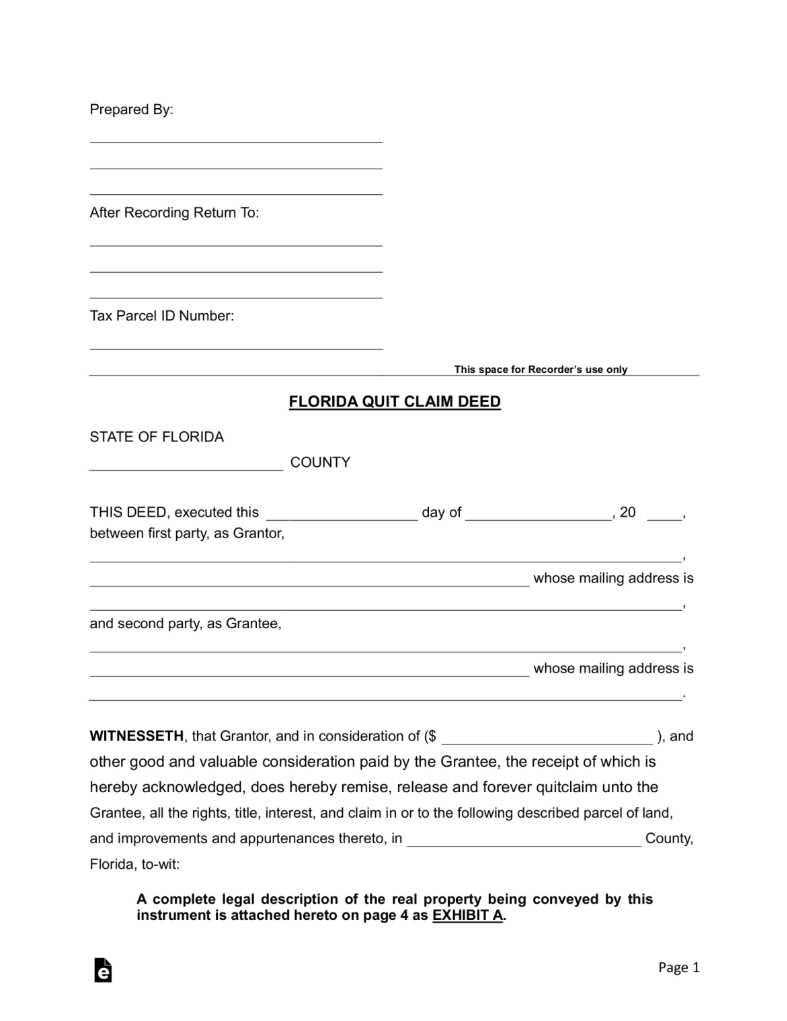
Florida Quit Claim Deed

Full Conversation


I inherited a house and it’s listed as owned by his trust now. My mom and I are the trustees and the beneficiaries. I have done a quitclaim deed but need to know how to list the grantor and how to sign as grantor. I want to put the deed in my name only. My mom is 93 and does not want to be listed due to Medicaid concerns.

Lexi

Lexi, Chatbot

I understand that dealing with inherited property can be quite complex. Can you confirm if the trust has been properly established and documented?

Yes.

Lexi

Lexi, Chatbot

Have you consulted with any legal professionals regarding the trust and the quitclaim deed process?

Yes.

Brandon

Brandon

Hi there, and welcome. My name is Brandon, and I’m an attorney. I’ll be happy to help you out today. Please note that this discussion is for guidance only and does not constitute an attorney-client relationship. My answers and comments should not be considered legal advice. Please also note that I am human, that I often need to research your answer to give you an accurate response, and that I work with other customers and get up from time to time. So please be patient while waiting for a response. Please feel free to reach out if more than 30 minutes have passed.

Where are you located?

Brevard County, Florida.

Brandon

Brandon

1. Who is the grantor when a trust owns the house

When a trust owns real estate, the trustee is considered the grantor because the trustee holds legal title. The trust itself is referenced, but it does not “sign.” The trustee signs.

So the grantor line on the deed typically looks like this:

“[Your Name], as Trustee of the [Father’s Name] Trust dated [date],”

and, if your mother is also currently a trustee:

“[Mother’s Name], as Trustee of the [Father’s Name] Trust dated [date].”

Florida requires that every current trustee sign any deed conveying trust property, unless the trust document specifically authorizes one trustee to act alone. This part is important for your mother’s Medicaid concerns, so we should look at whether the trust allows you to sign without her.

2. How you would sign as trustee

If you are the one signing, your signature block usually appears like this:

[Your Name], Trustee
[Father’s Name] Trust dated [date]

You do not sign your personal name alone. You sign as trustee.

3. Can the deed be put in your name alone

Mechanically, yes, a trustee can deed the property to a beneficiary. But there are two major considerations here.

A. The trust must authorize the distribution.

Many revocable trusts become irrevocable at death, and once irrevocable, the trustees must follow the distribution instructions exactly. If the trust says the home is to be split 50–50 between you and your mom, then deeding it only to you would violate the trust.

If the trust allows discretionary distributions or allows you to allocate assets, then you have more flexibility.

B. Medicaid implications for your mother.

If your mother is a beneficiary and the trust entitles her to part of the home, removing her interest to qualify her for Medicaid may be considered a disqualifying transfer. That can lead to a penalty period. Whether this is a problem depends heavily on whether the trust was revocable or irrevocable at the time your father passed and what rights she has to the property under the trust terms.

Before doing the transfer, it would help to clarify what interest your mother actually has.

4. Recording a deed in Brevard County

Once the deed is signed properly:

  • It must be notarized and witnessed by two witnesses.
  • You will need to complete the Florida DR-219 return. (FL Stat § 192.0105 (4)(a))
  • You will need to determine if documentary stamp tax applies. If the distribution is purely to a beneficiary and there is no outstanding mortgage, tax is generally zero.
  • After that, you record the deed with the Brevard County Clerk.

Thanks, what do I use as the grantor’s post office address, mine?

Brandon

Brandon

Correct.

Brandon

Brandon

17,510 satisfied customers

Brandon
Welcome! Have a similar question?

12 lawyers online now

0:00

By messaging AskALawyer, you agree to our Terms and Privacy Policy.

Disclaimer


By messaging AskaLawyer.com, you agree to our Terms and have read our Privacy Policy.

The information provided on AskaLawyer.com is for general informational purposes only and does not constitute legal advice. While we strive to ensure the accuracy and timeliness of the information presented, we make no guarantees regarding its completeness or applicability to your specific circumstances.

Use of this website does not create an attorney-client relationship between you and AskaLawyer.com or any of its attorneys. Communications through this website, including any responses from attorneys, are not privileged or confidential. For advice tailored to your individual situation, we recommend consulting a licensed attorney in your jurisdiction.

AskaLawyer.com disclaims any liability for actions taken or not taken based on the content of this site. We are not responsible for any third-party content that may be accessed through this website. Reliance on any information provided herein is solely at your own risk.

Ask a Lawyer Logo
Ask a Lawyer Logo
Intake Questions
Step  of 3
Loading...

Lexi, Chatbot

How would you like your legal question to be answered?

Online

Legal AI

Using ChatGPT 4o

Loading...

How do you like to pay?

By proceeding with payment, you agree to our Terms and Privacy Policy. You authorize us to charge $ today and $ thereafter until canceled. You may cancel anytime in the My Account section to stop future charges.

Total Due:

After purchasing, your chat will begin with an attorney.

By proceeding with payment, you agree to our Terms and Privacy Policy. You authorize us to charge $ today and $ thereafter until canceled. You may cancel anytime in the My Account section to stop future charges.

Total Due:

After purchasing, your chat will begin with an attorney.

After connecting, your chat will begin with an attorney.

After choosing, your chat will continue with Legal AI.

It looks like you already have an account with Ask a Lawyer.

We have sent you a magic link to . Click the link in your email to sign in and continue your chat.

spin

Step of 6 •

You'll receive an email at as soon as the lawyer joins the conversation 🙏🏻😊

Over 90% of lawyers connect within 5 minutes. If you're not online at that moment, don't worry — the lawyer will reply to your message while you're away.

You're also welcome to stay in the chat while waiting to be connected 💬✨

Waiting for lawyer

0:00