How do early divorce strategies work across multiple states with assets and custody considerations?

Queeneth E. Esq
Queeneth E. Esq

5,738 satisfied customers

View context
Solved

When spouses live in different states, the “right” place to file can be a strategy decision, because state laws and procedures differ.

Washington: you can file if a party is a resident of Washington (WA Rev Code § 26.09.030) (or certain military connections). Washington is no-fault (“irretrievably broken”) and has a 90-day minimum waiting period after filing/service before the court can enter a decree. Property division is “just and equitable,” and the statute expressly allows the court to divide community or separate property as it deems fair.

Maryland: Maryland is now effectively no-fault and allows divorce on grounds such as 6-month separation, mutual consent, and irreconcilable differences. Maryland’s residency statute says that if the grounds occurred outside Maryland, you generally can’t apply unless one spouse has lived in Maryland at least 6 months before filing (MD Family Law Code § 7-101). Maryland uses an equitable distribution framework for marital property (fair, not necessarily 50/50).

If one spouse files first in one state, it can affect procedure, timelines, and the financial framework (and sometimes leverage). In multi-state situations, retaining counsel early is often less about “fighting” and more about preventing an avoidable jurisdiction mess.

Before retaining counsel, do the following:

A. Quiet document and data collection (without snooping). Have the executive gather copies of:

  • Last 3–5 years tax returns (personal + business if any)
  • Recent paystubs and executive comp docs: bonus plans, RSU/option grants, deferred comp, SERP, equity plan statements
  • Bank/brokerage/401(k)/pension statements
  • Real estate deeds, mortgage statements, HELOCs
  • Credit card statements, loans, lines of credit
  • Business interests: cap tables, operating agreements, K-1s, valuations (if available)
  • Insurance policies, estate planning docs (wills, trusts), and any beneficiary designations

Avoid accessing the other spouse’s private accounts or devices without permission (that can backfire badly, especially across state lines).

B. Create a monthly cashflow snapshot: living expenses, childcare/school, housing, insurance, debt service. This helps with temporary support decisions and reduces panic.

C. For a senior executive, reputational risk is real. Keep communications calm and businesslike. Assume texts/emails could end up as exhibits. Consider whether internal stakeholders (HR/security/PR) need a plan only if there’s a genuine workplace risk—otherwise don’t overreact.

If there are children, interstate custody is heavily driven by the UCCJEA “home state” concept (typically where the child lived for the last 6 months).

0

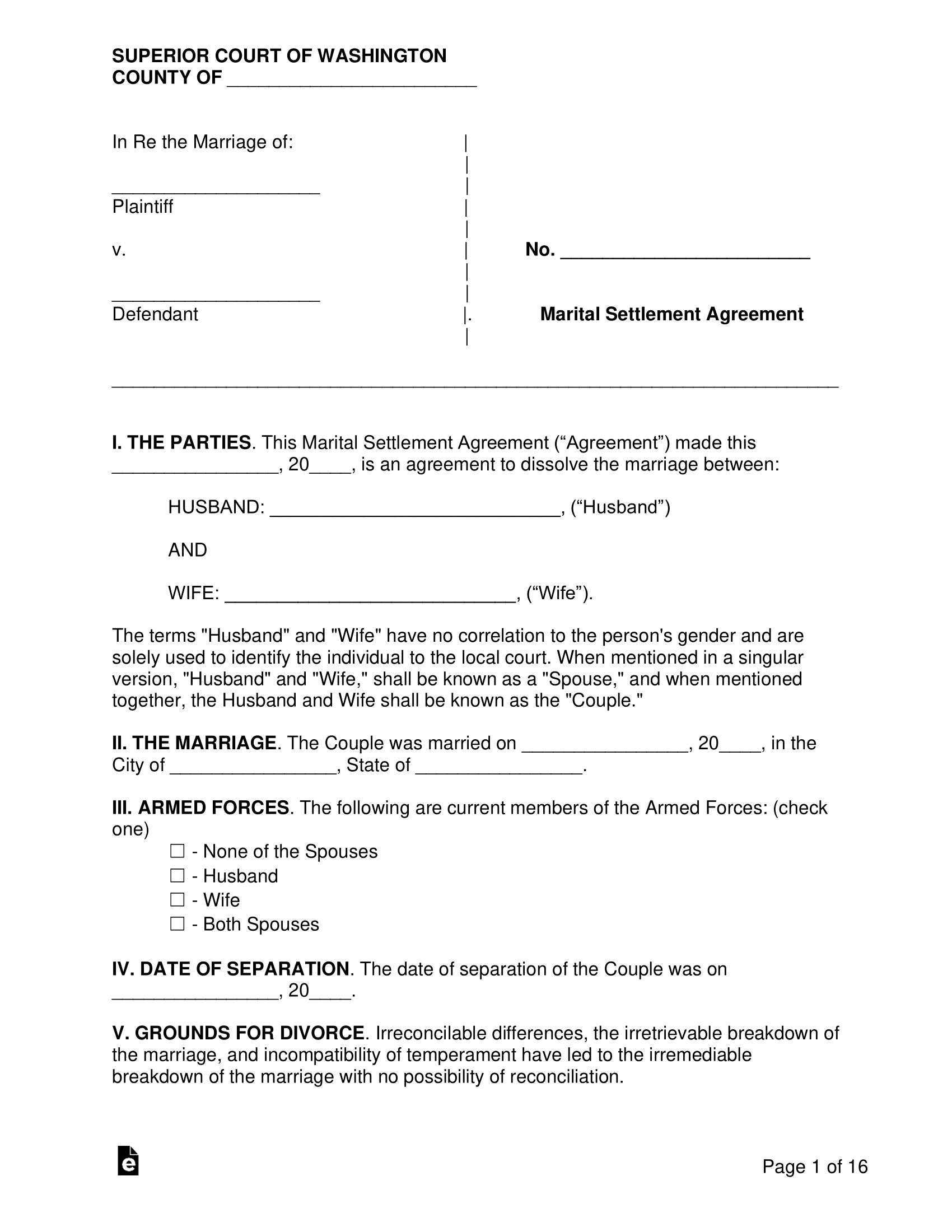
Washington Marital Settlement (Divorce) Agreement
Full Conversation


I’m helping a senior executive who is considering filing for divorce, and I’m trying to understand what the early legal options and next steps typically look like before formally retaining counsel.

We’re currently exploring both traditional law firm representation and online legal services (for example, platforms like you) to better understand the differences in process, cost, and level of legal support. Our goal for this initial consultation is to get a clearer, high-level understanding of how the process generally works, especially in situations that may involve added complexity.

Lexi

Lexi, Chatbot

I understand that navigating the divorce process can be quite complex, especially for a senior executive. Can you share if there are any specific concerns or complexities in this situation that you are aware of?

Situation involves multiple assets across US.

Lexi

Lexi, Chatbot

Are there any particular aspects of the divorce process, such as asset division or child custody, that you would like to focus on during this initial consultation?

Both asset division or child custody.

Queeneth E. Esq

Queeneth E. Esq

Hello. My name is Queeneth. I am an attorney with over 8 years of legal experience. I will do my best to assist you today. First, I need to ask you a few questions to give you the best answer. (Kindly note that our conversation does not establish an attorney-client relationship.)

Which state or states are the parties currently residing in, or where do you anticipate filing for divorce? Are there any existing prenuptial or postnuptial agreements that might affect asset division or custody arrangements?

Washington and Maryland. No prenuptial and postnuptials.

Queeneth E. Esq

Queeneth E. Esq

When spouses live in different states, the “right” place to file can be a strategy decision, because state laws and procedures differ.

Washington: you can file if a party is a resident of Washington (WA Rev Code § 26.09.030) (or certain military connections). Washington is no-fault (“irretrievably broken”) and has a 90-day minimum waiting period after filing/service before the court can enter a decree. Property division is “just and equitable,” and the statute expressly allows the court to divide community or separate property as it deems fair.

Maryland: Maryland is now effectively no-fault and allows divorce on grounds such as 6-month separation, mutual consent, and irreconcilable differences. Maryland’s residency statute says that if the grounds occurred outside Maryland, you generally can’t apply unless one spouse has lived in Maryland at least 6 months before filing (MD Family Law Code § 7-101). Maryland uses an equitable distribution framework for marital property (fair, not necessarily 50/50).

If one spouse files first in one state, it can affect procedure, timelines, and the financial framework (and sometimes leverage). In multi-state situations, retaining counsel early is often less about “fighting” and more about preventing an avoidable jurisdiction mess.

Before retaining counsel, do the following:

A. Quiet document and data collection (without snooping). Have the executive gather copies of:

  • Last 3–5 years tax returns (personal + business if any)
  • Recent paystubs and executive comp docs: bonus plans, RSU/option grants, deferred comp, SERP, equity plan statements
  • Bank/brokerage/401(k)/pension statements
  • Real estate deeds, mortgage statements, HELOCs
  • Credit card statements, loans, lines of credit
  • Business interests: cap tables, operating agreements, K-1s, valuations (if available)
  • Insurance policies, estate planning docs (wills, trusts), and any beneficiary designations

Avoid accessing the other spouse’s private accounts or devices without permission (that can backfire badly, especially across state lines).

B. Create a monthly cashflow snapshot: living expenses, childcare/school, housing, insurance, debt service. This helps with temporary support decisions and reduces panic.

C. For a senior executive, reputational risk is real. Keep communications calm and businesslike. Assume texts/emails could end up as exhibits. Consider whether internal stakeholders (HR/security/PR) need a plan only if there’s a genuine workplace risk—otherwise don’t overreact.

If there are children, interstate custody is heavily driven by the UCCJEA “home state” concept (typically where the child lived for the last 6 months).

Queeneth E. Esq

Queeneth E. Esq

5,738 satisfied customers

Queeneth E. Esq
Welcome! Have a similar question?

12 lawyers online now

0:00

By messaging AskALawyer, you agree to our Terms and Privacy Policy.

Queeneth E. Esq
Queeneth E. Esq

Commercial Contracts Attorney

4.61 (5,738)

[IL] How do I file a petition to modify custody after a divorce agreement?

12

4

Answered 5 days ago

Disclaimer


By messaging AskaLawyer.com, you agree to our Terms and have read our Privacy Policy.

The information provided on AskaLawyer.com is for general informational purposes only and does not constitute legal advice. While we strive to ensure the accuracy and timeliness of the information presented, we make no guarantees regarding its completeness or applicability to your specific circumstances.

Use of this website does not create an attorney-client relationship between you and AskaLawyer.com or any of its attorneys. Communications through this website, including any responses from attorneys, are not privileged or confidential. For advice tailored to your individual situation, we recommend consulting a licensed attorney in your jurisdiction.

AskaLawyer.com disclaims any liability for actions taken or not taken based on the content of this site. We are not responsible for any third-party content that may be accessed through this website. Reliance on any information provided herein is solely at your own risk.

Ask a Lawyer Logo
Ask a Lawyer Logo
Intake Questions
Step  of 3
Loading...

Lexi, Chatbot

How would you like your legal question to be answered?

Online

Legal AI

Using ChatGPT 4o

Loading...

How do you like to pay?

By proceeding with payment, you agree to our Terms and Privacy Policy. You authorize us to charge $ today and $ thereafter until canceled. You may cancel anytime in the My Account section to stop future charges.

Total Due:

After purchasing, your chat will begin with an attorney.

By proceeding with payment, you agree to our Terms and Privacy Policy. You authorize us to charge $ today and $ thereafter until canceled. You may cancel anytime in the My Account section to stop future charges.

Total Due:

After purchasing, your chat will begin with an attorney.

After connecting, your chat will begin with an attorney.

After choosing, your chat will continue with Legal AI.

It looks like you already have an account with Ask a Lawyer.

We have sent you a magic link to . Click the link in your email to sign in and continue your chat.

spin

Step of 6 •

You'll receive an email at as soon as the lawyer joins the conversation 🙏🏻😊

Over 90% of lawyers connect within 5 minutes. If you're not online at that moment, don't worry — the lawyer will reply to your message while you're away.

You're also welcome to stay in the chat while waiting to be connected 💬✨

Waiting for lawyer

0:00