How can a parent resolve a high school choice dispute when joint custody requires agreement on education decisions?

Legal Eagle
Legal Eagle

134,901 satisfied customers

View context
Solved

Based on your situation, there are several legal arguments and considerations in joint custody arrangements that could potentially support your case:

Joint custody typically means that both parents have equal rights and responsibilities in making major decisions about their child's welfare, including education. This means that both parents must agree on significant decisions, such as which school the child will attend.

If parents cannot agree, the court may need to intervene to make a decision based on the best interests of the child. The court will consider various factors, such as the child's needs, the parents' ability to cooperate, and the potential impact on the child's well-being.

In some cases, mediation or alternative dispute resolution methods may be recommended to help parents reach an agreement without court intervention.

Let's go through some steps you can take to address this situation:

1. Review Your Custody Agreement: Start by reviewing your custody agreement or court order to understand the specifics of your joint custody arrangement. This document will outline the decision-making process for educational matters and may provide guidance on resolving disputes.

2. Consider Mediation: Since you haven't tried mediation yet, it might be a good option. Mediation involves a neutral third party who can help both of you reach an agreement. It's often less adversarial than going to court and can lead to a solution that works for both parties.

3. Evaluate the Best Interests of the Child: Focus on what would be in the best interests of your child. Consider factors like the quality of education, the child's social environment, and any special needs or preferences your child might have. This perspective can guide discussions and decisions.

4. Legal Recourse: If mediation doesn't work, you may need to seek legal recourse. This could involve filing a motion with the court to resolve the dispute. The court will consider the best interests of the child and may order a specific educational path.

5. Document Your Efforts: Keep a record of all discussions and attempts to resolve the issue. This documentation can be useful if you need to present your case in court.

6. Consult With a Family Lawyer: It might be beneficial to consult with a family lawyer who can provide specific legal advice based on your situation and jurisdiction. They can help you understand your rights and options.

0

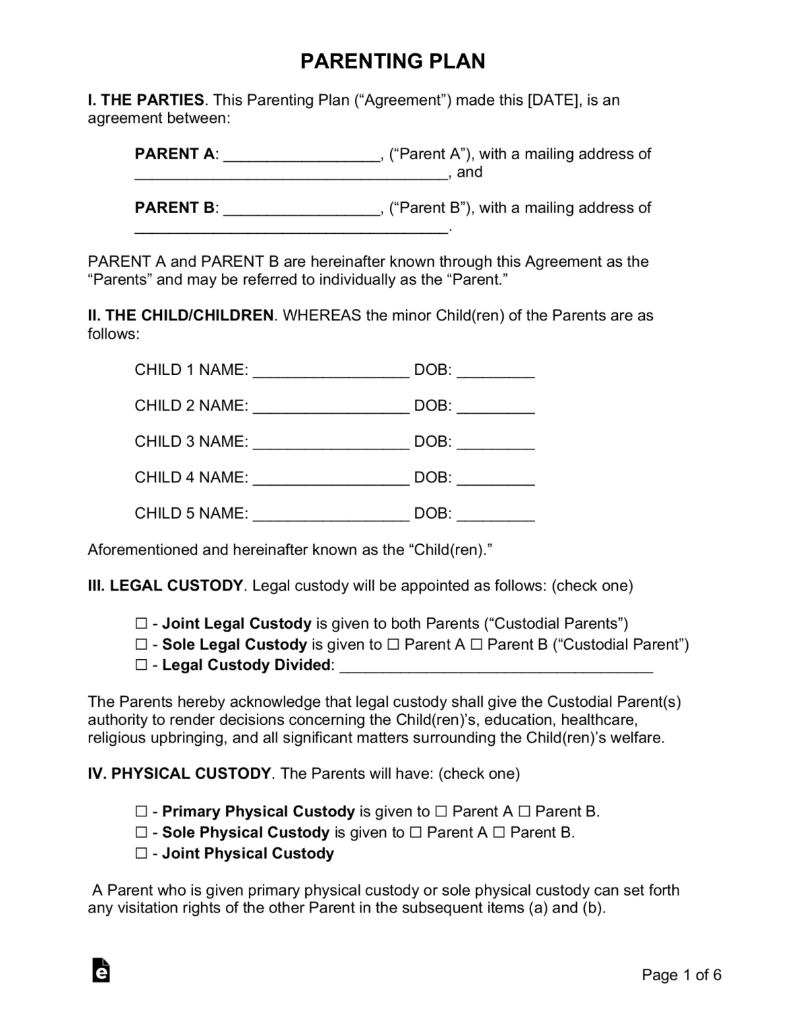
Custody (Parenting Plan) Agreement

Full Conversation


My ex-husband and I cannot agree on a high school for our child. We have joint custody regarding education decisions. Do I have any legal recourse?

Lexi

Lexi, Chatbot

I understand how challenging it can be to navigate educational decisions with an ex-spouse. What specific disagreements do you have regarding the high school choice?

I want our child to attend a private high school. I've offered to pay 100% of the tuition. My ex-husband wants our child to continue in public school.

Lexi

Lexi, Chatbot

Have you and your ex-husband attempted any mediation or discussions to resolve this issue?

We have not attempted mediation. We have had private discussions.

Lexi

Lexi, Chatbot

Is there anything else the Family Lawyer should know before I connect you? Rest assured they'll be able to help with your education decision dispute.

Legal Eagle

Legal Eagle

Hi there, thank you for your question. I’m Legal Eagle, a Lawyer here on our service. It seems like you're dealing with a situation involving joint custody and disagreements over your child's high school choice.

Legal Eagle

Legal Eagle

Based on your situation, there are several legal arguments and considerations in joint custody arrangements that could potentially support your case:

Joint custody typically means that both parents have equal rights and responsibilities in making major decisions about their child's welfare, including education. This means that both parents must agree on significant decisions, such as which school the child will attend.

If parents cannot agree, the court may need to intervene to make a decision based on the best interests of the child. The court will consider various factors, such as the child's needs, the parents' ability to cooperate, and the potential impact on the child's well-being.

In some cases, mediation or alternative dispute resolution methods may be recommended to help parents reach an agreement without court intervention.

Let's go through some steps you can take to address this situation:

1. Review Your Custody Agreement: Start by reviewing your custody agreement or court order to understand the specifics of your joint custody arrangement. This document will outline the decision-making process for educational matters and may provide guidance on resolving disputes.

2. Consider Mediation: Since you haven't tried mediation yet, it might be a good option. Mediation involves a neutral third party who can help both of you reach an agreement. It's often less adversarial than going to court and can lead to a solution that works for both parties.

3. Evaluate the Best Interests of the Child: Focus on what would be in the best interests of your child. Consider factors like the quality of education, the child's social environment, and any special needs or preferences your child might have. This perspective can guide discussions and decisions.

4. Legal Recourse: If mediation doesn't work, you may need to seek legal recourse. This could involve filing a motion with the court to resolve the dispute. The court will consider the best interests of the child and may order a specific educational path.

5. Document Your Efforts: Keep a record of all discussions and attempts to resolve the issue. This documentation can be useful if you need to present your case in court.

6. Consult With a Family Lawyer: It might be beneficial to consult with a family lawyer who can provide specific legal advice based on your situation and jurisdiction. They can help you understand your rights and options.

Legal Eagle

Legal Eagle

134,901 satisfied customers

Criminal law, employment law, family law, landlord-tenant, and real estate law.

Legal Eagle
Welcome! Have a similar question?

12 lawyers online now

0:00

By messaging AskALawyer, you agree to our Terms and Privacy Policy.

Queeneth E. Esq
Queeneth E. Esq

Commercial Contracts Attorney

4.61 (6,270)

Can I request shared custody for my mother if I die during childbirth?

9

2

Answered 1 day ago

Liz
Liz

Lawyer

4.75 (45,212)

[CA] Can I challenge being ordered back to mediation in a custody case?

36

15

Answered 2 days ago

Disclaimer


By messaging AskaLawyer.com, you agree to ourĀ Terms and have read ourĀ Privacy Policy.

The information provided on AskaLawyer.com is for general informational purposes only and does not constitute legal advice. While we strive to ensure the accuracy and timeliness of the information presented, we make no guarantees regarding its completeness or applicability to your specific circumstances.

Use of this website does not create an attorney-client relationship between you and AskaLawyer.com or any of its attorneys. Communications through this website, including any responses from attorneys, are not privileged or confidential. For advice tailored to your individual situation, we recommend consulting a licensed attorney in your jurisdiction.

AskaLawyer.com disclaims any liability for actions taken or not taken based on the content of this site. We are not responsible for any third-party content that may be accessed through this website. Reliance on any information provided herein is solely at your own risk.

Ask a Lawyer Logo
Ask a Lawyer Logo
Intake Questions
Step  of 3
Loading...

What's your legal question?

Lexi, Chatbot

How would you like your legal question to be answered?

Online

Legal AI

Using ChatGPT 4o

Loading...

How do you like to pay?

By proceeding with payment, you agree to our Terms and Privacy Policy. You authorize us to charge $ today and $ thereafter until canceled. You may cancel anytime in the My Account section to stop future charges.

Total Due:

After purchasing, your chat will begin with an attorney.

By proceeding with payment, you agree to our Terms and Privacy Policy. You authorize us to charge $ today and $ thereafter until canceled. You may cancel anytime in the My Account section to stop future charges.

Total Due:

After purchasing, your chat will begin with an attorney.

After connecting, your chat will begin with an attorney. After choosing, your chat will continue with Legal AI.

It looks like you already have an account with Ask a Lawyer.

We have sent you a magic link to . Click the link in your email to sign in and continue your chat.

spin

Step of 6 •

You'll receive an email at as soon as the lawyer joins the conversation šŸ™šŸ»šŸ˜Š

Over 90% of lawyers connect within 5 minutes. If you're not online at that moment, don't worry — the lawyer will reply to your message while you're away.

You're also welcome to stay in the chat while waiting to be connected šŸ’¬āœØ

Waiting for lawyer

We couldn't send your message. Please try again.

Your lawyer will reply as soon as possible

If there’s a delay, please don’t worry. Your chat will stay open, and they’ll get back to you as soon as they can. There’s no rush on your end either. You’ll receive an email notification as soon as there’s a new message.

You've reached your AI chat limit

Upgrade your plan to continue chatting and get instant domain-specific answers.

0:00