[TX] Can heirs be pressured into signing over their interest in an inherited property to an investor before a tax foreclosure?

Angelo M
Angelo M

16,167 satisfied customers

View context
Solved

You need to be very careful here, because what you are describing raises several serious legal red flags under Texas property and probate law. I'm going to break this down clearly so you understand your position and your risk.

First, ownership is the key issue. When your mother passed away, the property did not automatically get divided into percentages unless probate was completed or a valid will or transfer determined ownership. If probate was never done, the property is likely still in your mother's name, and all heirs — you, siblings, possibly cousins depending on the family tree — may have an undivided interest under Texas intestacy law. That means no single person — including an investor — can legally "buy the house" unless all rightful heirs properly transfer their interest through a valid deed. (TX Est Code § 101.001) A simple $2,000 payment and signature without proper title work may be ineffective or even fraudulent.

Second, the investor's strategy is a common one, but often predatory. What it sounds like is a tax foreclosure play. Because property taxes have not been paid for many years, the county can foreclose. Investors sometimes approach heirs and try to get them to sign over their interest cheaply before foreclosure so they can later acquire the property or profit from the land. If he is paying people small amounts like $2,000 for what could be a much more valuable share of land, that is a major warning sign. Vacant land in Texas — even with a rundown structure — can still be worth significantly more than that.

Third, you need to understand that you are under no obligation to sign anything. If you sign a deed (often called a quitclaim deed or warranty deed), you may permanently give up your ownership rights for a fraction of the property's value. Once signed, it is extremely difficult to reverse unless fraud or coercion can be proven.

Fourth, the tax situation matters but does not automatically justify selling cheaply. Even if taxes are owed for many years, there is still usually equity remaining after a tax foreclosure sale, and in Texas there may be a right of redemption after the sale. Additionally, before foreclosure, heirs can sometimes work out payment plans or sell the property properly on the open market for far more than what this investor is offering.

Fifth, the fact that cousins are involved suggests there may be confusion about who actually owns what. Not all cousins necessarily have legal rights unless they are heirs under intestate succession. This is another sign that title has likely never been properly cleared, which means the investor may be taking advantage of that confusion. (TX Est Code § 201.001)

Here is what I strongly recommend you do before taking any action:

  • Do not sign anything yet.
  • Ask for a copy of whatever document others signed.
  • Check the county appraisal district to estimate the property's value.
  • Contact a Texas probate or real estate attorney for a quick review (many offer low-cost consultations).
  • Consider whether the heirs could sell the property together properly instead of letting it go cheaply.

In plain terms: based on what you've described, this deal is very likely not in your best financial interest, and you could be giving away valuable property rights for almost nothing.

0

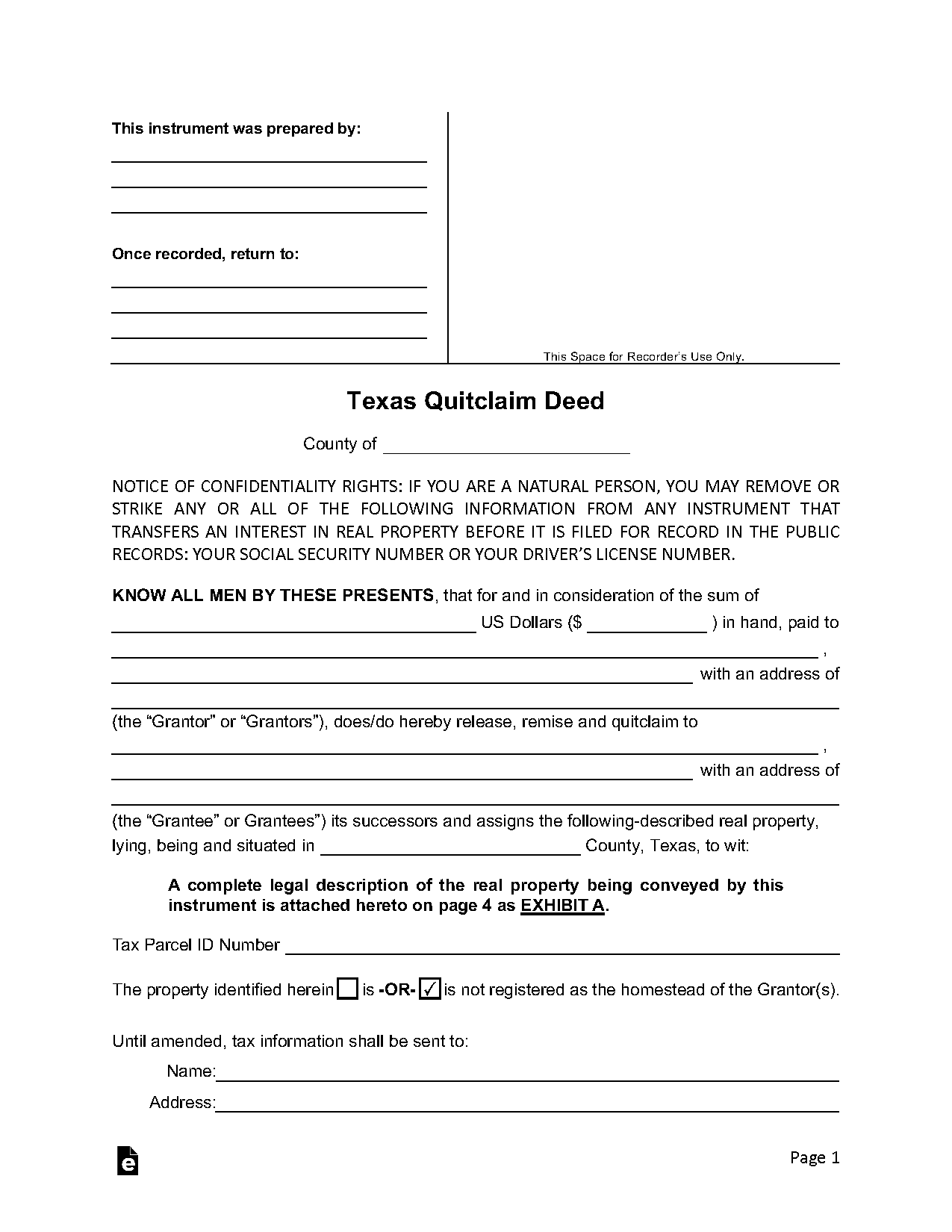
Texas Quit Claim Deed

Full Conversation


I live in TX and when my mother passed away she had a home. The home has been sitting empty for 10 years and because of my severe medical conditions my 3 siblings were supposed to be paying the property taxes but they have not. My siblings got an offer from an investor that wants to pay me, my 3 siblings, and 5 or 6 cousins so that he can purchase it when it goes into foreclosure even though the house has been paid for for decades. He's already paid some cousins $2,000 for signing the house over to him. Is this something I should do or not. I know nothing about these things.

Lexi

Lexi, Chatbot

I'm sorry to hear about the challenges you're facing with your mother's home. Have you and your siblings discussed the current ownership status of the property and whether it has gone through probate?

All I know is that all 3 of my siblings want to get their $2,000 and move on.

Lexi

Lexi, Chatbot

Are there any existing liens or debts associated with the property that you are aware of?

All I know is no property taxes have been paid in probably 2 decades and the house is in terrible shape and just sitting there. If I had to guess I'd say he's probably wanting to tear it down and sell the property it's sitting on. Again, he says we all have about 6% stake in the home each, and a few of them have already taken the money.

Lexi

Lexi, Chatbot

Is there anything else the Real Estate Lawyer should know before I connect you? Rest assured they'll be able to help with your property dispute.

No.

Angelo M

Angelo M

Greetings! I hope this message finds you well. I'm thrilled to have the opportunity to assist you with your situation and provide you with the support you need. Thank you for your patience, and I look forward to working with you.

Angelo M

Angelo M

You need to be very careful here, because what you are describing raises several serious legal red flags under Texas property and probate law. I'm going to break this down clearly so you understand your position and your risk.

First, ownership is the key issue. When your mother passed away, the property did not automatically get divided into percentages unless probate was completed or a valid will or transfer determined ownership. If probate was never done, the property is likely still in your mother's name, and all heirs — you, siblings, possibly cousins depending on the family tree — may have an undivided interest under Texas intestacy law. That means no single person — including an investor — can legally "buy the house" unless all rightful heirs properly transfer their interest through a valid deed. (TX Est Code § 101.001) A simple $2,000 payment and signature without proper title work may be ineffective or even fraudulent.

Second, the investor's strategy is a common one, but often predatory. What it sounds like is a tax foreclosure play. Because property taxes have not been paid for many years, the county can foreclose. Investors sometimes approach heirs and try to get them to sign over their interest cheaply before foreclosure so they can later acquire the property or profit from the land. If he is paying people small amounts like $2,000 for what could be a much more valuable share of land, that is a major warning sign. Vacant land in Texas — even with a rundown structure — can still be worth significantly more than that.

Third, you need to understand that you are under no obligation to sign anything. If you sign a deed (often called a quitclaim deed or warranty deed), you may permanently give up your ownership rights for a fraction of the property's value. Once signed, it is extremely difficult to reverse unless fraud or coercion can be proven.

Fourth, the tax situation matters but does not automatically justify selling cheaply. Even if taxes are owed for many years, there is still usually equity remaining after a tax foreclosure sale, and in Texas there may be a right of redemption after the sale. Additionally, before foreclosure, heirs can sometimes work out payment plans or sell the property properly on the open market for far more than what this investor is offering.

Fifth, the fact that cousins are involved suggests there may be confusion about who actually owns what. Not all cousins necessarily have legal rights unless they are heirs under intestate succession. This is another sign that title has likely never been properly cleared, which means the investor may be taking advantage of that confusion. (TX Est Code § 201.001)

Here is what I strongly recommend you do before taking any action:

  • Do not sign anything yet.
  • Ask for a copy of whatever document others signed.
  • Check the county appraisal district to estimate the property's value.
  • Contact a Texas probate or real estate attorney for a quick review (many offer low-cost consultations).
  • Consider whether the heirs could sell the property together properly instead of letting it go cheaply.

In plain terms: based on what you've described, this deal is very likely not in your best financial interest, and you could be giving away valuable property rights for almost nothing.

Angelo M

Angelo M

Thank you so much for your questions and for giving me the opportunity to assist you today. It is always a pleasure helping you, and I truly appreciate your trust in my advice.

Angelo M

Angelo M

16,167 satisfied customers

Angelo M
Welcome! Have a similar question?

12 lawyers online now

0:00

By messaging AskALawyer, you agree to our Terms and Privacy Policy.

Disclaimer


By messaging AskaLawyer.com, you agree to our Terms and have read our Privacy Policy.

The information provided on AskaLawyer.com is for general informational purposes only and does not constitute legal advice. While we strive to ensure the accuracy and timeliness of the information presented, we make no guarantees regarding its completeness or applicability to your specific circumstances.

Use of this website does not create an attorney-client relationship between you and AskaLawyer.com or any of its attorneys. Communications through this website, including any responses from attorneys, are not privileged or confidential. For advice tailored to your individual situation, we recommend consulting a licensed attorney in your jurisdiction.

AskaLawyer.com disclaims any liability for actions taken or not taken based on the content of this site. We are not responsible for any third-party content that may be accessed through this website. Reliance on any information provided herein is solely at your own risk.

Ask a Lawyer Logo
Ask a Lawyer Logo
Intake Questions
Step  of 3
Loading...

What's your legal question?

Lexi, Chatbot

How would you like your legal question to be answered?

Online

Legal AI

Using ChatGPT 4o

Loading...

How do you like to pay?

By proceeding with payment, you agree to our Terms and Privacy Policy. You authorize us to charge $ today and $ thereafter until canceled. You may cancel anytime in the My Account section to stop future charges.

Total Due:

After purchasing, your chat will begin with an attorney.

By proceeding with payment, you agree to our Terms and Privacy Policy. You authorize us to charge $ today and $ thereafter until canceled. You may cancel anytime in the My Account section to stop future charges.

Total Due:

After purchasing, your chat will begin with an attorney.

After connecting, your chat will begin with an attorney. After choosing, your chat will continue with Legal AI.

It looks like you already have an account with Ask a Lawyer.

We have sent you a magic link to . Click the link in your email to sign in and continue your chat.

spin

Step of 6 •

You'll receive an email at as soon as the lawyer joins the conversation 🙏🏻😊

Over 90% of lawyers connect within 5 minutes. If you're not online at that moment, don't worry — the lawyer will reply to your message while you're away.

You're also welcome to stay in the chat while waiting to be connected 💬✨

Waiting for lawyer

We couldn't send your message. Please try again.

Your lawyer will reply as soon as possible

If there’s a delay, please don’t worry. Your chat will stay open, and they’ll get back to you as soon as they can. There’s no rush on your end either. You’ll receive an email notification as soon as there’s a new message.

You've reached your AI chat limit

Upgrade your plan to continue chatting and get instant domain-specific answers.

0:00