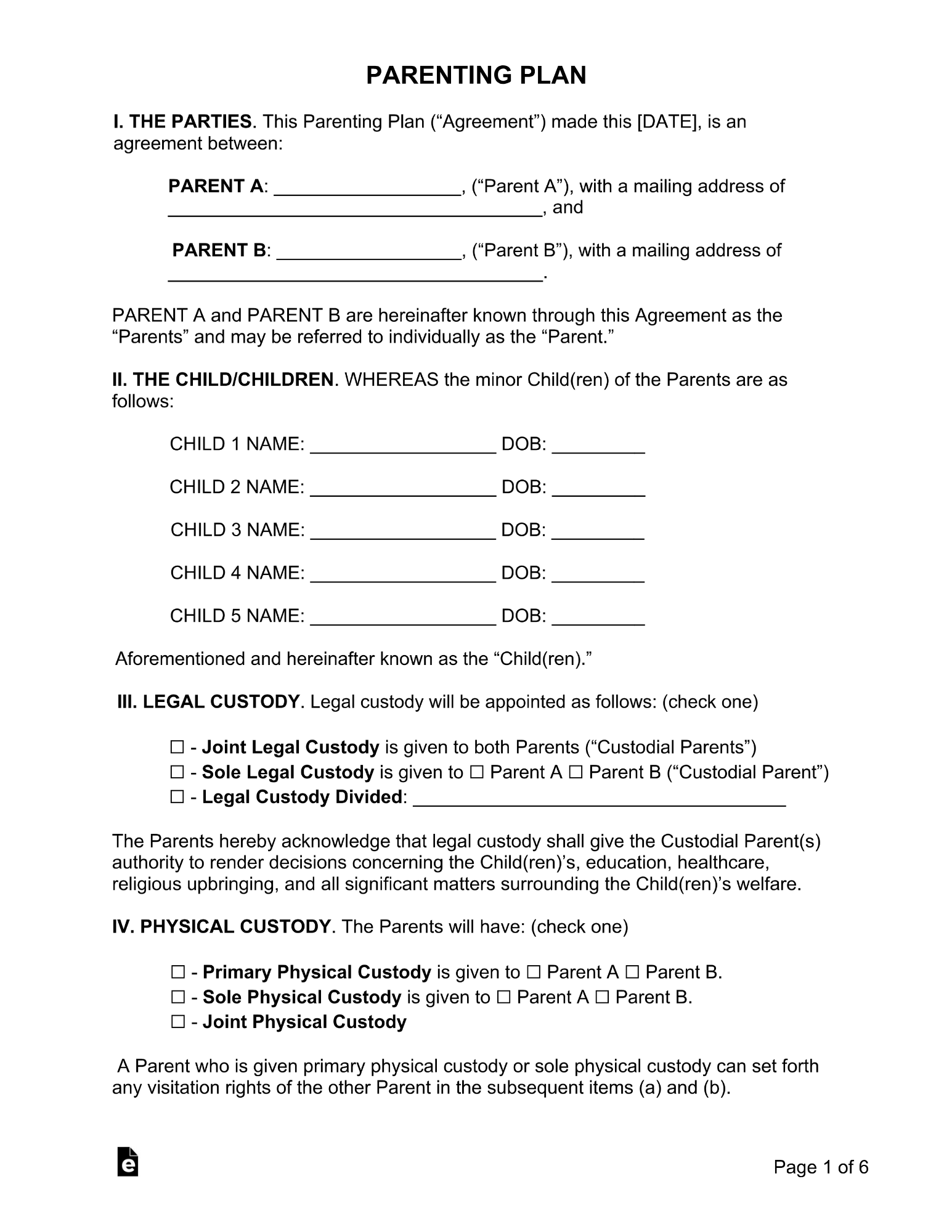
What is the process for getting a court order for child custody?

Jessica B
Jessica B

32,281 satisfied customers

View context
Solved

To obtain a court order for custody, you'll need to follow a series of steps. Here's a detailed guide to help you through the process:

  1. Understand the Types of Custody
    • Legal Custody: This involves the right to make important decisions about your child's life, such as education and healthcare.
    • Physical Custody: This determines where the child lives. Both types can be shared or awarded to one parent.
  2. File a Petition for Custody
    • Visit your local family court to file a petition for custody. Most states provide standardized custody petition forms through their family or domestic relations court, and courts generally decide custody using a "best interests of the child" standard, a principle codified in some form in nearly every state's family code and reflected in the Uniform Child Custody Jurisdiction and Enforcement Act (UCCJEA), which most states have adopted to determine which state has authority to make custody decisions.
    • Include details about your current arrangement and why you believe a formal order is necessary.
  3. Serve the Other Parent
    • Once you've filed the petition, you must serve the other parent with the court papers. This is a legal requirement to inform them of the proceedings.
  4. Prepare for Court
    • Gather evidence that supports your case for custody. This can include documentation of your current arrangement, proof of your involvement in your child's life, and any other relevant information.
    • Consider hiring an attorney to help you navigate the legal process and present your case effectively.
  5. Attend Mediation (if required)
    • Some courts require mediation before a custody hearing. This is an opportunity to reach an agreement with the other parent outside of court.
  6. Attend the Custody Hearing
    • Present your case to the judge, including any evidence and witnesses that support your claim for custody.
    • The judge will consider the best interests of the child when making a decision.
  7. Receive the Court Order
    • If the judge grants your request, you'll receive a court order outlining the custody arrangement.
    • Ensure you understand the terms and follow them accordingly.

Please let me know if you have further questions.

0

Custody (Parenting Plan) Agreement

Full Conversation


Full custody.

Lexi

Lexi, Chatbot

I understand that seeking full custody can be a challenging situation. Can you please share the current custody arrangement you have in place?

Nothing.

Lexi

Lexi, Chatbot

Are there any specific concerns or issues that have led you to pursue full custody?

I don't know.

Lexi

Lexi, Chatbot

Is there anything else the Family Lawyer should know before I connect you? Rest assured they'll be able to help with your full custody.

I don't know.

Jessica B

Jessica B

Thank you for choosing our service! My name is Jessica and I am a licensed attorney that will be assisting you with your question. I understand you're dealing with a situation involving full custody. Have you considered any legal steps to address this situation?

Yeah I want to challenge the mother of my child for custody. We have no court, nothing. I want to know what would I have to file and how can we just keep it as I'm not primary and we have a schedule. I'm as primary and we have a schedule. Or like a mediator.

Jessica B

Jessica B

Could you tell me more about the current living arrangements for your child? Are they living with you, the other parent, or is there a shared schedule in place?

We have like a mutual understanding, I have her 4 days 3 nights and vice versa. Or 3 and 3, I'm usually have the kid Sunday night, Wednesday morning. Or Monday to Wednesday.

Jessica B

Jessica B

Thanks for sharing that. Are there any existing legal agreements or court orders regarding custody, or is everything currently based on your mutual understanding?

I feel she starts off the week with me so she might as well be with me, and the school is under my address. Nothing through court, just word of mouth and what we feel like, but she definitely takes the bigger advantages in ways she uses it against me because she's the mom. Like summer or spring breaks and holidays.

Jessica B

Jessica B

Based on your situation, there are several legal considerations and concepts in custody cases that could potentially support your case:

Legal Custody vs. Physical Custody: Legal custody refers to the right to make important decisions about your child's life, such as education and healthcare. Physical custody involves where the child lives. Both can be shared or awarded to one parent.

Best Interests of the Child: Courts typically decide custody based on what is in the best interests of the child. This includes factors like the child's age, health, emotional ties to each parent, and each parent's ability to care for the child.

Parenting Plans: These are agreements between parents that outline custody arrangements, including schedules for holidays and vacations. They can be created with the help of a mediator or through court orders.

Mediation: This is a process where a neutral third party helps parents reach an agreement on custody and visitation without going to court. It can be a less adversarial way to resolve disputes.

Let me know if you have any questions or clarifications, if not I'll move forward with guidance.

I want like a court order. But please proceed with guidance.

Jessica B

Jessica B

To obtain a court order for custody, you'll need to follow a series of steps. Here's a detailed guide to help you through the process:

  1. Understand the Types of Custody
    • Legal Custody: This involves the right to make important decisions about your child's life, such as education and healthcare.
    • Physical Custody: This determines where the child lives. Both types can be shared or awarded to one parent.
  2. File a Petition for Custody
    • Visit your local family court to file a petition for custody. Most states provide standardized custody petition forms through their family or domestic relations court, and courts generally decide custody using a "best interests of the child" standard, a principle codified in some form in nearly every state's family code and reflected in the Uniform Child Custody Jurisdiction and Enforcement Act (UCCJEA), which most states have adopted to determine which state has authority to make custody decisions.
    • Include details about your current arrangement and why you believe a formal order is necessary.
  3. Serve the Other Parent
    • Once you've filed the petition, you must serve the other parent with the court papers. This is a legal requirement to inform them of the proceedings.
  4. Prepare for Court
    • Gather evidence that supports your case for custody. This can include documentation of your current arrangement, proof of your involvement in your child's life, and any other relevant information.
    • Consider hiring an attorney to help you navigate the legal process and present your case effectively.
  5. Attend Mediation (if required)
    • Some courts require mediation before a custody hearing. This is an opportunity to reach an agreement with the other parent outside of court.
  6. Attend the Custody Hearing
    • Present your case to the judge, including any evidence and witnesses that support your claim for custody.
    • The judge will consider the best interests of the child when making a decision.
  7. Receive the Court Order
    • If the judge grants your request, you'll receive a court order outlining the custody arrangement.
    • Ensure you understand the terms and follow them accordingly.

Please let me know if you have further questions.

Jessica B

Jessica B

32,281 satisfied customers

Jessica B
Welcome! Have a similar question?

12 lawyers online now

0:00

By messaging AskALawyer, you agree to our Terms and Privacy Policy.

Disclaimer


By messaging AskaLawyer.com, you agree to our Terms and have read our Privacy Policy.

The information provided on AskaLawyer.com is for general informational purposes only and does not constitute legal advice. While we strive to ensure the accuracy and timeliness of the information presented, we make no guarantees regarding its completeness or applicability to your specific circumstances.

Use of this website does not create an attorney-client relationship between you and AskaLawyer.com or any of its attorneys. Communications through this website, including any responses from attorneys, are not privileged or confidential. For advice tailored to your individual situation, we recommend consulting a licensed attorney in your jurisdiction.

AskaLawyer.com disclaims any liability for actions taken or not taken based on the content of this site. We are not responsible for any third-party content that may be accessed through this website. Reliance on any information provided herein is solely at your own risk.

Ask a Lawyer Logo
Ask a Lawyer Logo
Intake Questions
Step  of 3
Loading...

What's your legal question?

Lexi, Chatbot

How would you like your legal question to be answered?

Online

Loading...

How do you like to pay?

By proceeding with payment, you agree to our Terms and Privacy Policy. You authorize us to charge $ today and $ thereafter until canceled. You may cancel anytime in the My Account section to stop future charges.

Total Due:

After purchasing, your chat will begin with an attorney.

By proceeding with payment, you agree to our Terms and Privacy Policy. You authorize us to charge $ today and $ thereafter until canceled. You may cancel anytime in the My Account section to stop future charges.

Total Due:

After purchasing, your chat will begin with an attorney.

After connecting, your chat will begin with an attorney. After choosing, your chat will continue with Legal AI.

It looks like you already have an account with Ask a Lawyer.

We have sent you a magic link to . Click the link in your email to sign in and continue your chat.

spin

Step of 6 •

You'll receive an email at as soon as the lawyer joins the conversation 🙏🏻😊

Over 90% of lawyers connect within 5 minutes. If you're not online at that moment, don't worry — the lawyer will reply to your message while you're away.

You're also welcome to stay in the chat while waiting to be connected 💬✨

Waiting for lawyer

We couldn't send your message. Please try again.

Your lawyer will reply as soon as possible

If there’s a delay, please don’t worry. Your chat will stay open, and they’ll get back to you as soon as they can. There’s no rush on your end either. You’ll receive an email notification as soon as there’s a new message.

You've reached your AI chat limit

Upgrade your plan to continue chatting and get instant domain-specific answers.

0:00