[CA] Can a tenant claim wrongful eviction after completing a full lease before the unit is sold?

Dan
Dan

30,625 satisfied customers

View context
Solved

I understand why your real estate agent is worried, but from what you described, this does not sound like a classic wrongful eviction situation. In San Francisco, the big questions usually turn on whether the unit is covered by local rent control and the Just Cause rules, and whether the tenant was actually forced out before the end of a protected tenancy. Based on your facts, the tenant completed the full one-year lease, moved voluntarily, and you returned the full security deposit, so the risk appears lower than your agent suggests. (CA Civ Code § 1946) The most important thing now is to sort out whether any San Francisco eviction protections could still apply to your building and lease history, and then I'll walk you through the practical next steps.

One option is to confirm whether your condo is exempt from San Francisco rent control, because newer construction, including most buildings built after June 13, 1979, is generally exempt from rent increase limits under the San Francisco Rent Ordinance (San Francisco Administrative Code, Chapter 37), while the city's eviction protections can still matter in some situations. If your unit was built in 1988 or 1989, that timing strongly suggests it is outside traditional rent control coverage, but I would still want to verify the building status, the condo conversion history, and whether any local ordinance creates a special issue. This matters because the tenant's ability to bring a wrongful eviction claim depends heavily on whether the local protections even apply to your unit. The first step here is to gather the condo's construction date, certificate of occupancy, and any records showing how the unit is classified in San Francisco. (CA Civ Code § 1954.50)

A second option is to review the lease and your written notices, because the paperwork often makes the difference between a clean move-out and a dispute. Since the tenant stayed through the full lease term, your notice to sell was not the same thing as an early termination, and that is helpful to you. What matters legally is whether your messages could be read as a threat, coercion, or an attempt to pressure the tenant out before the lease ended, and from what you said, the texts sound cooperative rather than forceful. I would start by organizing the lease, the 2 to 3 month notice, the tenant's written acceptance, the move-out confirmation, and the receipt showing the security deposit was returned.

A third option is to do a risk review for any claim other than wrongful eviction, because even when the move-out is amicable, former tenants sometimes later raise issues about notice, repairs, deposit deductions, or alleged misstatements. In practical terms, this means checking whether you ever promised something in writing about how long he could stay, whether any building rule or local law required a different notice period, and whether the sale process included any entry or showing rights that were handled properly. This matters because a claim is usually easier to defend when the record shows clear communication, voluntary relocation, and no money withheld from the deposit without basis. The safest starting point is to create a clean timeline of events, with dates, texts, the lease end date, the move-out date, and the deposit refund.

My view is that the best starting point is to verify the unit's San Francisco legal status and then review the lease and written communications together, because those two items will usually tell us whether there is any real exposure at all. On the facts you shared, the tenant appears to have left voluntarily after the full lease term, with no complaint and no deposit dispute, which makes a wrongful eviction claim less likely. Please let me know if these options make sense to you. I am happy to explain anything further. It's important to me that you fully understand your choices.

0

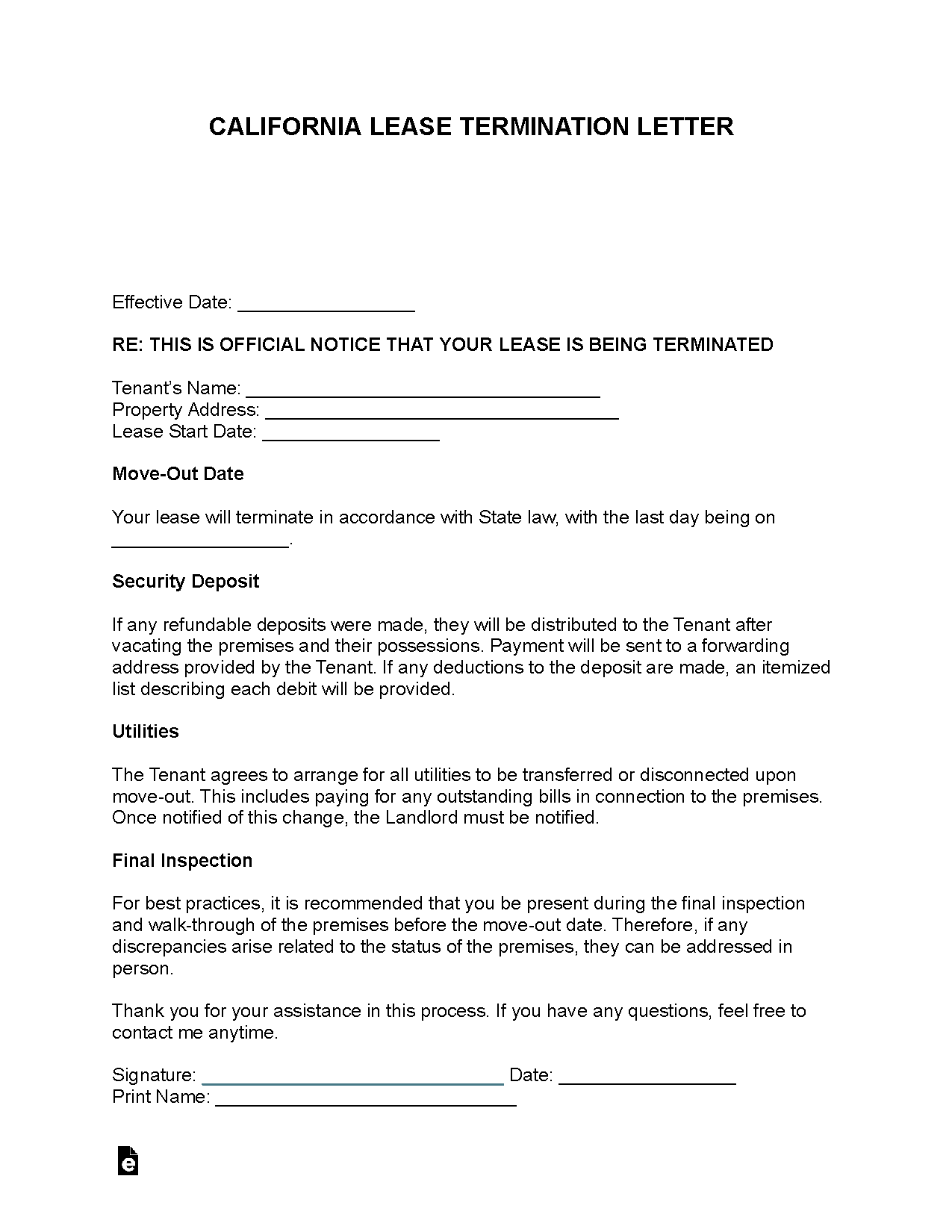
California Lease Termination Letter | 30-Day Notice
Full Conversation


Landlord Tenant question. The attorney must be licensed in San Francisco and understand unique laws. I've already done deep AI research through a paid model. I am now looking specifically for a human attorney to validate my specific case.

Details: I rented my condo in SF to a tenant on a fixed lease for 1 year, and told him upfront that I would likely sell in a year. I gave him a couple of months written notice (2 or 3) that I was in fact going to sell my unit. He said okay and he found a new place to rent. All is and was amicable. A few details that may or may not matter. The unit was built in 1988 or 1989. Part of the reason for selling it is because the unit costs me significantly more per month to own, as the rent does not cover the mortgage, HOA, taxes, insurance, etc. There are around 235 units in the building. The rent was pretty close to market rate.

Do you have any additional questions to ascertain whether a former tenant would have a case against me. Note there is no indication, but my real estate agent is worried.

Lexi

Lexi, Chatbot

I understand that navigating landlord-tenant laws can be quite stressful, especially in a unique market like San Francisco. Can you tell me if the tenant has expressed any concerns or objections regarding the sale of the unit?

No, they have not.

Lexi

Lexi, Chatbot

Have you documented all communications with the tenant regarding the lease and the notice to sell?

Yes, I do.

Lexi

Lexi, Chatbot

Is there anything else the Real Estate Lawyer should know before I connect you? Rest assured they'll be able to help with your landlord-tenant question.

No.

Dan

Dan

Hello, and welcome to AskaLawyer. My name is Daniel, and I'm a licensed attorney with over 22 years of experience. I'm sorry you're dealing with this situation, and I'll do everything I can to help. I understand you rented your condo in San Francisco to a tenant on a fixed lease and are now selling the unit. Could you share more details about any communications you've had with the tenant regarding the sale?

Yes, I have text communication. I gave him 2 to 3 months' notice and said I'd work with him if need be. He has been completely accommodating, no issues. It's my real estate agent who says we are vulnerable if he decides to sue for wrongful eviction. She believes he would have a case because, under San Francisco law, this would be a wrongful eviction.

He has already moved out, and I gave him his full security deposit back.

Dan

Dan

Thanks for sharing that. It's good to hear that everything has been amicable with your tenant. Could you tell me if there are any specific clauses in your lease agreement that address early termination or selling the property? This will help me understand your situation better.

I would have to provide you a copy of the lease, as I don't know. Is there a way to attach it? Otherwise, I'll run it through chat and have it provide any references to selling. Also, the termination was not early. He was there the full duration of the lease.

Dan

Dan

I really appreciate you taking the time to clarify that. It helps a lot and gives me a much clearer picture of what you're looking for. I'm pulling everything together now and should have your answer ready for you shortly.

Dan

Dan

I understand why your real estate agent is worried, but from what you described, this does not sound like a classic wrongful eviction situation. In San Francisco, the big questions usually turn on whether the unit is covered by local rent control and the Just Cause rules, and whether the tenant was actually forced out before the end of a protected tenancy. Based on your facts, the tenant completed the full one-year lease, moved voluntarily, and you returned the full security deposit, so the risk appears lower than your agent suggests. (CA Civ Code § 1946) The most important thing now is to sort out whether any San Francisco eviction protections could still apply to your building and lease history, and then I'll walk you through the practical next steps.

One option is to confirm whether your condo is exempt from San Francisco rent control, because newer construction, including most buildings built after June 13, 1979, is generally exempt from rent increase limits under the San Francisco Rent Ordinance (San Francisco Administrative Code, Chapter 37), while the city's eviction protections can still matter in some situations. If your unit was built in 1988 or 1989, that timing strongly suggests it is outside traditional rent control coverage, but I would still want to verify the building status, the condo conversion history, and whether any local ordinance creates a special issue. This matters because the tenant's ability to bring a wrongful eviction claim depends heavily on whether the local protections even apply to your unit. The first step here is to gather the condo's construction date, certificate of occupancy, and any records showing how the unit is classified in San Francisco. (CA Civ Code § 1954.50)

A second option is to review the lease and your written notices, because the paperwork often makes the difference between a clean move-out and a dispute. Since the tenant stayed through the full lease term, your notice to sell was not the same thing as an early termination, and that is helpful to you. What matters legally is whether your messages could be read as a threat, coercion, or an attempt to pressure the tenant out before the lease ended, and from what you said, the texts sound cooperative rather than forceful. I would start by organizing the lease, the 2 to 3 month notice, the tenant's written acceptance, the move-out confirmation, and the receipt showing the security deposit was returned.

A third option is to do a risk review for any claim other than wrongful eviction, because even when the move-out is amicable, former tenants sometimes later raise issues about notice, repairs, deposit deductions, or alleged misstatements. In practical terms, this means checking whether you ever promised something in writing about how long he could stay, whether any building rule or local law required a different notice period, and whether the sale process included any entry or showing rights that were handled properly. This matters because a claim is usually easier to defend when the record shows clear communication, voluntary relocation, and no money withheld from the deposit without basis. The safest starting point is to create a clean timeline of events, with dates, texts, the lease end date, the move-out date, and the deposit refund.

My view is that the best starting point is to verify the unit's San Francisco legal status and then review the lease and written communications together, because those two items will usually tell us whether there is any real exposure at all. On the facts you shared, the tenant appears to have left voluntarily after the full lease term, with no complaint and no deposit dispute, which makes a wrongful eviction claim less likely. Please let me know if these options make sense to you. I am happy to explain anything further. It's important to me that you fully understand your choices.

For the sake of this case, let's assume this is not a rent-control building (I'll double check). Also, it was built as a condo from the start. I can review the lease. I doubt we said anything about the possibility of selling it within the lease, possibly in email messages (I used a rental agent to rent out the condo). I think the one question that I have and need answered is whether there is a local ordinance that legally prevents me from having a tenant leave after the lease ends.

Dan

Dan

San Francisco's Rent Ordinance provides certain protections to tenants, including just cause eviction protections. However, these protections typically apply to rent-controlled units. Since your building was constructed in 1988 or 1989 and was built as a condo from the start, it may not be subject to these rent control provisions.

In San Francisco, tenants in rent-controlled units cannot be evicted without just cause. Just causes include non-payment of rent, breach of lease, or the landlord's intent to occupy the unit. If your unit is not subject to rent control, these protections may not apply.

Generally, if a lease term has ended and proper notice has been given, a landlord can ask a tenant to vacate the property. Since your tenant completed the full lease term and moved out voluntarily, this aligns with typical lease termination practices.

While San Francisco has specific tenant protections related to local ordinances, these often relate to rent-controlled properties. It's important to verify whether any local ordinances apply to your specific building and situation.

Let me know if you have any questions or clarifications.

Can you say unequivocally that if my building is not rent-controlled and does not have a specific local ordinance specific to my building, I am in the clear? That said, apart from my building, can you determine whether there is a San Francisco local ordinance that would apply to all condo buildings? I'm really trying to figure out where to draw the line. May I ask if you are an SF real estate attorney? If not, can you consult one, as that is really what I'm looking for here.

Dan

Dan

Generally, San Francisco's rent control and just cause eviction protections apply to buildings constructed before June 13, 1979. Since your condo was built in 1988 or 1989, it is likely exempt from these specific rent control provisions. However, it's crucial to verify this with the San Francisco Rent Board or a local real estate attorney to ensure there are no unique circumstances affecting your building. San Francisco does have specific ordinances that apply to condo conversions and tenant protections, but these typically relate to rent-controlled units. If your building is not subject to rent control, the general rule is that a tenant can be asked to vacate at the end of a lease term, provided proper notice is given and there are no other agreements in place.

Please let me know if you have further questions.

I appreciate your help, and it appears I'm okay, but I did ask to be put in touch with an SF real estate attorney. I guess that's one of the limitations of this system. While I feel somewhat better educated, I still feel I would need to consult an SF real estate attorney, which I had hoped to find via this platform.

Dan

Dan

Having local representation would be helpful in this situation. Your State Bar Association or the American Bar Association often offer referral services or legal aid programs that can provide free or affordable assistance. For private attorneys, websites like Avvo.com and Justia.com make it easier to search for lawyers near you, sorted by their specialties. Thank you so much for sharing your questions with me. I truly appreciate the opportunity to assist you and am very glad you reached out. If you have any additional questions, feel free to reach out.

Final question: in your opinion, is there a benefit to hiring an attorney, given that there hasn't been an issue?

Dan

Dan

Hiring an attorney can be beneficial even if there hasn't been an issue yet, especially in complex legal environments like San Francisco. An attorney can help ensure that all your actions are compliant with local laws and ordinances, potentially preventing future disputes. They can also provide peace of mind by reviewing your situation and confirming that you're on solid legal ground. If you're feeling uncertain or if your real estate agent has concerns, consulting with a local attorney could be a wise precaution. Let me know if you have any more questions!

Okay, thank you!

Dan

Dan

Most welcome.

Dan

Dan

30,625 satisfied customers

Dan
Welcome! Have a similar question?

12 lawyers online now

0:00

By messaging AskALawyer, you agree to our Terms and Privacy Policy.

Queeneth E. Esq
Queeneth E. Esq

Commercial Contracts Attorney

4.61 (6,820)

[IL] Can a tenant sue a landlord for failing to fully remediate mold in a rental property?

16

6

Answered 5 days ago

Disclaimer


By messaging AskaLawyer.com, you agree to our Terms and have read our Privacy Policy.

The information provided on AskaLawyer.com is for general informational purposes only and does not constitute legal advice. While we strive to ensure the accuracy and timeliness of the information presented, we make no guarantees regarding its completeness or applicability to your specific circumstances.

Use of this website does not create an attorney-client relationship between you and AskaLawyer.com or any of its attorneys. Communications through this website, including any responses from attorneys, are not privileged or confidential. For advice tailored to your individual situation, we recommend consulting a licensed attorney in your jurisdiction.

AskaLawyer.com disclaims any liability for actions taken or not taken based on the content of this site. We are not responsible for any third-party content that may be accessed through this website. Reliance on any information provided herein is solely at your own risk.

Ask a Lawyer Logo
Ask a Lawyer Logo
Intake Questions
Step  of 3
Loading...

What's your legal question?

Lexi, Chatbot

How would you like your legal question to be answered?

Online

Loading...

How do you like to pay?

By proceeding with payment, you agree to our Terms and Privacy Policy. You authorize us to charge $ today and $ thereafter until canceled. You may cancel anytime in the My Account section to stop future charges.

Total Due:

After purchasing, your chat will begin with an attorney.

By proceeding with payment, you agree to our Terms and Privacy Policy. You authorize us to charge $ today and $ thereafter until canceled. You may cancel anytime in the My Account section to stop future charges.

Total Due:

After purchasing, your chat will begin with an attorney.

After connecting, your chat will begin with an attorney. After choosing, your chat will continue with Legal AI.

It looks like you already have an account with Ask a Lawyer.

We have sent you a magic link to . Click the link in your email to sign in and continue your chat.

spin

Step of 6 •

You'll receive an email at as soon as the lawyer joins the conversation 🙏🏻😊

Over 90% of lawyers connect within 5 minutes. If you're not online at that moment, don't worry — the lawyer will reply to your message while you're away.

You're also welcome to stay in the chat while waiting to be connected 💬✨

Waiting for lawyer

We couldn't send your message. Please try again.

Your lawyer will reply as soon as possible

If there’s a delay, please don’t worry. Your chat will stay open, and they’ll get back to you as soon as they can. There’s no rush on your end either. You’ll receive an email notification as soon as there’s a new message.

You've reached your AI chat limit

Upgrade your plan to continue chatting and get instant domain-specific answers.

0:00