
How can a software developer retain ownership of its algorithms and system architecture when providing services to a client?

Jon
Jon

556 satisfied customers

View context
Solved

Your current contract already creates a basic separation between what the client owns and what you own. The client owns the custom work product created specifically for them, while you retain ownership of your pre-existing tools, systems, methods, and intellectual property. That gives you a solid starting point for eventually turning your technology into a standalone software product. Under federal copyright law, ownership initially belongs to the author of a work (17 U.S.C. § 201(a)), and because you are an outside contractor rather than an employee, your code generally will not be treated as a client-owned "work made for hire" unless the definition in (17 U.S.C. § 101) is met.

A transfer of copyright ownership is valid only if it is in a writing signed by the owner, which is why the exact scope of the written assignment in your contract matters so much. (17 U.S.C. § 204(a))

The biggest issue is that the current wording still leaves room for disputes over anything developed during the project. If you create a highly optimized algorithm, backend framework, database structure, or system architecture while working for the client, they could later argue that it qualifies as a "custom deliverable" under Section 4.1 and therefore belongs to them.

Your position is much stronger because you are not planning to reuse their confidential data, branding, or unique internal workflows. That distinction is critical. General engineering concepts, reusable frameworks, and underlying architecture are usually treated differently from client-specific implementations. Copyright protection does not extend to any idea, procedure, process, system, method of operation, concept, or principle 17 U.S.C. § 102(b), only to the specific expression of those ideas, so building a new product on similar concepts is generally permissible as long as you do not copy code or other deliverables assigned to the client. Still, the agreement should make that boundary much clearer before you extend the relationship.

The safest approach is to confirm that your ownership includes the underlying architecture, reusable code, algorithms, database structures, and technical systems you develop or refine during the engagement, as long as they do not contain the client's confidential information or unique workflows. Algorithms and system architecture can also qualify as trade secrets under the federal Defend Trade Secrets Act if you take reasonable measures to keep them secret, so pairing clear ownership language with confidentiality obligations strengthens your position. (18 U.S.C. § 1839(3))

0

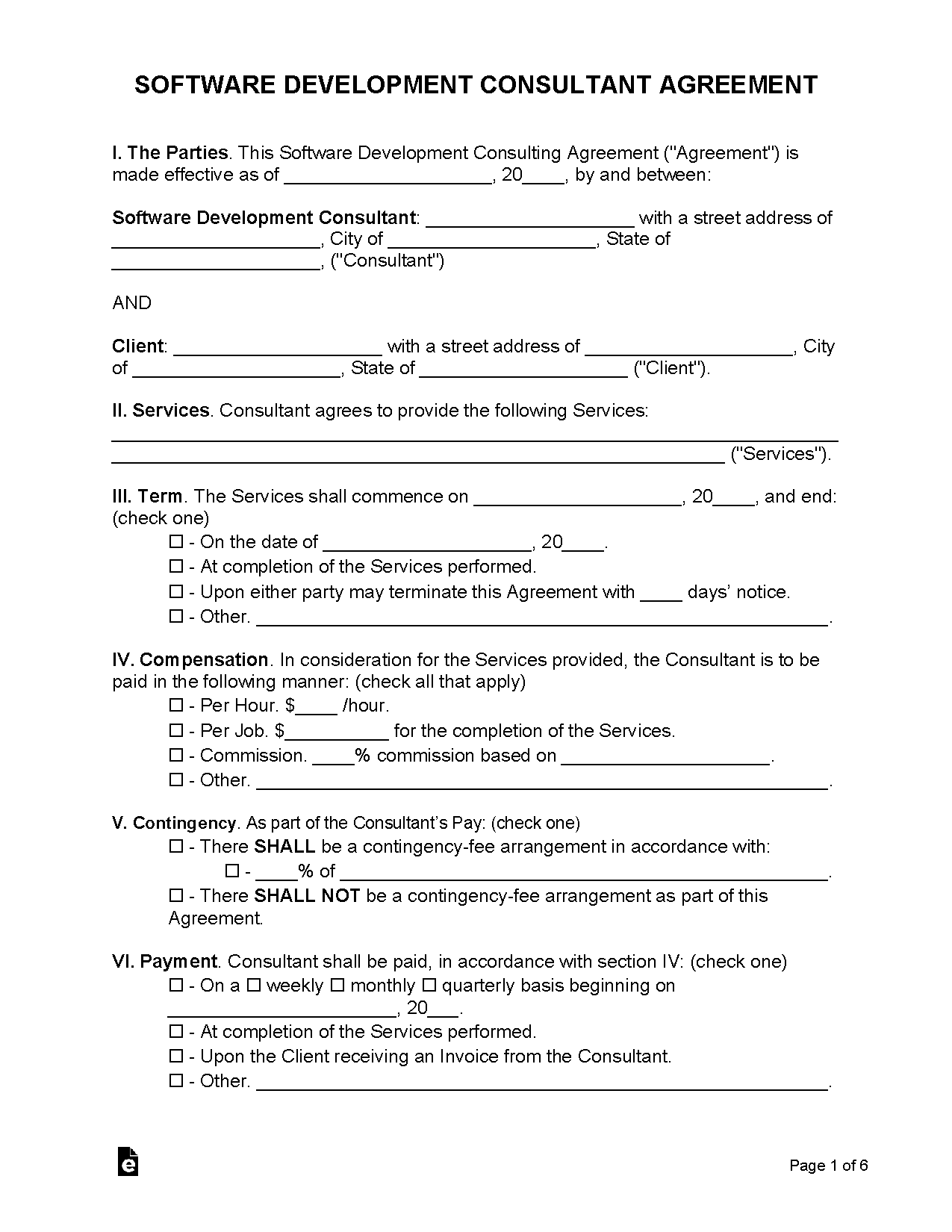
Software Development Consultant Agreement
Full Conversation


I am providing software services to a client - who owns the IP what clause to include to ensure we retain our IP and not give everything away?

Lexi

Lexi, Chatbot

I understand how important it is to protect your intellectual property in your software services. Can you tell me if you have a written contract with your client already?

Yes I have.

Lexi

Lexi, Chatbot

What specific types of intellectual property are you concerned about retaining (e.g., code, algorithms, designs)?

algorithms and system architecture to be able to retain it and sell it as a product later

Lexi

Lexi, Chatbot

Is there anything else the Lawyer should know before I connect you? Rest assured they'll be able to help with your intellectual property rights.

Nope.

Jon

Jon

Hello, and thank you for reaching out! I'm Jon, a licensed attorney with over 14 years of experience, here to help. I understand legal matters can feel overwhelming, but you're in good hands. My goal is to explain things clearly and guide you toward the best possible solution for your situation. Just a quick note: our conversation is for general legal information only and does not create an attorney-client relationship.

Could you let me know if your current contract includes any clauses related to intellectual property rights? This will help in understanding what might need to be added or adjusted.

Hi Thanks Jon, This was in the original contract - now we are extending it. I wanted to check before I sent the service agreement:

4.1 Work Product. Subject to full payment of all fees, Provider hereby assigns to Client all right, title, and interest in the custom deliverables created specifically for Client under this Agreement ("Work Product"), including all intellectual property rights therein.

4.2 Provider Tools & Platform. Provider retains all rights in its proprietary methodologies, frameworks, tools, templates, and pre-existing intellectual property ("Provider IP") used to deliver the services. Client receives a non-exclusive, perpetual, royalty-free license to use any Provider IP incorporated into the Work Product solely for Client's internal business purposes.

Jon

Jon

It looks like your contract already has provisions for retaining your proprietary methodologies and tools. Are there any specific changes or additions you are considering for the extension of this agreement?

Mainly can we take parts of our technology and package it as a product without any legal issues from the client? Of course we will not be using any of their data or workflows.

Jon

Jon

To clarify, are you planning to use the same technology or algorithms that were developed for the client, or are you considering creating a new product based on similar concepts?

new product based on similar concepts

Jon

Jon

Understood! I believe I have all the information I need. Is there anything else you'd like to add before I start working on your answer? If not, I'll get started right away.

Nope that's about it

Jon

Jon

Got it! I just need a few minutes to put together a complete response for you. It shouldn't take longer than about 4–5 minutes, and I want to make sure it's clear and comprehensive. Thanks so much for waiting. I really appreciate your patience.

Thanks!

Jon

Jon

Your current contract already creates a basic separation between what the client owns and what you own. The client owns the custom work product created specifically for them, while you retain ownership of your pre-existing tools, systems, methods, and intellectual property. That gives you a solid starting point for eventually turning your technology into a standalone software product. Under federal copyright law, ownership initially belongs to the author of a work (17 U.S.C. § 201(a)), and because you are an outside contractor rather than an employee, your code generally will not be treated as a client-owned "work made for hire" unless the definition in (17 U.S.C. § 101) is met.

A transfer of copyright ownership is valid only if it is in a writing signed by the owner, which is why the exact scope of the written assignment in your contract matters so much. (17 U.S.C. § 204(a))

The biggest issue is that the current wording still leaves room for disputes over anything developed during the project. If you create a highly optimized algorithm, backend framework, database structure, or system architecture while working for the client, they could later argue that it qualifies as a "custom deliverable" under Section 4.1 and therefore belongs to them.

Your position is much stronger because you are not planning to reuse their confidential data, branding, or unique internal workflows. That distinction is critical. General engineering concepts, reusable frameworks, and underlying architecture are usually treated differently from client-specific implementations. Copyright protection does not extend to any idea, procedure, process, system, method of operation, concept, or principle 17 U.S.C. § 102(b), only to the specific expression of those ideas, so building a new product on similar concepts is generally permissible as long as you do not copy code or other deliverables assigned to the client. Still, the agreement should make that boundary much clearer before you extend the relationship.

The safest approach is to confirm that your ownership includes the underlying architecture, reusable code, algorithms, database structures, and technical systems you develop or refine during the engagement, as long as they do not contain the client's confidential information or unique workflows. Algorithms and system architecture can also qualify as trade secrets under the federal Defend Trade Secrets Act if you take reasonable measures to keep them secret, so pairing clear ownership language with confidentiality obligations strengthens your position. (18 U.S.C. § 1839(3))

Jon

Jon

You also want the contract to clearly preserve your right to use the general knowledge, experience, methodologies, and technical know-how gained during the project when building future products or services.

It is equally important to make clear that your company is free to develop and commercialize software products based on its own technology, provided no client data or confidential information is used. Addressing that upfront helps avoid future claims of implied exclusivity or ownership.

From a practical standpoint, continue keeping a strict separation between reusable core technology and anything unique to the client. Avoid reusing their proprietary workflows, branding, internal processes, or confidential datasets. Structure your reusable systems as generic modular components that can function independently from any one customer environment.

When discussing these revisions with the client, frame them as standard intellectual property clarifications for a long-term software development relationship. The client still fully owns their custom-facing application and proprietary business information, while you retain ownership of the reusable technology foundations that support your broader business and future software products.

Got it thanks that makes sense.

Jon

Jon

556 satisfied customers

Jon
Welcome! Have a similar question?

12 lawyers online now

0:00

By messaging AskALawyer, you agree to our Terms and Privacy Policy.

Disclaimer


By messaging AskaLawyer.com, you agree to our Terms and have read our Privacy Policy.

The information provided on AskaLawyer.com is for general informational purposes only and does not constitute legal advice. While we strive to ensure the accuracy and timeliness of the information presented, we make no guarantees regarding its completeness or applicability to your specific circumstances.

Use of this website does not create an attorney-client relationship between you and AskaLawyer.com or any of its attorneys. Communications through this website, including any responses from attorneys, are not privileged or confidential. For advice tailored to your individual situation, we recommend consulting a licensed attorney in your jurisdiction.

AskaLawyer.com disclaims any liability for actions taken or not taken based on the content of this site. We are not responsible for any third-party content that may be accessed through this website. Reliance on any information provided herein is solely at your own risk.

Ask a Lawyer Logo
Ask a Lawyer Logo
Intake Questions
Step  of 3
Loading...

What's your legal question?

Lexi, Chatbot

How would you like your legal question to be answered?

Online

Loading...

How do you like to pay?

By proceeding with payment, you agree to our Terms and Privacy Policy. You authorize us to charge $ today and $ thereafter until canceled. You may cancel anytime in the My Account section to stop future charges.

Total Due:

After purchasing, your chat will begin with an attorney.

By proceeding with payment, you agree to our Terms and Privacy Policy. You authorize us to charge $ today and $ thereafter until canceled. You may cancel anytime in the My Account section to stop future charges.

Total Due:

After purchasing, your chat will begin with an attorney.

After connecting, your chat will begin with an attorney. After choosing, your chat will continue with Legal AI.

It looks like you already have an account with Ask a Lawyer.

We have sent you a magic link to . Click the link in your email to sign in and continue your chat.

spin

Step of 6 •

You'll receive an email at as soon as the lawyer joins the conversation 🙏🏻😊

Over 90% of lawyers connect within 5 minutes. If you're not online at that moment, don't worry — the lawyer will reply to your message while you're away.

You're also welcome to stay in the chat while waiting to be connected 💬✨

Waiting for lawyer

We couldn't send your message. Please try again.

Your lawyer will reply as soon as possible

If there’s a delay, please don’t worry. Your chat will stay open, and they’ll get back to you as soon as they can. There’s no rush on your end either. You’ll receive an email notification as soon as there’s a new message.

You've reached your AI chat limit

Upgrade your plan to continue chatting and get instant domain-specific answers.

0:00