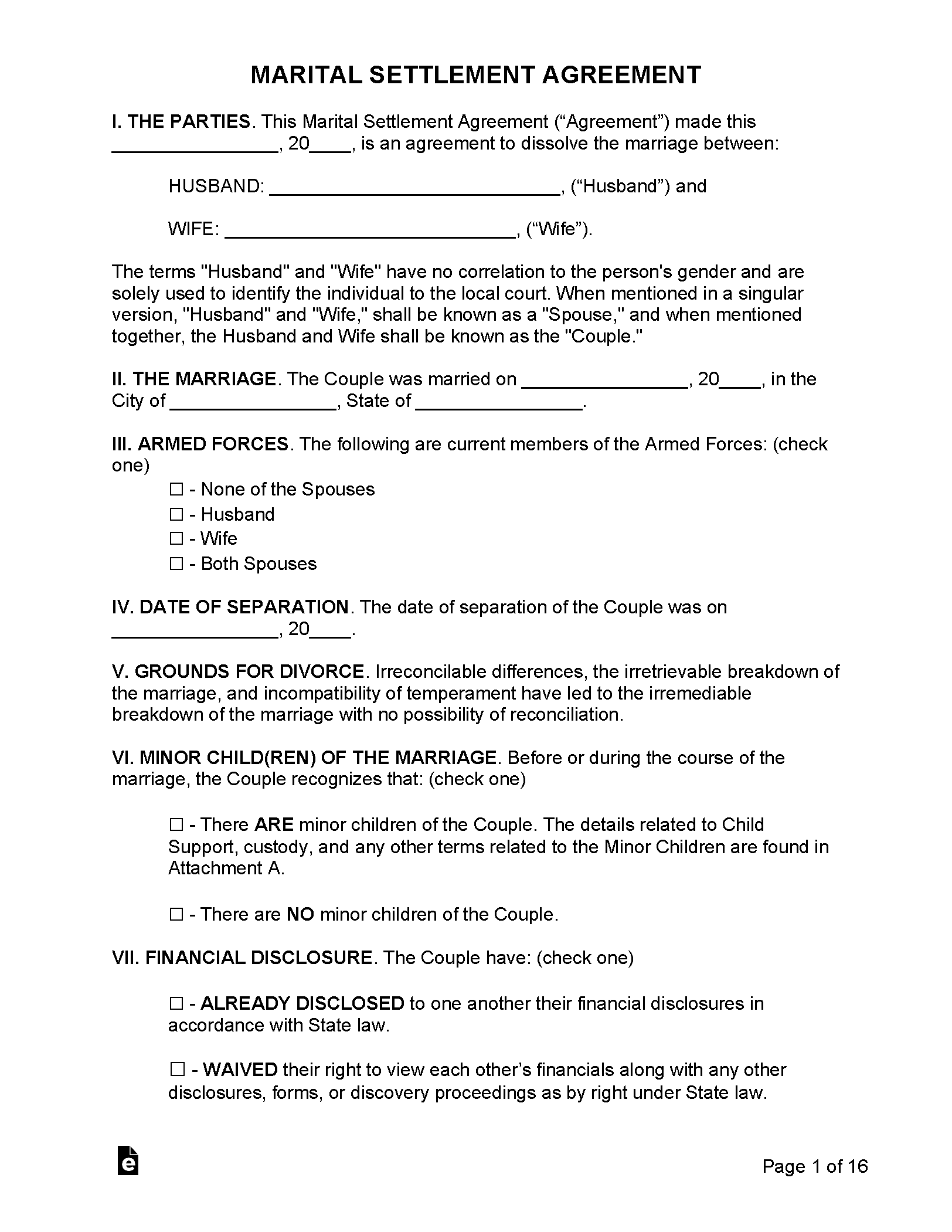
My husband and I are separating, and I'm buying him out to keep the house. How do I ensure the agreement is legally airtight?
“XII. HUSBAND’S PROPERTY. It is declared by the Couple that, under this Agreement, the Husband shall be the owner of the following: Only item is $200K payout from home refinancing, which will happen prior to divorce. This is a one-time cash out, and he will not pursue any other financial assets after the $200K cash out.”
Does this verbiage suffice?
The language you included is headed in the right direction, but it could be stronger and more airtight. Right now, it's informal and leaves room for argument about what “not pursue any other financial assets” really covers.
Here is a stronger sample you can use:
“The parties agree that the Husband shall receive a one-time payment of $200,000 from the refinancing of the marital home, which shall constitute a full, final, and complete settlement of all claims the Husband may have against the Wife, including but not limited to claims for equitable distribution, spousal support, or any interest in the marital residence. The Husband expressly waives and relinquishes any and all current or future rights, title, or interest in the marital home and any other financial assets of the Wife. Both parties acknowledge that this Agreement is the result of a negotiated settlement, entered into freely, voluntarily, and with full understanding of its terms. The parties further waive any rights they may have under applicable state marital property laws to the extent permitted by law.”
Full Conversation

I am going through a separation, I will buy him out to keep my house. Giving him a one-time payout of 200K through a refinance. I want to make sure this document covers that this one-time payout is all he can come after, and cannot sue me later on for any more cash or to make me sell the house.

I understand that navigating a separation can be challenging, especially when it comes to financial agreements. Have you already drafted any documents regarding the buyout and payout?

I did the marital settlement agreement.

Are there any specific terms or conditions you want to ensure are included in the agreement to protect your interests?

Yes—my house, and ensure I am not responsible for any other financial requests outside of this document.

Is there anything else the Lawyer should know before I connect you? Rest assured they’ll be able to help with your marital settlement agreement.

I don’t know.

Hello! My name is Michael, and I'm an attorney ready to help! Your responses matter to me, so I only need a few minutes to review and respond to each of your posts.
Does your marital settlement agreement clearly state that the $200K buyout is in full and final satisfaction of all property and financial claims, and that he waives any future rights to the home or further compensation?

Below is what the document states:
“XII. HUSBAND’S PROPERTY. It is declared by the Couple that, under this Agreement, the Husband shall be the owner of the following: Only item is $200K payout from home refinancing, which will happen prior to divorce. This is a one-time cash out, and he will not pursue any other financial assets after the $200K cash out.”
Does this verbiage suffice?

The language you included is headed in the right direction, but it could be stronger and more airtight. Right now, it's informal and leaves room for argument about what “not pursue any other financial assets” really covers.
Here is a stronger sample you can use:
“The parties agree that the Husband shall receive a one-time payment of $200,000 from the refinancing of the marital home, which shall constitute a full, final, and complete settlement of all claims the Husband may have against the Wife, including but not limited to claims for equitable distribution, spousal support, or any interest in the marital residence. The Husband expressly waives and relinquishes any and all current or future rights, title, or interest in the marital home and any other financial assets of the Wife. Both parties acknowledge that this Agreement is the result of a negotiated settlement, entered into freely, voluntarily, and with full understanding of its terms. The parties further waive any rights they may have under applicable state marital property laws to the extent permitted by law.”

Does this cover me so he can’t come later after my 401K or if I sell the house years later he can’t ask for more money? Or if he wants alimony?

If that’s the only language in the agreement, it likely doesn’t go far enough. You should add:
“The Husband further waives and releases any and all claims to the Wife’s retirement accounts, including but not limited to her 401(k), IRA, or pension plans, whether existing now or acquired in the future. He also waives any right to seek additional compensation or share in any future proceeds if the Wife sells or refinances the marital home after the date of this Agreement. This waiver is intended to be full and final, and shall survive the entry of any Judgment of Divorce.”

I should add all this under XII. HUSBAND’S PROPERTY?

Yes, but it may be clearer if the section is renamed something broader like “Property and Financial Waiver” or “Settlement Terms.”
Just place the added language in its own paragraph so nothing is confusing.

We have an 18-year-old son going to college. He said he is paying most tuition and will claim him for taxes. Should I include that? I claim our 15-year-old daughter and he can see her whenever he wants.

Yes, it’s smart to include that in the agreement to avoid misunderstandings later. Even if you’re amicable now, clarity protects both of you.

He has offered to pay $1K per month for her expenses, which I detailed. I included neither one of us will pay alimony.

Your alimony clause is clear. You may want to clarify that the $1K is child-related only, not spousal support, to prevent confusion.

For the Marital Separation Agreement I don’t need to go to court to file, correct? Just notarize and sign?

Correct. You don’t need to file it unless it becomes part of a divorce. Signed + notarized = legally binding contract.

Could it be contested in court?

Any agreement can be contested, but a clear, voluntary, notarized agreement is usually upheld.

Would a judge consider it unfair if he should get more because the house is worth more? He agreed to the $200K. He’s leaving money on the table but that’s all I can afford.

If he knowingly agreed, wasn’t pressured, and understood the value of the house, the judge is likely to uphold it. Courts honor voluntary settlements.

Ok, great! Michael thank you very much. I think I asked what I needed.