[TX] How can I modify a postnuptial agreement to protect the reimbursement of my individual funds in jointly owned assets?

TX Divorce
Queeneth E. Esq
Queeneth E. Esq

5,738 satisfied customers

View context
Solved

First, if the rental homes are jointly titled and you want repayment, a reimbursement clause is usually the better tool. If instead you want part of those houses themselves to become your separate property ownership interest, that is more like a partition/exchange provision and may also require deed work, not just a paragraph in a postnup. Texas permits spouses to partition or exchange community property by written signed agreement, and the property interest transferred becomes that spouse's separate property. (TX Fam Code § 4.102)

Second, your clause will be much stronger if the agreement includes:

  1. The property addresses
  2. The exact dollar amounts
  3. The date of each contribution
  4. The source account
  5. A statement that the funds were separate property
  6. A statement that the contributions were not gifts
  7. Attached bank statements / closing statements / invoices / receipts

The words "can reasonably show" are also too soft. In Texas, use "trace by clear and convincing evidence," or at least "trace with reasonably reliable documentation." The statute uses the clear-and-convincing standard for rebutting the community-property presumption. (TX Fam Code § 3.003)

A short redraft of just your original sentence would be:
"Unless otherwise expressly stated in writing, commingling of separate property with community property or jointly titled property shall not, by itself, convert the contributing spouse's separate property contribution into community property or a gift. To the extent a spouse can trace a contribution to that spouse's separate property, the contributing spouse shall retain a reimbursement claim for that contribution against the benefited property or estate." (TX Fam Code § 3.001)

That said, for your situation I would not stop there. I would use a specific reimbursement clause with addresses and amounts, because that is much better than relying on a generic sentence.

Do you have any other questions?

0

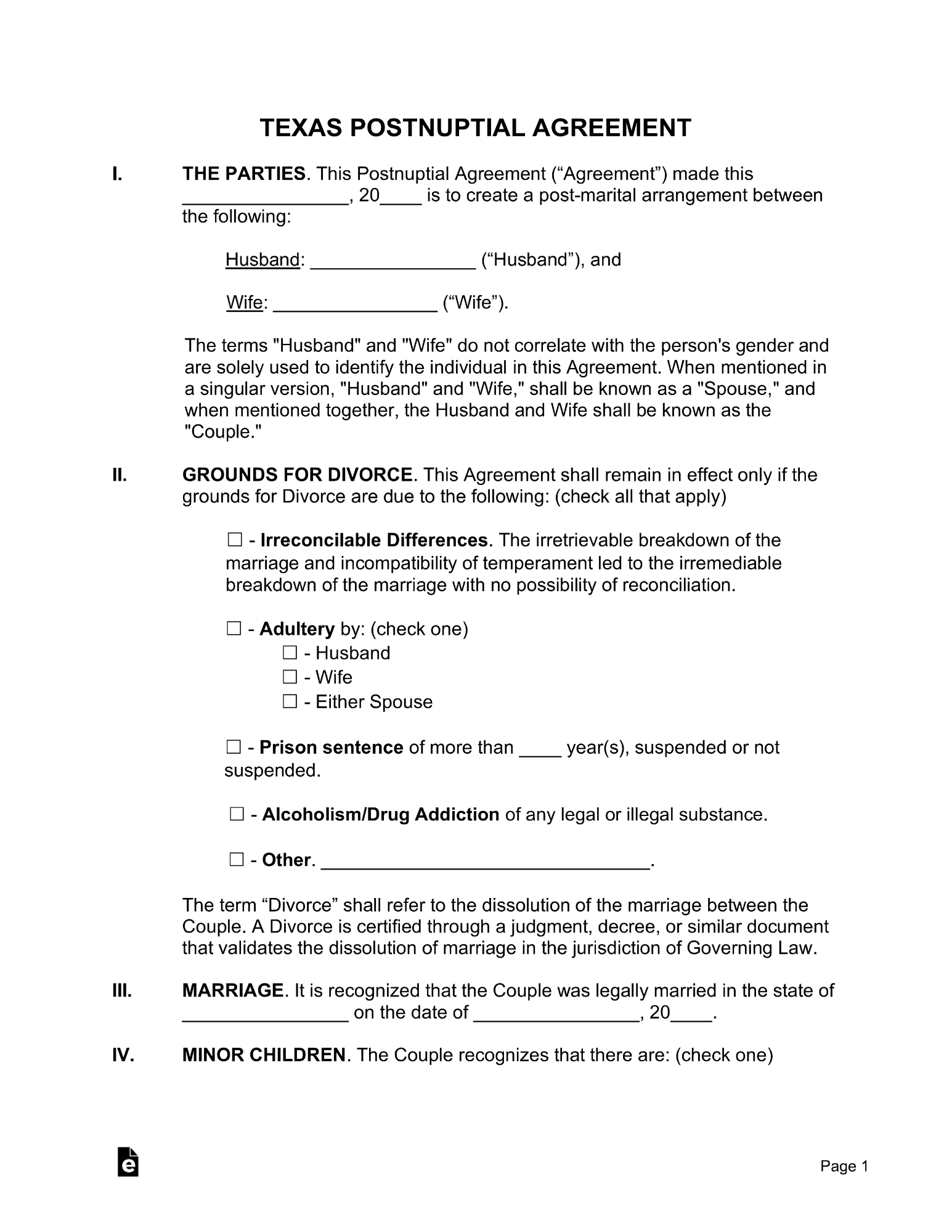
Texas Postnuptial Agreement

Full Conversation


Human lawyer.

Lexi

Lexi, Chatbot

I understand that you may be seeking legal assistance, and I'm here to help. What specific legal issue are you facing?

Human lawyer.

Lexi

Lexi, Chatbot

Have you already consulted with any other lawyers regarding this matter?

No.

Queeneth E. Esq

Queeneth E. Esq

Hello and welcome to our service. My name is Queeneth. I am an attorney with over 8 years of legal experience. I will do my best to assist you today. Could you please tell me more about the legal issue you're facing?

Can you please tell me which state or country you're located in? Could you share a bit more detail about the specific legal issue or situation you need help with?

I need help modifying the following verbiage as part of a post nuptial agreement in Texas:

"Unless a party can reasonably show that they solely own a piece of property, where either party commingles jointly owned property with separate property, any commingled property will be presumed to be shared property."

Queeneth E. Esq

Queeneth E. Esq

Thank you for the additional information. I am currently preparing a response to your question.

I have put sole and separate property money into two rental homes in the form of down payments, but I own them with my spouse. I also paid out of sole and separate money for our pool at our primary home. I want to ensure I get this money back upon divorce.

Queeneth E. Esq

Queeneth E. Esq

Thank you for your patience. Your current sentence is too broad for what you want, and in Texas it uses the wrong concepts. Texas uses “separate property” and “community property,” not “shared property,” and Texas already presumes property possessed during marriage is community property unless a spouse proves otherwise by clear and convincing evidence. Texas also allows spouses, by a written signed marital property agreement, to partition or exchange community property and to address reimbursement claims between marital estates.

Because you are saying: you used your sole/separate funds for the down payments on two rental homes that are owned with your spouse, and you used sole/separate funds for the pool at the primary home, you do not want a clause that says commingling turns everything into “shared property.” That wording could undercut your tracing and reimbursement position.

What you want instead is a clause that says joint title does not waive your separate-property reimbursement claim, and that your separate estate gets repaid first. Texas reimbursement law recognizes claims when one marital estate confers a benefit on another, subject to statutory limits, and marital-property agreements can assign or preserve those claims.

Queeneth E. Esq

Queeneth E. Esq

First, if the rental homes are jointly titled and you want repayment, a reimbursement clause is usually the better tool. If instead you want part of those houses themselves to become your separate property ownership interest, that is more like a partition/exchange provision and may also require deed work, not just a paragraph in a postnup. Texas permits spouses to partition or exchange community property by written signed agreement, and the property interest transferred becomes that spouse's separate property. (TX Fam Code § 4.102)

Second, your clause will be much stronger if the agreement includes:

  1. The property addresses
  2. The exact dollar amounts
  3. The date of each contribution
  4. The source account
  5. A statement that the funds were separate property
  6. A statement that the contributions were not gifts
  7. Attached bank statements / closing statements / invoices / receipts

The words "can reasonably show" are also too soft. In Texas, use "trace by clear and convincing evidence," or at least "trace with reasonably reliable documentation." The statute uses the clear-and-convincing standard for rebutting the community-property presumption. (TX Fam Code § 3.003)

A short redraft of just your original sentence would be:
"Unless otherwise expressly stated in writing, commingling of separate property with community property or jointly titled property shall not, by itself, convert the contributing spouse's separate property contribution into community property or a gift. To the extent a spouse can trace a contribution to that spouse's separate property, the contributing spouse shall retain a reimbursement claim for that contribution against the benefited property or estate." (TX Fam Code § 3.001)

That said, for your situation I would not stop there. I would use a specific reimbursement clause with addresses and amounts, because that is much better than relying on a generic sentence.

Do you have any other questions?

Thank you for this. I think in our case, if we divorced, we would sell the rentals, and then I would want my sole and separate down payment back, and then we would split what is left. Would this verbiage work for that? I don't think we would try to keep the houses.

Queeneth E. Esq

Queeneth E. Esq

Yes, for your actual goal, the clause should be rewritten as a sale-proceeds waterfall, not just a general reimbursement sentence. Texas law does allow spouses in a postmarital agreement to define property rights between themselves, and Texas reimbursement law recognizes claims when one marital estate benefits another. But if you want a cleaner result than "ask the divorce court to decide what is equitable," the agreement should say exactly what happens when the rentals are sold.

For your situation, the right concept is:

  1. The rentals can remain jointly owned during the marriage.
  2. Your down-payment funds are acknowledged as your separate property contributions.
  3. Those contributions are not gifts.
  4. On divorce and sale, the house is sold.
  5. Ordinary sale costs and liens are paid.
  6. Your separate down payment is reimbursed to you first.
  7. The remaining net proceeds are then split as agreed.

That is much better than a general "commingled property will be presumed shared" clause, because that broader wording could work against you. Texas also starts from a community-property presumption for property possessed during marriage unless proven otherwise, so being specific helps.

The two biggest drafting choices are:

  • Whether reimbursement is for the exact dollars contributed or for a percentage of equity.
  • Whether repayment comes only from that property's proceeds or from the broader marital estate if proceeds are short.

From what you said, it sounds like you want exact dollars back first, then split the rest. If so, the clause above is the right structure.

If mortgage principal was later paid down with community money, that can create mixed claims in the background. A postnup can simplify this by stating your repayment is limited to the original separate down payment amount only, with the remaining equity divided 50/50 after that. That avoids a later fight over appreciation, principal reduction, and offsets.

Thank you!

Queeneth E. Esq

Queeneth E. Esq

You're welcome. I am happy to have assisted you today.

Queeneth E. Esq

Queeneth E. Esq

5,738 satisfied customers

Queeneth E. Esq
Welcome! Have a similar question?

12 lawyers online now

0:00

By messaging AskALawyer, you agree to our Terms and Privacy Policy.

Jon
Jon

4.77 (556)

[MI] How can I prepare for divorce to protect assets?

15

5

Answered 2 months ago

Disclaimer


By messaging AskaLawyer.com, you agree to our Terms and have read our Privacy Policy.

The information provided on AskaLawyer.com is for general informational purposes only and does not constitute legal advice. While we strive to ensure the accuracy and timeliness of the information presented, we make no guarantees regarding its completeness or applicability to your specific circumstances.

Use of this website does not create an attorney-client relationship between you and AskaLawyer.com or any of its attorneys. Communications through this website, including any responses from attorneys, are not privileged or confidential. For advice tailored to your individual situation, we recommend consulting a licensed attorney in your jurisdiction.

AskaLawyer.com disclaims any liability for actions taken or not taken based on the content of this site. We are not responsible for any third-party content that may be accessed through this website. Reliance on any information provided herein is solely at your own risk.

Ask a Lawyer Logo
Ask a Lawyer Logo
Intake Questions
Step  of 3
Loading...

Lexi, Chatbot

How would you like your legal question to be answered?

Online

Legal AI

Using ChatGPT 4o

Loading...

How do you like to pay?

By proceeding with payment, you agree to our Terms and Privacy Policy. You authorize us to charge $ today and $ thereafter until canceled. You may cancel anytime in the My Account section to stop future charges.

Total Due:

After purchasing, your chat will begin with an attorney.

By proceeding with payment, you agree to our Terms and Privacy Policy. You authorize us to charge $ today and $ thereafter until canceled. You may cancel anytime in the My Account section to stop future charges.

Total Due:

After purchasing, your chat will begin with an attorney.

After connecting, your chat will begin with an attorney.

After choosing, your chat will continue with Legal AI.

It looks like you already have an account with Ask a Lawyer.

We have sent you a magic link to . Click the link in your email to sign in and continue your chat.

spin

Step of 6 •

You'll receive an email at as soon as the lawyer joins the conversation 🙏🏻😊

Over 90% of lawyers connect within 5 minutes. If you're not online at that moment, don't worry — the lawyer will reply to your message while you're away.

You're also welcome to stay in the chat while waiting to be connected 💬✨

Waiting for lawyer

0:00