During a divorce, will signing a quitclaim deed remove my spouse from the deed to our house?
In your case, since the house was purchased before marriage and the spouse is not on the loan, the situation is a bit more straightforward. The quitclaim deed, when signed, would transfer your spouse's interest in the property to you, assuming they are willing to sign it. However, it’s important to note that a quitclaim deed does not address any financial obligations, such as the mortgage loan. The loan will still remain in both your names unless you refinance it and remove your spouse from that as well.
If the divorce hasn't started yet, it might be a good idea to consider waiting until you have a clearer picture of how the divorce proceedings will unfold, especially if the property will be part of the divorce settlement. You might want to check with your local county clerk to see if there are any specific rules about property transfer during a divorce or if the quitclaim deed would still be valid once the divorce is filed.
Once the divorce is finalized, the division of property will usually be addressed, and a court order might be required for the final transfer of ownership. In some cases, a judge will issue a ruling on property distribution, and the quitclaim deed can be used to follow through on that order.
0
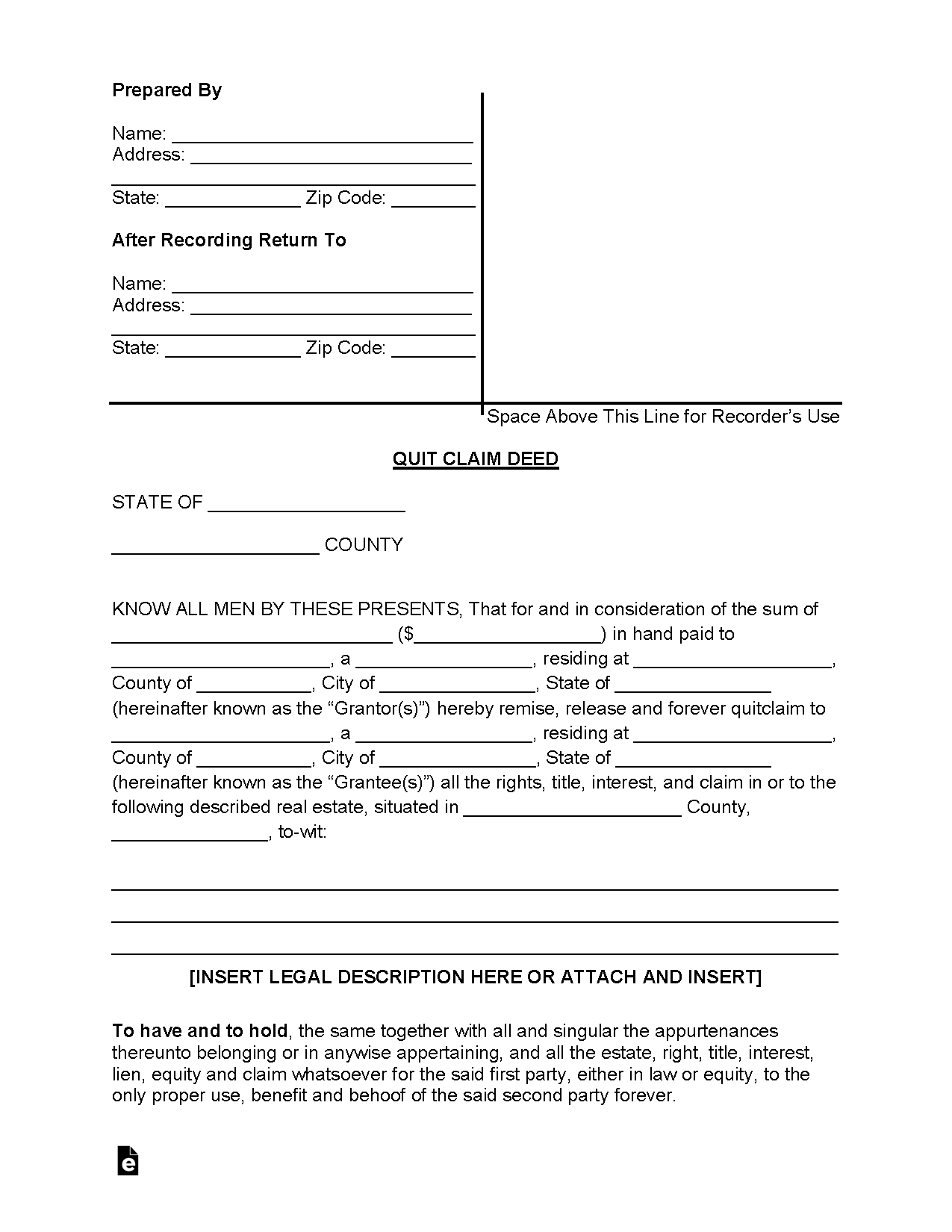
Quit Claim Deed Form
Full Conversation
If you go through a divorce, does the quit claim deed take the spouse off of the deed? They are not on the loan and the house was purchased before marriage.
Lexi, Chatbot
I understand that you're dealing with a divorce situation. Was the quit claim deed signed before or after the marriage?
It hasn't been signed yet. Was going to get it signed now. The divorce hasn't started yet.
Lexi, Chatbot
Have there been any discussions or agreements regarding the property in the divorce proceedings?
No.
Lexi, Chatbot
Is there anything else the Family Lawyer should know before I connect you? Rest assured they'll be able to help with removing spouse from deed.
No.
Brandon
Hi there and welcome to AskaLawyer. My name is Brandon and I'm an attorney.
Brandon
Where are you located?
Brandon
In your case, since the house was purchased before marriage and the spouse is not on the loan, the situation is a bit more straightforward. The quitclaim deed, when signed, would transfer your spouse's interest in the property to you, assuming they are willing to sign it. However, it’s important to note that a quitclaim deed does not address any financial obligations, such as the mortgage loan. The loan will still remain in both your names unless you refinance it and remove your spouse from that as well.
If the divorce hasn't started yet, it might be a good idea to consider waiting until you have a clearer picture of how the divorce proceedings will unfold, especially if the property will be part of the divorce settlement. You might want to check with your local county clerk to see if there are any specific rules about property transfer during a divorce or if the quitclaim deed would still be valid once the divorce is filed.
Once the divorce is finalized, the division of property will usually be addressed, and a court order might be required for the final transfer of ownership. In some cases, a judge will issue a ruling on property distribution, and the quitclaim deed can be used to follow through on that order.
Brandon
Did you understand my answer and did it address your concern?
Disclaimer
By messaging AskaLawyer.com, you agree to our Terms and have read our Privacy Policy.
The information provided on AskaLawyer.com is for general informational purposes only and does not constitute legal advice. While we strive to ensure the accuracy and timeliness of the information presented, we make no guarantees regarding its completeness or applicability to your specific circumstances.
Use of this website does not create an attorney-client relationship between you and AskaLawyer.com or any of its attorneys. Communications through this website, including any responses from attorneys, are not privileged or confidential. For advice tailored to your individual situation, we recommend consulting a licensed attorney in your jurisdiction.
AskaLawyer.com disclaims any liability for actions taken or not taken based on the content of this site. We are not responsible for any third-party content that may be accessed through this website. Reliance on any information provided herein is solely at your own risk.