[IN] Can I take legal action against my employer for unpaid overtime if they asked me to work extra hours off the clock?

Richard
Richard

76,546 satisfied customers

View context
Solved

Yes. You can sue your employer for unpaid overtime under both federal and state law. The Fair Labor Standards Act (FLSA) requires employers to pay non-exempt employees 1½ times their regular rate for any hours worked over 40 in a workweek. (29 U.S.C. § 207) Ordering you to “keep overtime off your timecard” is a direct violation of that law — the employer cannot avoid paying by instructing you not to record the time.

If you decide to pursue it, you may file a claim with the U.S. Department of Labor, Wage and Hour Division, or file a civil lawsuit in state or federal court. You could recover the unpaid overtime, an equal amount in liquidated damages, and potentially attorney’s fees. (29 U.S.C. § 204)

Keep any evidence you have — such as emails, texts, schedules, or records showing when you worked — since that documentation will support your claim.

In short: yes, you can sue, and the employer’s instructions not to record overtime are unlawful under the FLSA.

As for recording conversations, it depends on the laws in your state. Some states require both parties to consent to being recorded, while others only require one party's consent. If you're in a one-party consent state, you can legally record conversations you're part of without informing the other person. This could serve as evidence if you decide to take legal action. (IN Code § 35-33.5-5-5)

0

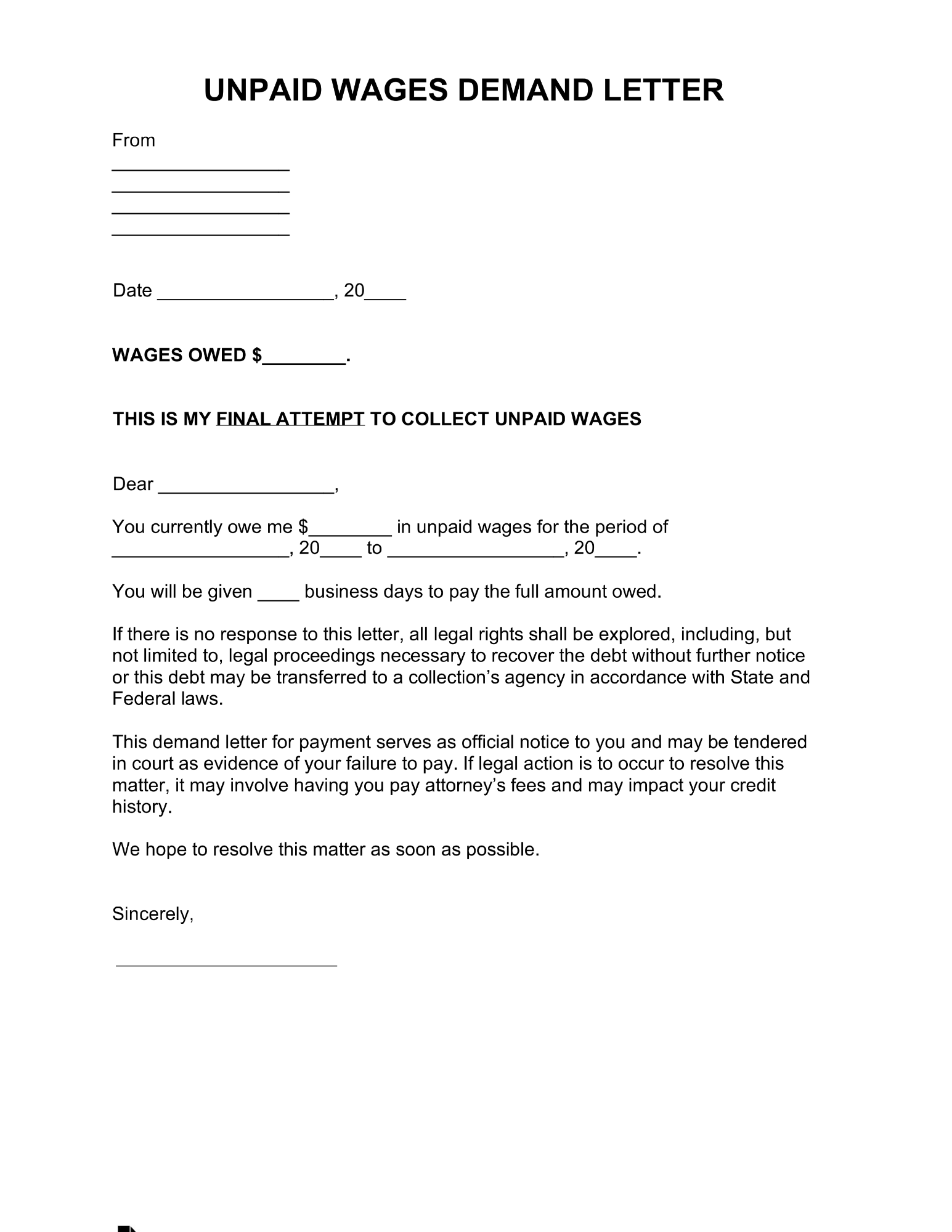
Unpaid Wages Demand Letter

Full Conversation


If my employers refuse to pay me for overtime can I sue them?

Lexi

Lexi, Chatbot

I understand how frustrating it can be when employers refuse to pay for overtime. Have you already discussed this issue with your employer or HR department?

I've already discussed it with my employer; on multiple occasions they have asked me to keep my overtime work off of my timecard.

Lexi

Lexi, Chatbot

How long have you been experiencing this issue with unpaid overtime?

Here and there, the problem started shortly after I got my new job. That was a little over a year ago.

Lexi

Lexi, Chatbot

Is there anything else the employment lawyer should know before I connect you? Rest assured they'll be able to help with your unpaid overtime.

No.

Richard

Richard

Hello. My name is Richard and I have been a licensed attorney for over 25 years and hope to be of assistance. Please be advised that this website is for information purposes only and I cannot formally represent users of this service or perform actual legal services on your behalf.

I understand you're dealing with an issue where your employer has asked you to keep overtime work off your timecard. Could you tell me more about any documentation or communications you've had with them regarding this matter?

Hello Richard, thank you for the response. Yes, my immediate superior asks me to leave work I do outside of my usual 40 hrs/week off of my timecard most of the time. It's for one reason or another, one time it was because I was doing stuff on my laptop and didn't leave my house, another he just felt that the task that I was called in for to do wasn't worth the overtime.

Richard

Richard

Thanks for sharing that. It sounds like a frustrating situation. Could you let me know where you're located? Employment laws can vary by state or country, so this will help me give you the best advice. Also, do you have any written communication or emails from your employer regarding the overtime work?

I work in Indiana, which I believe is a one-party consent state.

Well, I'm still unsure about what legal action I can take to resolve my employer refusing to pay me for my overtime work? I am also unsure if recording the conversations when he asks me to waive my overtime is adequate evidence for when I need to prove it?

Richard

Richard

Yes. You can sue your employer for unpaid overtime under both federal and state law. The Fair Labor Standards Act (FLSA) requires employers to pay non-exempt employees 1½ times their regular rate for any hours worked over 40 in a workweek. (29 U.S.C. § 207) Ordering you to “keep overtime off your timecard” is a direct violation of that law — the employer cannot avoid paying by instructing you not to record the time.

If you decide to pursue it, you may file a claim with the U.S. Department of Labor, Wage and Hour Division, or file a civil lawsuit in state or federal court. You could recover the unpaid overtime, an equal amount in liquidated damages, and potentially attorney’s fees. (29 U.S.C. § 204)

Keep any evidence you have — such as emails, texts, schedules, or records showing when you worked — since that documentation will support your claim.

In short: yes, you can sue, and the employer’s instructions not to record overtime are unlawful under the FLSA.

As for recording conversations, it depends on the laws in your state. Some states require both parties to consent to being recorded, while others only require one party's consent. If you're in a one-party consent state, you can legally record conversations you're part of without informing the other person. This could serve as evidence if you decide to take legal action. (IN Code § 35-33.5-5-5)

Richard

Richard

76,546 satisfied customers

Richard
Welcome! Have a similar question?

12 lawyers online now

0:00

By messaging AskALawyer, you agree to our Terms and Privacy Policy.

Disclaimer


By messaging AskaLawyer.com, you agree to our Terms and have read our Privacy Policy.

The information provided on AskaLawyer.com is for general informational purposes only and does not constitute legal advice. While we strive to ensure the accuracy and timeliness of the information presented, we make no guarantees regarding its completeness or applicability to your specific circumstances.

Use of this website does not create an attorney-client relationship between you and AskaLawyer.com or any of its attorneys. Communications through this website, including any responses from attorneys, are not privileged or confidential. For advice tailored to your individual situation, we recommend consulting a licensed attorney in your jurisdiction.

AskaLawyer.com disclaims any liability for actions taken or not taken based on the content of this site. We are not responsible for any third-party content that may be accessed through this website. Reliance on any information provided herein is solely at your own risk.

Ask a Lawyer Logo
Ask a Lawyer Logo
Intake Questions
Step  of 3
Loading...

Lexi, Chatbot

How would you like your legal question to be answered?

Online

Legal AI

Using ChatGPT 4o

Loading...

How do you like to pay?

By proceeding with payment, you agree to our Terms and Privacy Policy. You authorize us to charge $ today and $ thereafter until canceled. You may cancel anytime in the My Account section to stop future charges.

Total Due:

After purchasing, your chat will begin with an attorney.

By proceeding with payment, you agree to our Terms and Privacy Policy. You authorize us to charge $ today and $ thereafter until canceled. You may cancel anytime in the My Account section to stop future charges.

Total Due:

After purchasing, your chat will begin with an attorney.

After connecting, your chat will begin with an attorney.

After choosing, your chat will continue with Legal AI.

It looks like you already have an account with Ask a Lawyer.

We have sent you a magic link to . Click the link in your email to sign in and continue your chat.

spin

Step of 6 •

You'll receive an email at as soon as the lawyer joins the conversation 🙏🏻😊

Over 90% of lawyers connect within 5 minutes. If you're not online at that moment, don't worry — the lawyer will reply to your message while you're away.

You're also welcome to stay in the chat while waiting to be connected 💬✨

Waiting for lawyer

0:00