EsquireChamp
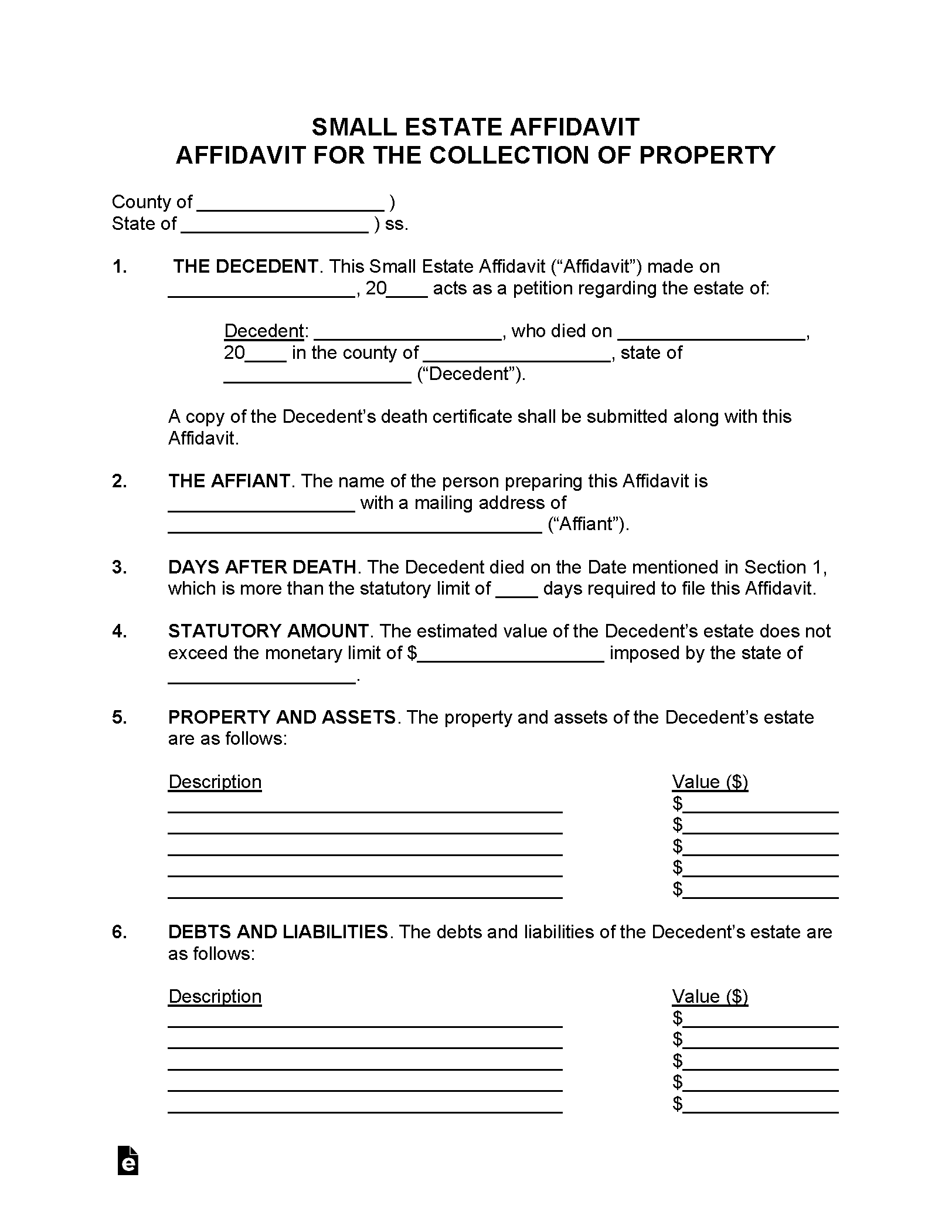
When completing a small estate affidavit, assets must generally be listed with sufficient specificity to identify them, and their distribution must align with the statutory requirements and the decedent's estate plan or intestate succession laws. Regarding the specific questions:
Listing Bank Accounts and Stocks Separately: Bank accounts and stocks should be listed separately in the affidavit to ensure clarity and proper identification of the assets. This is consistent with the general requirement that the affidavit must describe the decedent's property in a manner that allows for its identification and distribution to the rightful heirs or beneficiaries. For example, in In re Johnsson, a small estate affidavit was used to close out specific bank accounts, demonstrating the need for individual identification of such assets (In re Johnsson, 551 B.R. 384 (2016)).
Life Insurance Policy Paid to a Deceased Beneficiary: If a life insurance policy was paid to the decedent's mother, who subsequently passed away before the filing of the affidavit, the proceeds of the policy would likely become part of the mother's estate unless otherwise directed by the policy or applicable law. The affidavit should note the life insurance policy and its distribution, as insurance policies are often considered personal property. For instance, in Burkett v. Mott, the court discussed the treatment of insurance policy benefits as personal property, which can be subject to estate distribution (Burkett v. Mott by Maricopa County Public Fiduciary, 152 Ariz. 476 (1986)). Additionally, Pennsylvania regulations require listing insurance policies in estate-related forms, further emphasizing the importance of including such assets in the affidavit (55 Pa. Code § 257.24).
Truck Registration Without Title: If the truck's title cannot be located, the affidavit should still list the truck as an asset, and the affiant may need to take additional steps to transfer ownership. Under small estate statutes, the affiant is authorized to collect and distribute the decedent's assets, which may include facilitating the transfer of vehicle ownership. For example, in In re Fowler, the statutes authorize the affiant to liquidate or manage assets to satisfy claims or facilitate distributions (In re Fowler, 400 S.W.3d 796 (2013)). The assessment and registration in your name may suffice for practical purposes, but you should verify with the relevant motor vehicle department whether additional documentation is required to complete the title transfer.
Requirements for Listing Assets in a Small Estate Affidavit
Small estate affidavits must include a detailed description of the decedent's assets to ensure proper identification and distribution. This includes listing each bank account and stock separately, as demonstrated in In re Johnsson, where specific bank accounts were closed using the affidavit (In re Johnsson, 551 B.R. 384 (2016)). The affidavit must also comply with statutory requirements, such as those outlined in Illinois law, which mandates that the affidavit take a specific form and include all necessary information for asset distribution (Radwill v. Romeo, Not Reported in N.E.2d (2013)).
Treatment of Life Insurance Proceeds
Life insurance proceeds paid to a deceased beneficiary, such as the decedent's mother, should be addressed in the affidavit. These proceeds may become part of the mother's estate unless otherwise specified. Courts have recognized insurance policies as personal property subject to estate distribution, as seen in Burkett v. Mott (Burkett v. Mott by Maricopa County Public Fiduciary, 152 Ariz. 476 (1986)). Additionally, Pennsylvania regulations emphasize the importance of listing insurance policies in estate-related forms (55 Pa. Code § 257.24).
Addressing Missing Vehicle Titles
When a vehicle title is missing, the affiant should still list the vehicle in the affidavit and take steps to transfer ownership. Small estate statutes authorize the affiant to manage and distribute assets, including vehicles, as necessary. In In re Fowler, the court noted that affiants are empowered to liquidate or manage assets to facilitate distributions (In re Fowler, 400 S.W.3d 796 (2013)). While the assessment and registration in your name may suffice temporarily, you should confirm with the motor vehicle department whether additional documentation is required to complete the title transfer.


 Solved
 Create Document


 13
13
 3
3