Is my grandmother’s ladybird deed set up correctly for Medicare/Medicaid eligibility?

Barrister
Barrister

65,716 satisfied customers

View context
Solved

Medicare and Medicaid are separate programs with very different rules, and that distinction matters a lot for estate planning. Medicare is a federal health insurance program and does not have estate recovery. Medicaid, on the other hand, is means-tested and is subject to mandatory estate recovery for certain benefits, particularly long-term care.

Under federal law, states are required to seek recovery from a Medicaid recipient’s estate for the cost of certain benefits paid after age 55, including nursing home care. This requirement comes from 42 U.S.C. § 1396p(b). Each state implements this requirement through its own Medicaid estate recovery program, but the federal mandate is the baseline.

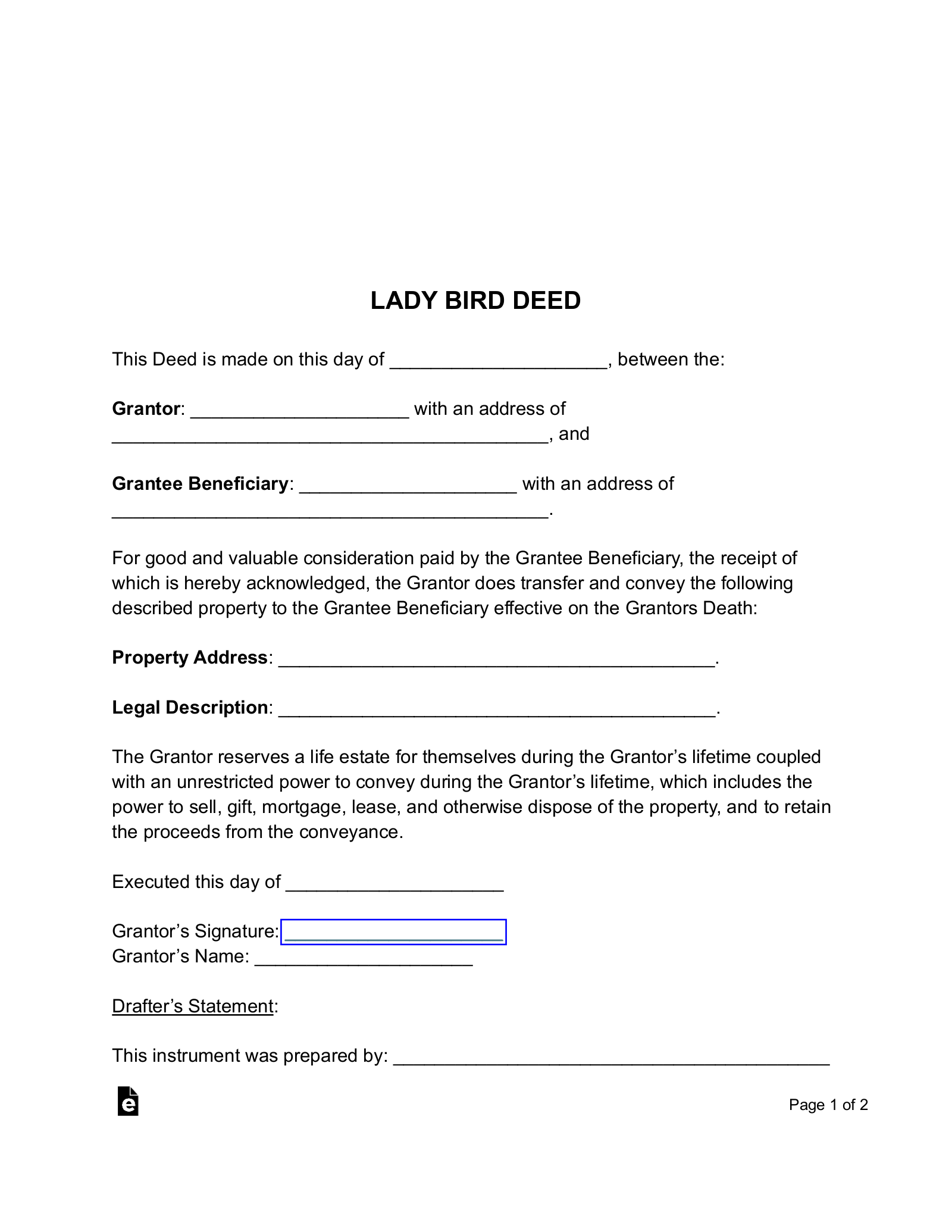
If your concern is Medicaid estate recovery, specifically protecting the home from being claimed after she passes due to Medicaid-funded long-term care, then yes — a Lady Bird deed (enhanced life estate deed) is commonly used in states that recognize it to accomplish that goal.

A Lady Bird deed works because the homeowner retains an enhanced life estate with the power to sell, mortgage, or revoke the deed during her lifetime, while the remainder interest passes automatically to the named beneficiaries at death. In states that recognize enhanced life estate deeds, the property typically does not become part of the probate estate at death. Since many Medicaid estate recovery programs are limited to the probate estate, the home may fall outside the scope of recovery.

This distinction is critical:

  • Medicaid recovery generally applies to assets that pass through probate.
  • A Lady Bird deed causes the property to transfer by operation of law, not through probate.

As a result, in practice and under state Medicaid policy in Lady Bird–recognition states, the home is often not subject to estate recovery, even though Medicaid benefits were received during life.

That said, Lady Bird deeds are not authorized by statute in every state and are recognized primarily through state law and practice. They are commonly accepted in states such as Michigan, Florida, Texas, and a limited number of others, but they are not valid everywhere. Additionally, some states have expanded estate recovery beyond probate, which can change the analysis.

Because Medicaid estate recovery is governed by a mix of federal law (42 U.S.C. § 1396p) and state-specific Medicaid rules, it is important to confirm:

  • Whether your state recognizes Lady Bird deeds, and
  • Whether your state’s recovery program is limited to the probate estate or expanded beyond it.

If your goal is Medicaid planning and home protection, a Lady Bird deed is often an effective tool when used in the right state, but it should be implemented with careful attention to state Medicaid policy to ensure it actually achieves the intended protection.

0

Lady Bird Deed

Full Conversation


Hi! We are setting up a ladybird deed to have my grandmother’s home transferred to my husband and me once she passes, to ensure she remains within Medicare/Medicaid guidelines. Are you able to review the document and make sure it checks all the boxes for this?

Lexi

Lexi, Chatbot

It’s great that you’re taking steps to protect your grandmother’s home. Have you already drafted the ladybird deed, or are you looking for assistance drafting it?

I already drafted one.

Lexi

Lexi, Chatbot

Have you consulted with any other professionals, such as a financial advisor or elder law attorney, regarding this deed?

No. It’s a simple home.

Lexi

Lexi, Chatbot

Is there anything else the lawyer should know before I connect you?

Nope.

Barrister

Barrister

Hello and welcome. My name is Barrister, and I am a licensed attorney. I’m happy to help. There may be short delays in my responses as I work with multiple clients at once.

If you can upload the document, I can review it and let you know if anything appears incorrect.

Hi! Here’s a link to the document.

Barrister

Barrister

Assuming the grandmother is the current owner and the property is intended to transfer to you and your husband, the deed appears to be completed correctly. Your grandmother will need to sign it in front of a notary public, and then it must be recorded with the local land records office.

Awesome! Can you tell me if this will affect her Medicare or Medicaid benefits? Also, is there anything we need to add to avoid a large tax bill every year?

Barrister

Barrister

I’m limited to one legal topic per question thread under site rules. You would need to post a new question for Medicaid-related issues, but you’re welcome to request me again if you’d like.

My original question was about Medicare and Medicaid.

“We are setting up a ladybird deed to ensure she remains within Medicare/Medicaid guidelines. Are you able to review the document and make sure it checks all the boxes for this?”

Barrister

Barrister

I apologize for the confusion. I understood your initial request as asking whether the deed was legally valid and recordable, which it is.

Barrister

Barrister

Medicare and Medicaid are separate programs with very different rules, and that distinction matters a lot for estate planning. Medicare is a federal health insurance program and does not have estate recovery. Medicaid, on the other hand, is means-tested and is subject to mandatory estate recovery for certain benefits, particularly long-term care.

Under federal law, states are required to seek recovery from a Medicaid recipient’s estate for the cost of certain benefits paid after age 55, including nursing home care. This requirement comes from 42 U.S.C. § 1396p(b). Each state implements this requirement through its own Medicaid estate recovery program, but the federal mandate is the baseline.

If your concern is Medicaid estate recovery, specifically protecting the home from being claimed after she passes due to Medicaid-funded long-term care, then yes — a Lady Bird deed (enhanced life estate deed) is commonly used in states that recognize it to accomplish that goal.

A Lady Bird deed works because the homeowner retains an enhanced life estate with the power to sell, mortgage, or revoke the deed during her lifetime, while the remainder interest passes automatically to the named beneficiaries at death. In states that recognize enhanced life estate deeds, the property typically does not become part of the probate estate at death. Since many Medicaid estate recovery programs are limited to the probate estate, the home may fall outside the scope of recovery.

This distinction is critical:

  • Medicaid recovery generally applies to assets that pass through probate.
  • A Lady Bird deed causes the property to transfer by operation of law, not through probate.

As a result, in practice and under state Medicaid policy in Lady Bird–recognition states, the home is often not subject to estate recovery, even though Medicaid benefits were received during life.

That said, Lady Bird deeds are not authorized by statute in every state and are recognized primarily through state law and practice. They are commonly accepted in states such as Michigan, Florida, Texas, and a limited number of others, but they are not valid everywhere. Additionally, some states have expanded estate recovery beyond probate, which can change the analysis.

Because Medicaid estate recovery is governed by a mix of federal law (42 U.S.C. § 1396p) and state-specific Medicaid rules, it is important to confirm:

  • Whether your state recognizes Lady Bird deeds, and
  • Whether your state’s recovery program is limited to the probate estate or expanded beyond it.

If your goal is Medicaid planning and home protection, a Lady Bird deed is often an effective tool when used in the right state, but it should be implemented with careful attention to state Medicaid policy to ensure it actually achieves the intended protection.

Perfect. Thank you for your help.

Barrister

Barrister

Glad to help. Be safe.

Barrister

Barrister

65,716 satisfied customers

Barrister
Welcome! Have a similar question?

12 lawyers online now

0:00

By messaging AskALawyer, you agree to our Terms and Privacy Policy.

Disclaimer


By messaging AskaLawyer.com, you agree to our Terms and have read our Privacy Policy.

The information provided on AskaLawyer.com is for general informational purposes only and does not constitute legal advice. While we strive to ensure the accuracy and timeliness of the information presented, we make no guarantees regarding its completeness or applicability to your specific circumstances.

Use of this website does not create an attorney-client relationship between you and AskaLawyer.com or any of its attorneys. Communications through this website, including any responses from attorneys, are not privileged or confidential. For advice tailored to your individual situation, we recommend consulting a licensed attorney in your jurisdiction.

AskaLawyer.com disclaims any liability for actions taken or not taken based on the content of this site. We are not responsible for any third-party content that may be accessed through this website. Reliance on any information provided herein is solely at your own risk.

Ask a Lawyer Logo
Ask a Lawyer Logo
Intake Questions
Step  of 3
Loading...

Lexi, Chatbot

How would you like your legal question to be answered?

Online

Legal AI

Using ChatGPT 4o

Loading...

How do you like to pay?

By proceeding with payment, you agree to our Terms and Privacy Policy. You authorize us to charge $ today and $ thereafter until canceled. You may cancel anytime in the My Account section to stop future charges.

Total Due:

After purchasing, your chat will begin with an attorney.

By proceeding with payment, you agree to our Terms and Privacy Policy. You authorize us to charge $ today and $ thereafter until canceled. You may cancel anytime in the My Account section to stop future charges.

Total Due:

After purchasing, your chat will begin with an attorney.

After connecting, your chat will begin with an attorney.

After choosing, your chat will continue with Legal AI.

It looks like you already have an account with Ask a Lawyer.

We have sent you a magic link to . Click the link in your email to sign in and continue your chat.

spin

Step of 6 •

You'll receive an email at as soon as the lawyer joins the conversation 🙏🏻😊

Over 90% of lawyers connect within 5 minutes. If you're not online at that moment, don't worry — the lawyer will reply to your message while you're away.

You're also welcome to stay in the chat while waiting to be connected 💬✨

Waiting for lawyer

0:00