[WI] How do I transfer my property into a trust?
Got it. Here’s how it works:
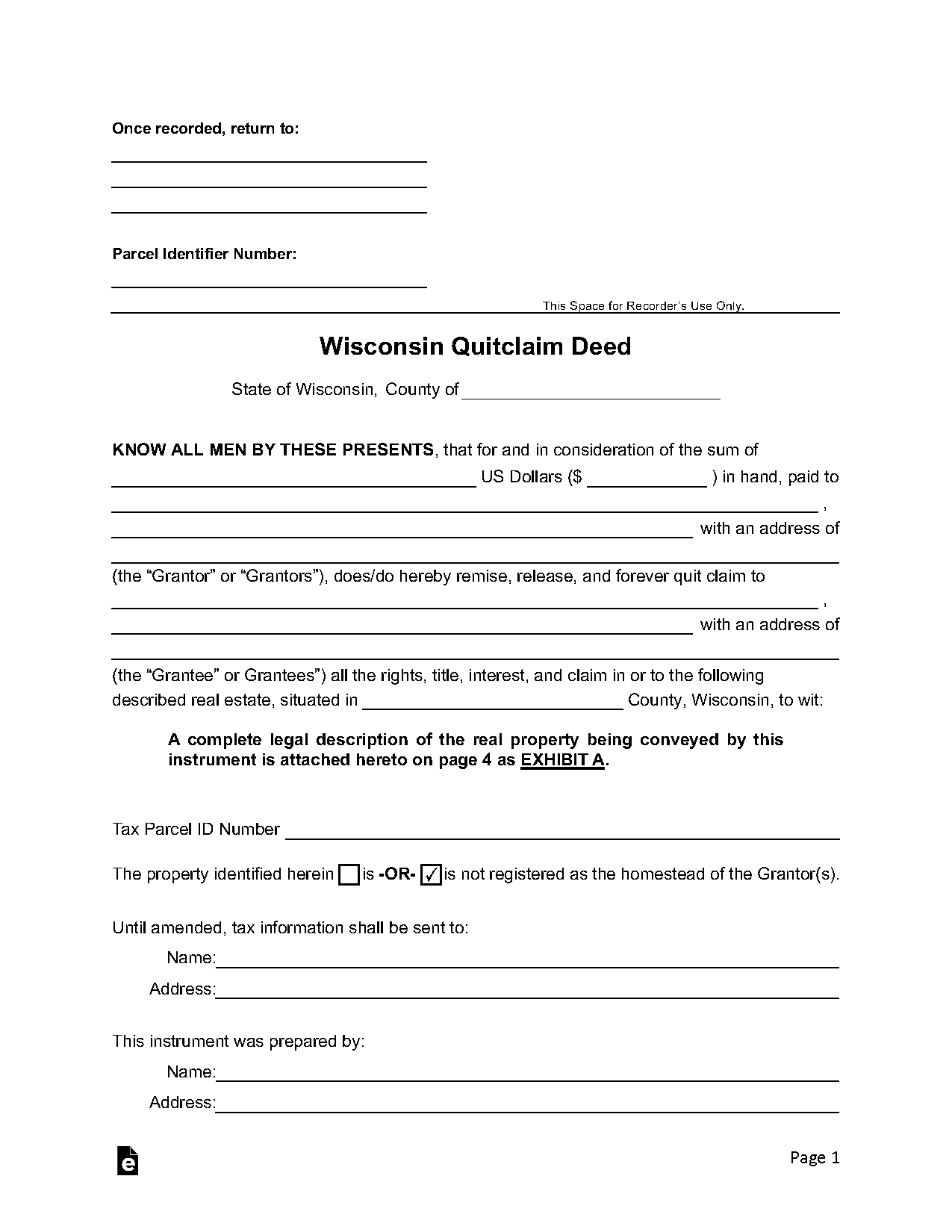
To move your Wisconsin property into your revocable trust, you don’t just “word” it into the trust—you must formally transfer ownership by retitling the property. This is done through a new deed, usually a quitclaim deed (Wis. Stat. § 706.05). The deed would name you (the current owner) as grantor and the trust as grantee, using wording like:
“John A. Doe, as Grantor, to John A. Doe, Trustee of the Doe Family Revocable Trust dated January 1, 2023.”
The deed must also include the property’s full legal description, exactly as shown on the existing deed (§ 706.05(2m)). After signing in front of a notary, record it with the county Register of Deeds. Notify your lender if there’s a mortgage (most won’t call the loan due if it’s a revocable trust) and update your homeowner’s insurance to list the trust.
Full Conversation

I want to add a property that I own up north to a trust. What’s the best way to word that?

Have you already set up a trust for this purpose?

Yes.

Are you looking to transfer ownership of the property into the trust’s name?

Yes.

Is there anything else the lawyer should know?

No.

Hello and thank you for reaching out! I’m Jon, a licensed attorney with over 13 years of experience. What state is the property located in, and where was the trust formed?

Wisconsin.

Both the property and the trust?

Yes.

And what type of trust—revocable or irrevocable?

Revocable.

Got it. Here’s how it works:
To move your Wisconsin property into your revocable trust, you don’t just “word” it into the trust—you must formally transfer ownership by retitling the property. This is done through a new deed, usually a quitclaim deed (Wis. Stat. § 706.05). The deed would name you (the current owner) as grantor and the trust as grantee, using wording like:
“John A. Doe, as Grantor, to John A. Doe, Trustee of the Doe Family Revocable Trust dated January 1, 2023.”
The deed must also include the property’s full legal description, exactly as shown on the existing deed (§ 706.05(2m)). After signing in front of a notary, record it with the county Register of Deeds. Notify your lender if there’s a mortgage (most won’t call the loan due if it’s a revocable trust) and update your homeowner’s insurance to list the trust.

In the trust, do I need to use verbiage for the property? I understand how to file the quitclaim deed and will do that with an attorney.

Generally, no. The trust document usually doesn’t list specific real property—it just says “all assets titled in the trust” are governed by it. That’s enough.

I’m confused because the last page of the trust form I filled out had space for property information.

I can’t see the form, but if it asks, you can fill it in—it won’t hurt. It’s not legally required, just optional.

Okay, it’s the digital form from this website.

Then you can fill it in. Again, not required by law, but not wrong either.

Okay.

Glad I could help! If you need anything else, don’t hesitate to ask.