[OR] How do beneficiary timing, property listing, and contingent or specific gifts affect ownership and distribution of a trust?

Jon
Jon

556 satisfied customers

View context
Solved

In general, for a married couple’s revocable living trust, the usual goal is for the surviving spouse to maintain full control of all trust assets. This is normally done by specifying in the trust that when the first spouse passes away, the trust either remains revocable or becomes partially irrevocable, and the surviving spouse becomes the sole Trustee and lifetime beneficiary. (OR Rev Stat § 130.505)

The assets then pass to the other beneficiaries—often called “remainder beneficiaries”—only after the surviving spouse dies. To make this work, your trust needs clear language defining how control and benefits shift between spouses and what triggers the final distribution to other beneficiaries.

Regarding the trust’s address and including your new Oregon house, the trust should use a current mailing address, usually the main residence of the Grantors (you and your spouse). Once you close on the Oregon house and move in, that can become the new address. While the address itself doesn’t affect the validity of the trust, it should always be accurate. As for the house, you should wait until closing to transfer it into the trust. At that time, the title company or closing attorney can prepare the deed so the property goes directly into the trust’s name. Trying to do it afterward just creates an extra step. (OR Rev Stat § 93.010)

If you want to leave a specific asset, like a vehicle, to someone, you don’t need to give them a percentage of the trust. You can simply include a specific bequest in the trust document stating that the Trustee should distribute the vehicle to that person after the last surviving spouse passes.

It’s also important to clearly identify any contingent beneficiaries. These are people who inherit only if the primary beneficiary has passed away or cannot take the asset. Your trust should list their full legal names and clearly describe under what circumstances they inherit. (OR Rev Stat § 130.010)

Given the complexity of what you’re doing and the draft you already have, the safest step is to schedule a consultation with a trust and estate attorney in Oregon or Washington to ensure your intentions are properly captured and the trust is legally effective.

0

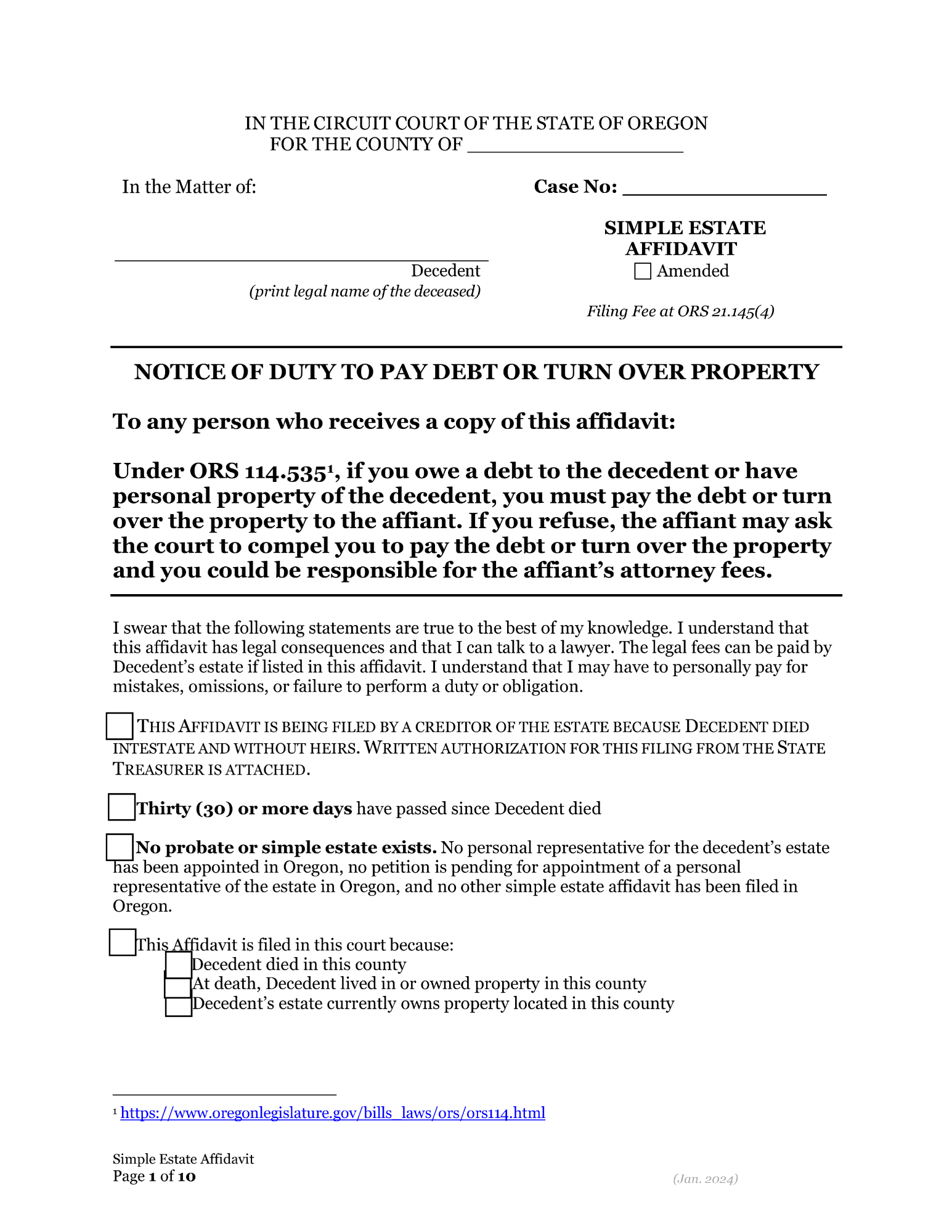
Oregon Small Estate Affidavit

Full Conversation


  1. Does the beneficiary/inheritance only become effective when both my spouse and I die? We want to ensure that if only one has died, everything continues to be full ownership to the other spouse.
  2. What address should we put on the trust given it is for a house we are buying and expect to be at once it’s in place? Also, should we wait to list the house we are buying until closing when setting up the trust?
  3. Does someone who is not a beneficiary of a percentage of assets, but is specific to a vehicle, need to be listed directly as beneficiary (with 0% general share)?
  4. Do contingent beneficiaries need to be listed as beneficiaries or just referenced in full name on the inheritance description?
Lexi

Lexi, Chatbot

I understand that navigating inheritance and trust issues can be quite complex. Can you share if you have already established a trust or are in the process of creating one?

Creating one.

Lexi

Lexi, Chatbot

Are there any specific assets or properties you are particularly concerned about in relation to your spouse's ownership?

We want whichever spouse is surviving to maintain all ownership of everything in the trust. We only want other beneficiaries to come after both spouses pass.

Jon

Jon

Hello, and thank you for reaching out! I’m Jon, a licensed attorney with over 13 years of experience, here to help.

I understand legal matters can feel overwhelming, but you’re in good hands. My goal is to explain things clearly and guide you toward the best possible solution for your situation. Just a quick note: our conversation is for general legal information only and does not create an attorney-client relationship.

Thanks for sharing your situation. First, could you let me know which state you're in? This helps because trust and inheritance laws can vary by location. Also, have you consulted with any legal professionals about setting up your trust so far?

We will be in Oregon when we purchase a house (the main reason to establish the trust), but we are currently in Washington.

We have not consulted any attorneys yet.

Jon

Jon

Thanks for sharing that! Since you're in the process of creating a trust, have you decided on the type of trust you want to establish? For example, are you considering a revocable living trust or another type?

Revocable living trust is what we are wanting. We created a draft already just want to ensure we have done this correctly.

Jon

Jon

To make sure everything is set up correctly, could you tell me if you've included any specific provisions for what happens to the trust assets upon the death of one spouse?

We have not.

Jon

Jon

Got it. Have you considered how you want to handle the designation of beneficiaries and contingent beneficiaries in your trust? This can help ensure your assets are distributed according to your wishes after both spouses have passed.

Do we need to specify that then? If so, how does that work with beneficiary percentages?
Yes, we wrote down the beneficiaries with percentages, then special provisions.

Jon

Jon

Understood! I believe I have all the information I need. Is there anything else you'd like to add before I start working on your answer? If not, I’ll get started right away.

The contingent beneficiaries are listed within the special provisions. We did include one beneficiary that is not receiving a percentage, but will be receiving a vehicle.

Jon

Jon

I just need a few minutes to put together a complete response for you. It shouldn’t take longer than about 4–5 minutes, and I want to make sure it’s clear and comprehensive. Thanks so much for waiting—I really appreciate your patience.

Thank you.

Jon

Jon

In general, for a married couple’s revocable living trust, the usual goal is for the surviving spouse to maintain full control of all trust assets. This is normally done by specifying in the trust that when the first spouse passes away, the trust either remains revocable or becomes partially irrevocable, and the surviving spouse becomes the sole Trustee and lifetime beneficiary. (OR Rev Stat § 130.505)

The assets then pass to the other beneficiaries—often called “remainder beneficiaries”—only after the surviving spouse dies. To make this work, your trust needs clear language defining how control and benefits shift between spouses and what triggers the final distribution to other beneficiaries.

Regarding the trust’s address and including your new Oregon house, the trust should use a current mailing address, usually the main residence of the Grantors (you and your spouse). Once you close on the Oregon house and move in, that can become the new address. While the address itself doesn’t affect the validity of the trust, it should always be accurate. As for the house, you should wait until closing to transfer it into the trust. At that time, the title company or closing attorney can prepare the deed so the property goes directly into the trust’s name. Trying to do it afterward just creates an extra step. (OR Rev Stat § 93.010)

If you want to leave a specific asset, like a vehicle, to someone, you don’t need to give them a percentage of the trust. You can simply include a specific bequest in the trust document stating that the Trustee should distribute the vehicle to that person after the last surviving spouse passes.

It’s also important to clearly identify any contingent beneficiaries. These are people who inherit only if the primary beneficiary has passed away or cannot take the asset. Your trust should list their full legal names and clearly describe under what circumstances they inherit. (OR Rev Stat § 130.010)

Given the complexity of what you’re doing and the draft you already have, the safest step is to schedule a consultation with a trust and estate attorney in Oregon or Washington to ensure your intentions are properly captured and the trust is legally effective.

Is there boilerplate language on the surviving spouse to include?

Jon

Jon

“Boilerplate” trust language can be dangerous. Washington and Oregon treat property and trusts differently, and tax-planning language can accidentally make portions of the trust irrevocable after the first death, which would prevent the surviving spouse from making changes.

Okay, thank you.

Jon

Jon

Great! I do hope the information I provided was helpful and addressed your question. If there's anything else you need, please don't hesitate to reach out—I’m always happy to assist. Wishing you a fantastic day ahead!

You too.

Jon

Jon

556 satisfied customers

Jon
Welcome! Have a similar question?

12 lawyers online now

0:00

By messaging AskALawyer, you agree to our Terms and Privacy Policy.

Disclaimer


By messaging AskaLawyer.com, you agree to our Terms and have read our Privacy Policy.

The information provided on AskaLawyer.com is for general informational purposes only and does not constitute legal advice. While we strive to ensure the accuracy and timeliness of the information presented, we make no guarantees regarding its completeness or applicability to your specific circumstances.

Use of this website does not create an attorney-client relationship between you and AskaLawyer.com or any of its attorneys. Communications through this website, including any responses from attorneys, are not privileged or confidential. For advice tailored to your individual situation, we recommend consulting a licensed attorney in your jurisdiction.

AskaLawyer.com disclaims any liability for actions taken or not taken based on the content of this site. We are not responsible for any third-party content that may be accessed through this website. Reliance on any information provided herein is solely at your own risk.

Ask a Lawyer Logo
Ask a Lawyer Logo
Intake Questions
Step  of 3
Loading...

Lexi, Chatbot

How would you like your legal question to be answered?

Online

Legal AI

Using ChatGPT 4o

Loading...

How do you like to pay?

By proceeding with payment, you agree to our Terms and Privacy Policy. You authorize us to charge $ today and $ thereafter until canceled. You may cancel anytime in the My Account section to stop future charges.

Total Due:

After purchasing, your chat will begin with an attorney.

By proceeding with payment, you agree to our Terms and Privacy Policy. You authorize us to charge $ today and $ thereafter until canceled. You may cancel anytime in the My Account section to stop future charges.

Total Due:

After purchasing, your chat will begin with an attorney.

After connecting, your chat will begin with an attorney.

After choosing, your chat will continue with Legal AI.

It looks like you already have an account with Ask a Lawyer.

We have sent you a magic link to . Click the link in your email to sign in and continue your chat.

spin

Step of 6 •

You'll receive an email at as soon as the lawyer joins the conversation 🙏🏻😊

Over 90% of lawyers connect within 5 minutes. If you're not online at that moment, don't worry — the lawyer will reply to your message while you're away.

You're also welcome to stay in the chat while waiting to be connected 💬✨

Waiting for lawyer

0:00