[FL] As trustee of a trust, should I use a warranty deed or a quitclaim deed to transfer property to a beneficiary?

My sister needs a Transfer Title from a Trust in Florida. I am the trustee. What should she use, a General Warranty Deed form or a Quitclaim Deed form?

14

4

Barrister
Barrister

65,716 satisfied customers

View context
Solved

Either a General Warranty Deed or a Quitclaim Deed can be used to transfer real property out of a trust, as long as the deed is executed by the acting trustee(s) in their fiduciary capacity and properly recorded.

A Quitclaim Deed conveys whatever interest the trust holds in the property, if any, without warranties of title. This means the trust is not guaranteeing that title is clear or free of defects; it is simply transferring its interest. Quitclaim deeds are commonly used in intra-family transfers, trust distributions, or situations where the parties already know the property’s history and are comfortable accepting the property “as is” from a title perspective.

A General Warranty Deed, by contrast, provides the strongest protection to the grantee. It includes covenants that the grantor (here, the trust) owns the property, has the right to convey it, and that the title is free from undisclosed encumbrances. It also warrants against title defects arising both before and during the trust’s ownership. Because of these guarantees, warranty deeds are often preferred when there is uncertainty about the property’s title history or when a lender or title insurer requires them.

As a general legal principle recognized across jurisdictions, trustees have authority to convey trust property in accordance with the trust instrument and applicable trust law (see, e.g., Uniform Trust Code § 815, adopted in some form in many states), and the choice between a quitclaim deed and a warranty deed primarily affects the level of title protection, not the validity of the transfer itself.

In a family situation where the parties are familiar with the property, there are no known title issues, and no lender requirements, a Quitclaim Deed is typically sufficient and simpler for transferring property from the trust to your sister. If there are any concerns about title defects or future disputes, using a General Warranty Deed may provide additional peace of mind.

0

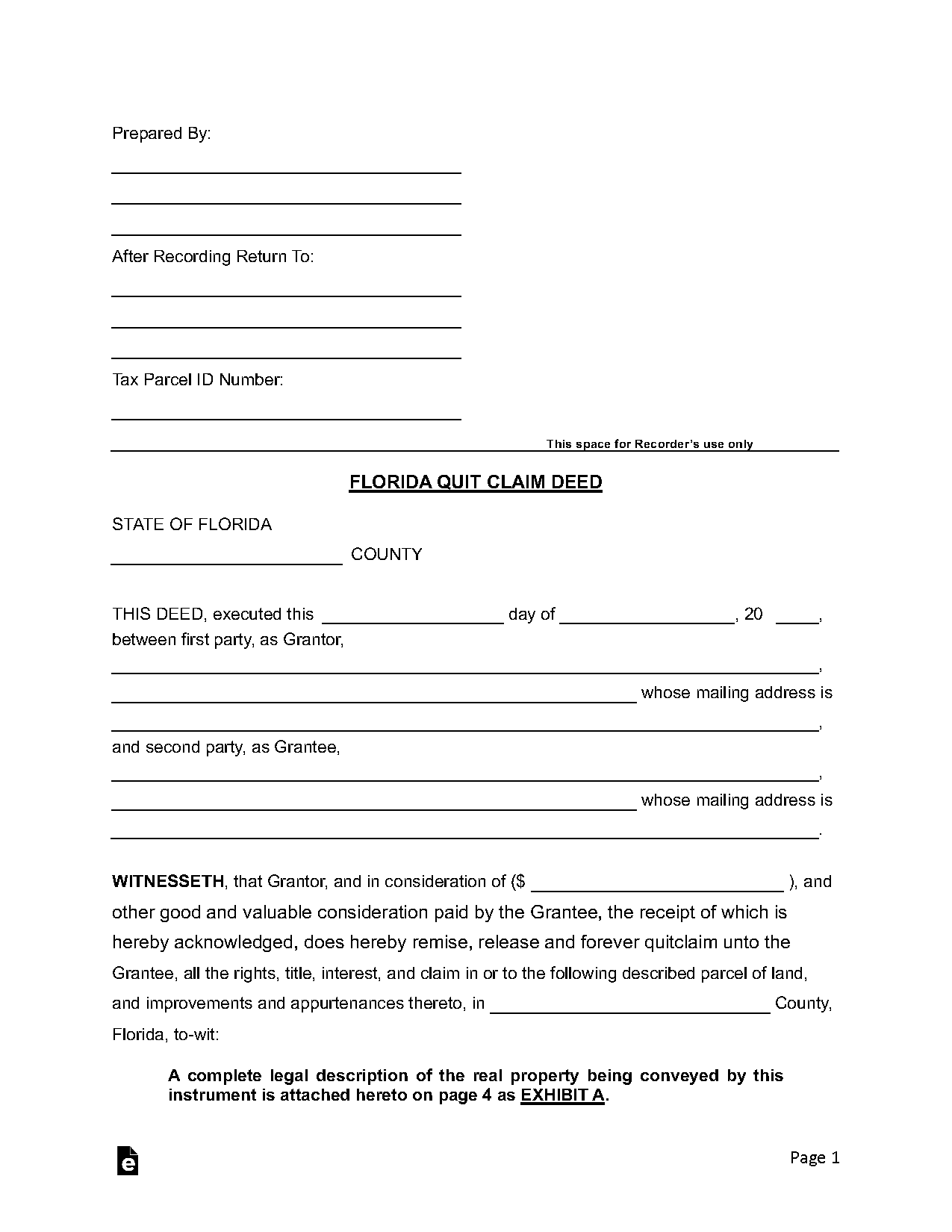
Quit Claim Deed

Full Conversation


My sister needs a Transfer Title from a Trust in Florida. I am the trustee. What should she use, a General Warranty Deed form or a Quitclaim Deed form?

Lexi

Lexi, Chatbot

I understand that navigating trust and title transfers can be complex. Have you already reviewed the terms of the trust regarding the transfer of the title?

I don’t know.

Lexi

Lexi, Chatbot

Is there a specific reason your sister is considering either the General Warranty Deed or Quitclaim Deed for this transfer?

I don’t know.

Lexi

Lexi, Chatbot

Is there anything else the Estate Lawyer should know before I connect you? Rest assured they’ll be able to help with the title transfer.

I don’t know.

Barrister

Barrister

Hello and welcome to the site. My name is Barrister and I am a licensed attorney. I understand this situation can be confusing.

Can you tell me who created the trust? Was it your sister?

This was for my mom.

Barrister

Barrister

Either a General Warranty Deed or a Quitclaim Deed can be used to transfer real property out of a trust, as long as the deed is executed by the acting trustee(s) in their fiduciary capacity and properly recorded.

A Quitclaim Deed conveys whatever interest the trust holds in the property, if any, without warranties of title. This means the trust is not guaranteeing that title is clear or free of defects; it is simply transferring its interest. Quitclaim deeds are commonly used in intra-family transfers, trust distributions, or situations where the parties already know the property’s history and are comfortable accepting the property “as is” from a title perspective.

A General Warranty Deed, by contrast, provides the strongest protection to the grantee. It includes covenants that the grantor (here, the trust) owns the property, has the right to convey it, and that the title is free from undisclosed encumbrances. It also warrants against title defects arising both before and during the trust’s ownership. Because of these guarantees, warranty deeds are often preferred when there is uncertainty about the property’s title history or when a lender or title insurer requires them.

As a general legal principle recognized across jurisdictions, trustees have authority to convey trust property in accordance with the trust instrument and applicable trust law (see, e.g., Uniform Trust Code § 815, adopted in some form in many states), and the choice between a quitclaim deed and a warranty deed primarily affects the level of title protection, not the validity of the transfer itself.

In a family situation where the parties are familiar with the property, there are no known title issues, and no lender requirements, a Quitclaim Deed is typically sufficient and simpler for transferring property from the trust to your sister. If there are any concerns about title defects or future disputes, using a General Warranty Deed may provide additional peace of mind.

Then Quitclaim Deed. Can I change the form?

Barrister

Barrister

A Quitclaim Deed and a General Warranty Deed are both types of deeds. If you are the trustee, you would prepare a new Quitclaim Deed listing the trust as the grantor and your sister as the grantee. You would sign it in front of a notary public and then record it with the local land records office to complete the transfer.

I just paid $55 for a General Warranty Deed. Do I have to pay again for a Quitclaim Deed?

Barrister

Barrister

I don’t know how the website’s pricing works, as I don’t work for them. However, if you already paid for a General Warranty Deed, there is no legal harm in using it if you choose to do so, even if a Quitclaim Deed would have been simpler.

Barrister

Barrister

65,716 satisfied customers

Barrister
Welcome! Have a similar question?

12 lawyers online now

Disclaimer


By messaging AskaLawyer.com, you agree to our Terms and have read our Privacy Policy.

The information provided on AskaLawyer.com is for general informational purposes only and does not constitute legal advice. While we strive to ensure the accuracy and timeliness of the information presented, we make no guarantees regarding its completeness or applicability to your specific circumstances.

Use of this website does not create an attorney-client relationship between you and AskaLawyer.com or any of its attorneys. Communications through this website, including any responses from attorneys, are not privileged or confidential. For advice tailored to your individual situation, we recommend consulting a licensed attorney in your jurisdiction.

AskaLawyer.com disclaims any liability for actions taken or not taken based on the content of this site. We are not responsible for any third-party content that may be accessed through this website. Reliance on any information provided herein is solely at your own risk.

Ask a Lawyer Logo
Ask a Lawyer Logo
Intake Questions
Step  of 3
Loading...

How do you like to pay?

By proceeding with payment, you agree to our Terms and Privacy Policy. You authorize us to charge $ today and $ thereafter until canceled. You may cancel anytime in the My Account section to stop future charges.

Total Due:

After purchasing, your chat will begin with an attorney.

By proceeding with payment, you agree to our Terms and Privacy Policy. You authorize us to charge $ today and $ thereafter until canceled. You may cancel anytime in the My Account section to stop future charges.

Total Due:

After purchasing, your chat will begin with an attorney.

It looks like you already have an account with Ask a Lawyer.

We have sent you a magic link to . Click the link in your email to sign in and continue your chat.

spin

Step of 6 •

You'll receive an email at as soon as the lawyer joins the conversation 🙏🏻😊

Over 90% of lawyers connect within 5 minutes. If you're not online at that moment, don't worry — the lawyer will reply to your message while you're away.

You're also welcome to stay in the chat while waiting to be connected 💬✨

Waiting for lawyer