[OR] What rights does an unmarried partner have to property or trust benefits after a breakup?

Angelo M
Angelo M

16,167 satisfied customers

View context
Solved

I'm sorry you're going through this. Situations like this can feel especially unsettling when finances, housing, and long-term expectations are intertwined. I'll break this down clearly so you understand where you stand legally in Oregon:

First, because you were not married and did not register a domestic partnership in either California or Oregon, you generally do not have automatic "domestic partnership" rights under Oregon law. Unlike some states, Oregon does not recognize common-law marriage, and simply living together, even for many years, does not create spousal rights such as property division, support, or inheritance. Oregon does allow same-sex and opposite-sex couples to register as domestic partners under the Oregon Family Fairness Act, but that status must be formally registered with the county, which did not happen here. (OR Rev Stat § 106.310)

However, that does not mean you have no rights at all. Oregon courts do recognize what are often called "equitable claims" between unmarried partners. These can arise where there was a shared financial arrangement or understanding. For example, if you contributed significantly toward the home (beyond fair market rent), or there was an agreement or expectation that you would share in the property, you may be able to assert a claim such as:

  • Unjust enrichment, if he benefited unfairly at your expense, or
  • A constructive trust or equitable interest, if there was a clear agreement or reliance on a shared future.

That said, based on what you described, paying rent at about 40% of the mortgage, courts often view that as a tenant-like arrangement, not an ownership interest, unless there is strong evidence that the payments were intended to build equity or ownership.

With respect to the living trust, this is very important. Your rights under that trust are not vested unless and until he passes away and the trust remains unchanged. Because it is a revocable living trust, he can typically:

  • Remove you as a beneficiary,
  • Change or revoke your right to live in the home, and
  • Reassign power of attorney.

In other words, after a breakup, you should assume that those benefits may no longer exist unless he affirmatively keeps them in place. You currently do not have enforceable rights to remain in the home after a breakup based solely on that trust.

As for your current housing situation, your rights depend on whether you are considered a tenant. If you were paying regular rent, Oregon landlord-tenant law may apply, meaning:

  1. You may be entitled to proper notice before being required to leave, under the Oregon Residential Landlord and Tenant Act, and
  2. He cannot simply remove you without following legal eviction procedures.

In practical terms, your strongest potential claims, if any, would relate to:

  1. Whether there was any agreement or understanding about sharing assets or the home, and
  2. Whether your financial contributions went beyond normal rent in a way that created an equitable interest.

Given the length of the relationship (6.5 years) and the trust document referencing support for you, it would be wise to have a local Oregon attorney review:

  1. The trust document itself, and
  2. Any communications (texts, emails) showing intent about shared finances or housing.

0

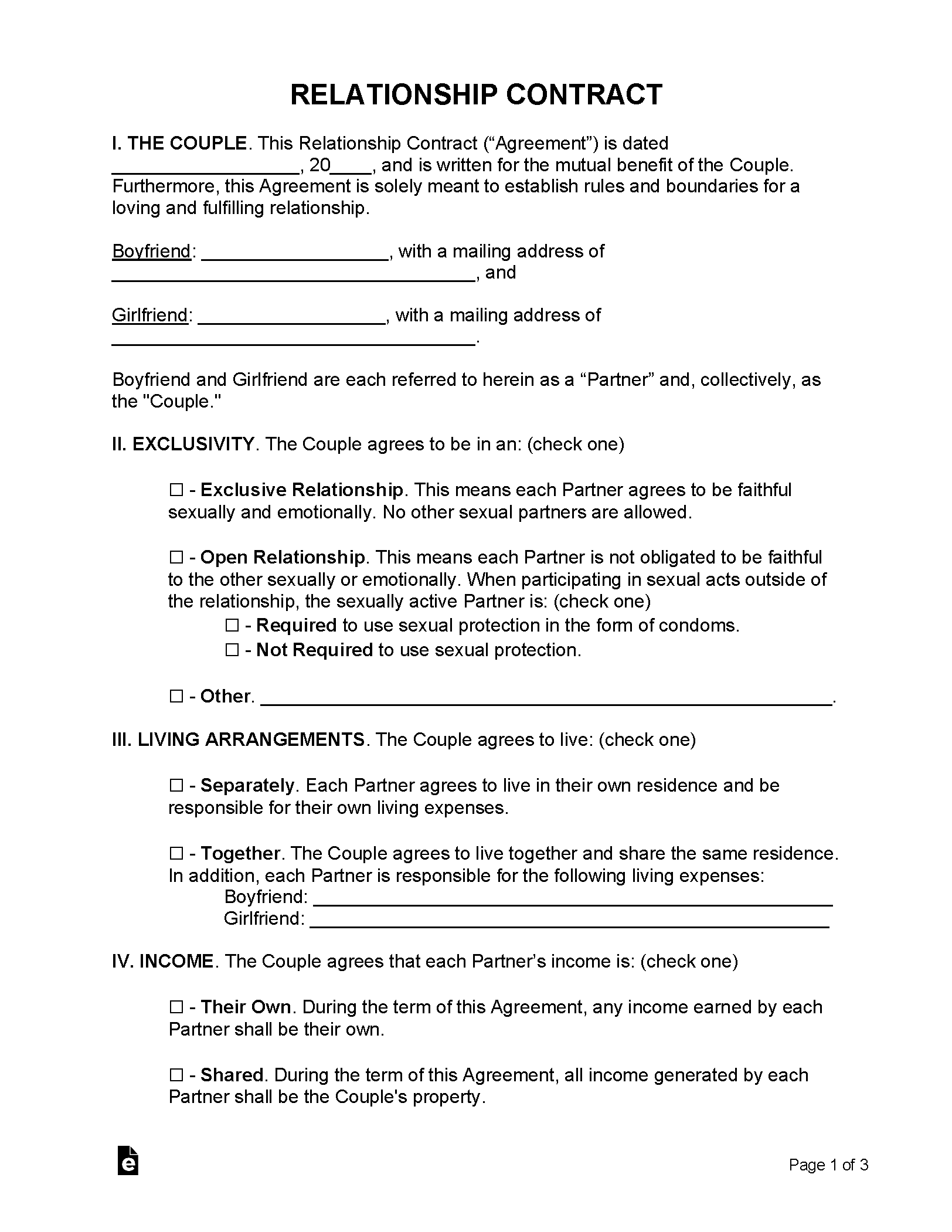
Relationship Contract Template (Cohabitation Agreement)
Full Conversation


I just broke up with a man who I have lived with for 6.5 years, since August 2019. We had intended to marry. When I lived with him, I paid him rent, equivalent to approximately 40% of the mortgage. In 2021, he created a living trust, named me as a beneficiary and gave me power of attorney over his healthcare, in the trust he stated his intentions that I could stay in the house after his death, requesting that his brother provide for me from his estate. Do I have any domestic partnership rights? The trust was prepared in CA, but we currently live in OR.

Lexi

Lexi, Chatbot

I'm sorry to hear about your breakup; that must be a difficult situation for you. Can you tell me if you and your ex-partner ever registered as domestic partners in California or Oregon?

No.

Lexi

Lexi, Chatbot

Have you discussed the living trust and your rights as a beneficiary with your ex-partner since the breakup?

No.

Lexi

Lexi, Chatbot

Is there anything else the Estate Lawyer should know before I connect you? Rest assured they'll be able to help with your domestic partnership rights.

No.

Angelo M

Angelo M

Greetings! I hope this message finds you well. My name is Angelo, and I'm an experienced and licensed attorney with over 41+ years of practice in the field of law. I'm thrilled to have the opportunity to assist you with your situation and provide you with the support you need. Please know that I may be assisting other clients simultaneously, but I assure you that I will give your case the attention it deserves as soon as possible. I WILL respond. Thank you for your patience, and I look forward to working with you.

Angelo M

Angelo M

I'm sorry you're going through this. Situations like this can feel especially unsettling when finances, housing, and long-term expectations are intertwined. I'll break this down clearly so you understand where you stand legally in Oregon:

First, because you were not married and did not register a domestic partnership in either California or Oregon, you generally do not have automatic "domestic partnership" rights under Oregon law. Unlike some states, Oregon does not recognize common-law marriage, and simply living together, even for many years, does not create spousal rights such as property division, support, or inheritance. Oregon does allow same-sex and opposite-sex couples to register as domestic partners under the Oregon Family Fairness Act, but that status must be formally registered with the county, which did not happen here. (OR Rev Stat § 106.310)

However, that does not mean you have no rights at all. Oregon courts do recognize what are often called "equitable claims" between unmarried partners. These can arise where there was a shared financial arrangement or understanding. For example, if you contributed significantly toward the home (beyond fair market rent), or there was an agreement or expectation that you would share in the property, you may be able to assert a claim such as:

  • Unjust enrichment, if he benefited unfairly at your expense, or
  • A constructive trust or equitable interest, if there was a clear agreement or reliance on a shared future.

That said, based on what you described, paying rent at about 40% of the mortgage, courts often view that as a tenant-like arrangement, not an ownership interest, unless there is strong evidence that the payments were intended to build equity or ownership.

With respect to the living trust, this is very important. Your rights under that trust are not vested unless and until he passes away and the trust remains unchanged. Because it is a revocable living trust, he can typically:

  • Remove you as a beneficiary,
  • Change or revoke your right to live in the home, and
  • Reassign power of attorney.

In other words, after a breakup, you should assume that those benefits may no longer exist unless he affirmatively keeps them in place. You currently do not have enforceable rights to remain in the home after a breakup based solely on that trust.

As for your current housing situation, your rights depend on whether you are considered a tenant. If you were paying regular rent, Oregon landlord-tenant law may apply, meaning:

  1. You may be entitled to proper notice before being required to leave, under the Oregon Residential Landlord and Tenant Act, and
  2. He cannot simply remove you without following legal eviction procedures.

In practical terms, your strongest potential claims, if any, would relate to:

  1. Whether there was any agreement or understanding about sharing assets or the home, and
  2. Whether your financial contributions went beyond normal rent in a way that created an equitable interest.

Given the length of the relationship (6.5 years) and the trust document referencing support for you, it would be wise to have a local Oregon attorney review:

  1. The trust document itself, and
  2. Any communications (texts, emails) showing intent about shared finances or housing.

Thank you.

Angelo M

Angelo M

16,167 satisfied customers

Angelo M
Welcome! Have a similar question?

12 lawyers online now

0:00

By messaging AskALawyer, you agree to our Terms and Privacy Policy.

Disclaimer


By messaging AskaLawyer.com, you agree to our Terms and have read our Privacy Policy.

The information provided on AskaLawyer.com is for general informational purposes only and does not constitute legal advice. While we strive to ensure the accuracy and timeliness of the information presented, we make no guarantees regarding its completeness or applicability to your specific circumstances.

Use of this website does not create an attorney-client relationship between you and AskaLawyer.com or any of its attorneys. Communications through this website, including any responses from attorneys, are not privileged or confidential. For advice tailored to your individual situation, we recommend consulting a licensed attorney in your jurisdiction.

AskaLawyer.com disclaims any liability for actions taken or not taken based on the content of this site. We are not responsible for any third-party content that may be accessed through this website. Reliance on any information provided herein is solely at your own risk.

Ask a Lawyer Logo
Ask a Lawyer Logo
Intake Questions
Step  of 3
Loading...

What's your legal question?

Lexi, Chatbot

How would you like your legal question to be answered?

Online

Loading...

How do you like to pay?

By proceeding with payment, you agree to our Terms and Privacy Policy. You authorize us to charge $ today and $ thereafter until canceled. You may cancel anytime in the My Account section to stop future charges.

Total Due:

After purchasing, your chat will begin with an attorney.

By proceeding with payment, you agree to our Terms and Privacy Policy. You authorize us to charge $ today and $ thereafter until canceled. You may cancel anytime in the My Account section to stop future charges.

Total Due:

After purchasing, your chat will begin with an attorney.

After connecting, your chat will begin with an attorney. After choosing, your chat will continue with Legal AI.

It looks like you already have an account with Ask a Lawyer.

We have sent you a magic link to . Click the link in your email to sign in and continue your chat.

spin

Step of 6 •

You'll receive an email at as soon as the lawyer joins the conversation 🙏🏻😊

Over 90% of lawyers connect within 5 minutes. If you're not online at that moment, don't worry — the lawyer will reply to your message while you're away.

You're also welcome to stay in the chat while waiting to be connected 💬✨

Waiting for lawyer

We couldn't send your message. Please try again.

Your lawyer will reply as soon as possible

If there’s a delay, please don’t worry. Your chat will stay open, and they’ll get back to you as soon as they can. There’s no rush on your end either. You’ll receive an email notification as soon as there’s a new message.

You've reached your AI chat limit

Upgrade your plan to continue chatting and get instant domain-specific answers.

0:00