[NJ] How do I need to evict a tenant, and how much of the process can I handle on my own versus needing a lawyer?

Jessica B
Jessica B

30,891 satisfied customers

View context
Solved

Since your rental property is in New Jersey, here’s a step-by-step guide on how to handle the eviction process there:

  1. Review the Lease Agreement. Start by reviewing the lease agreement you have with your tenant. This document will outline the terms of the lease, including payment schedules and any clauses related to late payments or property damage.
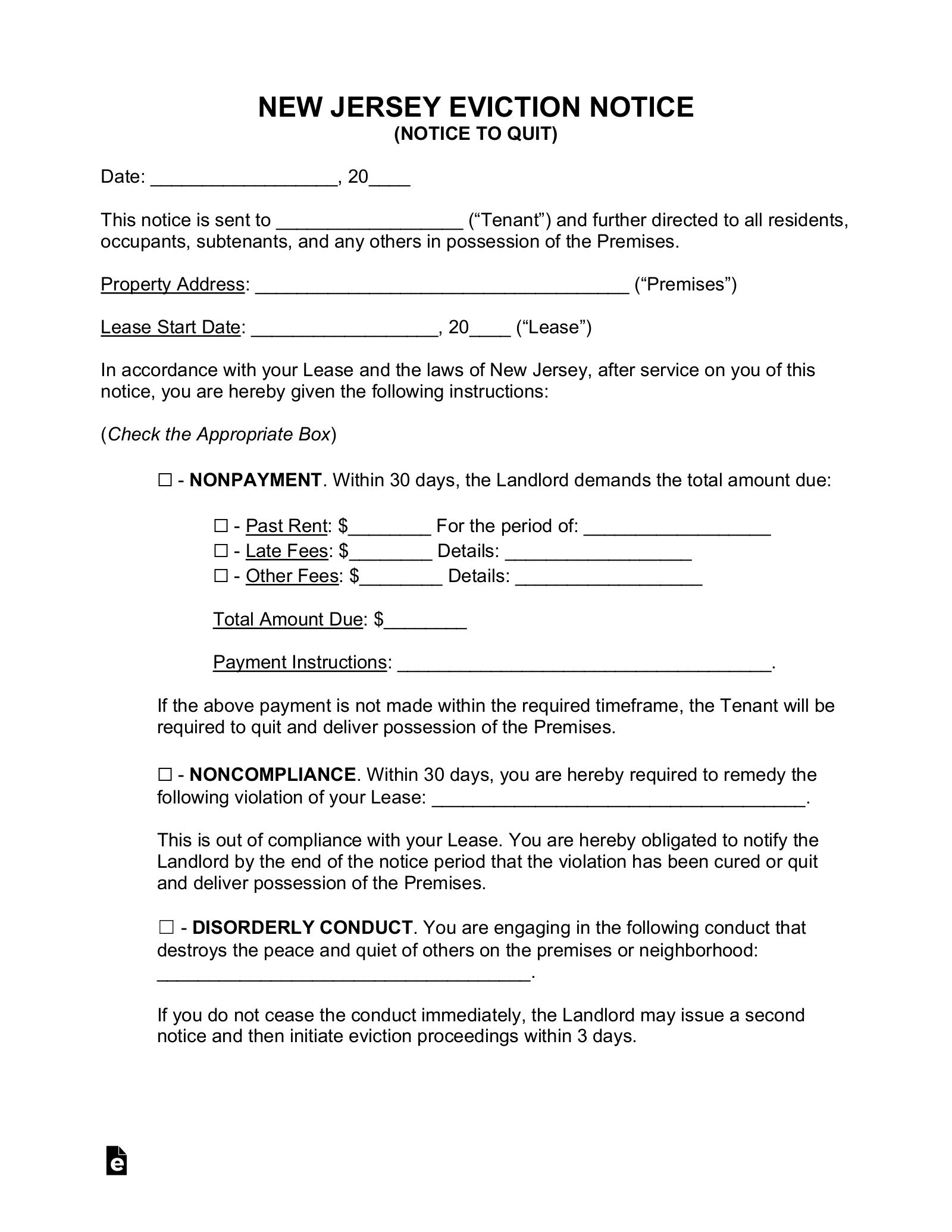
  2. Provide Written Notice. In New Jersey, you must provide the tenant with a written notice before starting the eviction process. This is often called a "Notice to Quit." For non-payment of rent, you typically need to give a 30-day notice, but check your lease for specific terms. (NJ Rev Stat § 2A:18-61.2)
  3. File a Complaint. If the tenant does not comply with the notice, you can file a complaint with the local Superior Court. This initiates the formal eviction process. You’ll need to provide evidence of the lease agreement, the notice given, and any other relevant documentation. (NJ Rev Stat § 2A:18-53)
  4. Attend the Court Hearing. After filing, a court date will be set. Both you and the tenant will have the opportunity to present your case. Be prepared with all necessary documents, such as the lease, notices, and any communication records.
  5. Obtain a Judgment for Possession. If the court rules in your favor, you will receive a Judgment for Possession. This allows you to request a warrant for removal, which is executed by a court officer to remove the tenant from the property. (NJ Rev Stat § 2A:18-57)
  6. Consider Legal Assistance. While you can handle many steps on your own, consulting with a local attorney who specializes in landlord-tenant law in New Jersey can be beneficial, especially if the tenant contests the eviction.

Please let me know if you have further questions.

0

New Jersey Notice to Quit Form

Full Conversation


I need information on steps to evict a renter in New Jersey. How much can I do on my own and when should I seek legal assistance? Can you help me legally or do I have to find a lawyer that practices in New Jersey?

Lexi

Lexi, Chatbot

I understand that dealing with eviction can be a stressful situation. Have you already started the eviction process, or are you looking for guidance on how to begin?

I haven't started on paper. It started with text. Can that be used?

Lexi

Lexi, Chatbot

Are you currently facing any specific issues with your renter that you would like to address?

Yes.

Jessica B

Jessica B

Thank you for reaching out! My name is Jessica and I am a licensed attorney that will be assisting you with your question.

I understand you're dealing with a situation where you need information on steps to evict a renter in New Jersey. Have you considered any legal steps to address this situation?

Yes.

Jessica B

Jessica B

Got it! Since you're in New Jersey, could you tell me a bit more about the specific issues you're facing with your renter? This will help me understand your situation better.

I'm not in Jersey. I'm in Georgia. My house is tore up. He hasn't paid rent this month. And continuously late with payment.

Jessica B

Jessica B

Thanks for letting me know. It sounds like a tough situation. Do you have a written lease agreement with your renter?

Yes.

Jessica B

Jessica B

Since your rental property is in New Jersey, here’s a step-by-step guide on how to handle the eviction process there:

  1. Review the Lease Agreement. Start by reviewing the lease agreement you have with your tenant. This document will outline the terms of the lease, including payment schedules and any clauses related to late payments or property damage.
  2. Provide Written Notice. In New Jersey, you must provide the tenant with a written notice before starting the eviction process. This is often called a "Notice to Quit." For non-payment of rent, you typically need to give a 30-day notice, but check your lease for specific terms. (NJ Rev Stat § 2A:18-61.2)
  3. File a Complaint. If the tenant does not comply with the notice, you can file a complaint with the local Superior Court. This initiates the formal eviction process. You’ll need to provide evidence of the lease agreement, the notice given, and any other relevant documentation. (NJ Rev Stat § 2A:18-53)
  4. Attend the Court Hearing. After filing, a court date will be set. Both you and the tenant will have the opportunity to present your case. Be prepared with all necessary documents, such as the lease, notices, and any communication records.
  5. Obtain a Judgment for Possession. If the court rules in your favor, you will receive a Judgment for Possession. This allows you to request a warrant for removal, which is executed by a court officer to remove the tenant from the property. (NJ Rev Stat § 2A:18-57)
  6. Consider Legal Assistance. While you can handle many steps on your own, consulting with a local attorney who specializes in landlord-tenant law in New Jersey can be beneficial, especially if the tenant contests the eviction.

Please let me know if you have further questions.

Jessica B

Jessica B

I hope I was able to help resolve your issue! If you have any other questions, feel free to ask. Don't hesitate to reach out whenever you need assistance!

Thank you.

Jessica B

Jessica B

30,891 satisfied customers

Jessica B
Welcome! Have a similar question?

12 lawyers online now

0:00

By messaging AskALawyer, you agree to our Terms and Privacy Policy.

Disclaimer


By messaging AskaLawyer.com, you agree to our Terms and have read our Privacy Policy.

The information provided on AskaLawyer.com is for general informational purposes only and does not constitute legal advice. While we strive to ensure the accuracy and timeliness of the information presented, we make no guarantees regarding its completeness or applicability to your specific circumstances.

Use of this website does not create an attorney-client relationship between you and AskaLawyer.com or any of its attorneys. Communications through this website, including any responses from attorneys, are not privileged or confidential. For advice tailored to your individual situation, we recommend consulting a licensed attorney in your jurisdiction.

AskaLawyer.com disclaims any liability for actions taken or not taken based on the content of this site. We are not responsible for any third-party content that may be accessed through this website. Reliance on any information provided herein is solely at your own risk.

Ask a Lawyer Logo
Ask a Lawyer Logo
Intake Questions
Step  of 3
Loading...

Lexi, Chatbot

How would you like your legal question to be answered?

Online

Legal AI

Using ChatGPT 4o

Loading...

How do you like to pay?

By proceeding with payment, you agree to our Terms and Privacy Policy. You authorize us to charge $ today and $ thereafter until canceled. You may cancel anytime in the My Account section to stop future charges.

Total Due:

After purchasing, your chat will begin with an attorney.

By proceeding with payment, you agree to our Terms and Privacy Policy. You authorize us to charge $ today and $ thereafter until canceled. You may cancel anytime in the My Account section to stop future charges.

Total Due:

After purchasing, your chat will begin with an attorney.

After connecting, your chat will begin with an attorney.

After choosing, your chat will continue with Legal AI.

It looks like you already have an account with Ask a Lawyer.

We have sent you a magic link to . Click the link in your email to sign in and continue your chat.

spin

Step of 6 •

You'll receive an email at as soon as the lawyer joins the conversation 🙏🏻😊

Over 90% of lawyers connect within 5 minutes. If you're not online at that moment, don't worry — the lawyer will reply to your message while you're away.

You're also welcome to stay in the chat while waiting to be connected 💬✨

Waiting for lawyer

0:00