Can a pro se defendant file for sanctions or contempt against opposing counsel?

Angelo M
Angelo M

16,500 satisfied customers

View context
Solved

What you are describing is serious, but I would urge caution before immediately filing a motion for sanctions or contempt against opposing counsel, especially while you are transitioning into a pro se posture and while your foreclosure matter is still active. Courts generally expect sanctions motions to be supported by very clear evidence of intentional misconduct, bad faith, fraud upon the court, or repeated violations of procedural rules. A sanctions motion that is filed too early, emotionally, or without a precise procedural foundation can sometimes distract from the underlying wrongful foreclosure claims you are trying to protect.

From what you described, the stronger and wiser first step may not be "contempt," but rather a carefully written affidavit and notice to the court clarifying the factual record. For example, if opposing counsel represented to the judge that he was not served, and you personally witnessed service being made through your attorney, that becomes an issue of correcting the record professionally and respectfully. The court usually prefers factual clarification supported by documentation, witness statements, timestamps, or affidavits rather than accusations of dishonesty unless the proof is overwhelming. Your credibility as a respectful litigant matters greatly, particularly as a senior citizen and self-represented litigant dealing with communication and disability-related barriers.

You also mentioned that opposing counsel mocks you in court. Judges take courtroom professionalism seriously. However, courts usually respond best when the issue is presented calmly and objectively rather than emotionally. Instead of accusing counsel of "malice," it is often more effective to state that certain comments or conduct made you feel intimidated, demeaned, or disadvantaged as a self-represented disabled litigant, and that you respectfully request the court ensure professional decorum and equal access to proceedings. Courts are often sensitive to disability accommodation issues when presented respectfully and supported clearly. State and local courts are public entities covered by Title II of the Americans with Disabilities Act (42 U.S.C. § 12132), and federal regulations require them to ensure effective communication with people with disabilities (28 C.F.R. § 35.160).

Regarding "sanctions versus contempt," sanctions are generally more appropriate here than contempt. Contempt usually applies to violations of a direct court order. Sanctions are broader and may apply to improper litigation conduct, misrepresentations, frivolous filings, or procedural abuse. Many state court rules on sanctions are modeled on Federal Rule of Civil Procedure 11, which includes a "safe harbor" period that gives the other side a chance to withdraw or correct a challenged filing before a sanctions motion is filed with the court. But even then, many judges prefer parties first attempt to resolve procedural disputes through clarification, meet-and-confer efforts, corrected filings, or status conferences before escalating into punitive motions. In your situation, especially given your concern about retaliation or backlash, a measured approach is likely strategically safer.

You also raised concerns about your own attorney. If you genuinely believe there is a conflict of interest, lack of advocacy, or a breakdown in communication, you absolutely have the right to seek substitute counsel or proceed pro se. However, be careful about alleging collusion or secret "deals" between attorneys unless you have objective evidence. Courts react very negatively to unsupported allegations against officers of the court. Focus instead on concrete facts: lack of communication, undisclosed prior relationship, failure to relay information, or failure to advocate your position adequately.

A practical approach may be:

  • File a respectful affidavit clarifying service facts and your current pro se status if necessary.
  • Request reasonable accommodations if your disability affects courtroom communication.
  • Preserve all evidence of filings, service, and courtroom interactions.
  • Consider filing a motion to substitute counsel or a notice of pro se appearance if representation has broken down.
  • Reserve sanctions requests for situations where you can clearly document repeated misconduct or demonstrable prejudice to your case.

The tone you use will matter enormously. Judges are far more receptive to litigants who present themselves as calm, factual, and solution-oriented rather than accusatory. Particularly in a wrongful foreclosure case involving a reverse mortgage and a senior homeowner, maintaining credibility and procedural precision is extremely important.

0

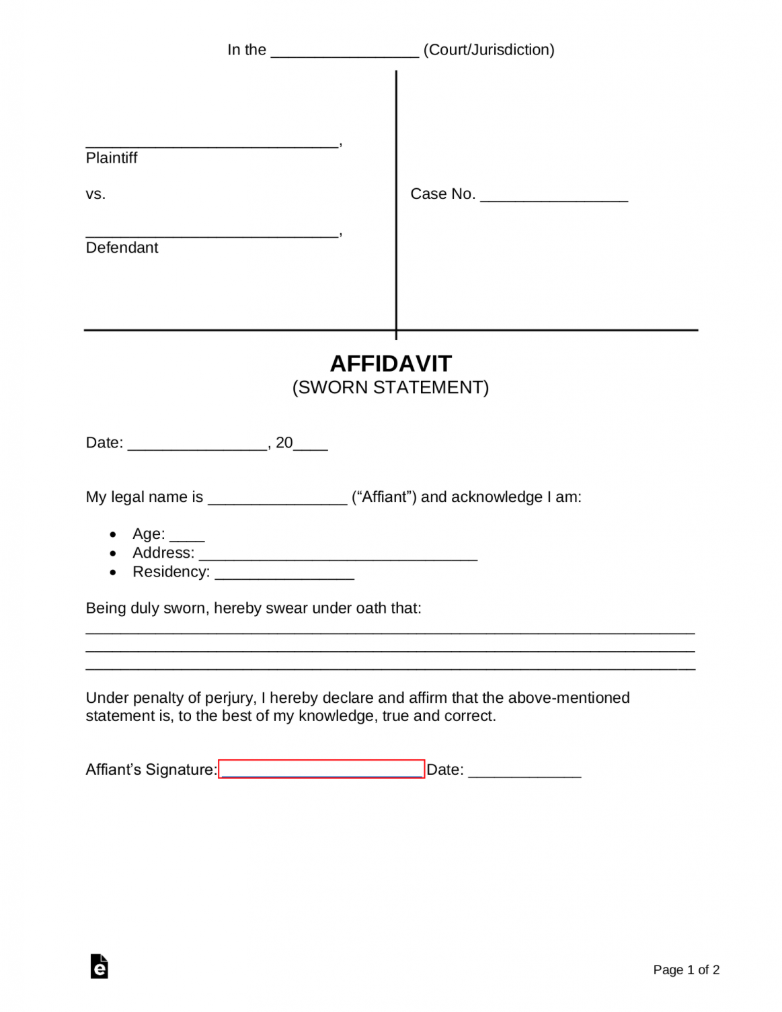
Court Affidavit Form (Sworn Statement)

Full Conversation


Delicate matter: sanctions on a plaintiff attorney, with the defendant filing pro se and with an affidavit due to problems in communication with their current attorney. This is due to a reverse mortgage wrongful foreclosure case. I am a senior with a mental health disability and a stuttering problem. This past Friday, the plaintiff attorney told the judge he was not served the Certificate of Service, and I witnessed that he was, because my friend, who was on the case and has now been removed by a fought court dismissal, handed it to my lawyer, who in turn handed it to the plaintiff attorney. Also, the plaintiff attorney mocks me when speaking of me and my case in court. I have classic values of respect for the court, lawyers, and judges, so this is hard for me to even ask. I am asking a lawyer on this forum how to proceed and which is the wiser choice: "file for sanctions or contempt," so that he does not act with malice when a motion or hearing requires their legal participation and does not block a just result. What is your scholarly guidance, please?

Lexi

Lexi, Chatbot

I understand that this is a challenging situation for you, and it's important to address these issues properly. Have you already attempted to communicate your concerns with your current attorney regarding the behavior of the plaintiff attorney?

No. They seem to have known each other for the past five years, and my attorney did not reveal when retained that he worked with the opposing plaintiff as a client in 2018, so I see I am being made into a construct of eviction by a deal they made with each other.

Lexi

Lexi, Chatbot

What specific outcomes are you hoping to achieve by filing for sanctions or contempt against the plaintiff attorney?

That the filing is done properly and accepted by the judge, that there will be no backlash to me, and that all is in professional legal format. I also want it made known that I am in need of a new attorney and forced to be pro se, and that is why I am filing as an affidavit.

Lexi

Lexi, Chatbot

Is there anything else the lawyer should know before I connect you? Rest assured they'll be able to help with your legal representation.

All is there.

Angelo M

Angelo M

Greetings! I hope this message finds you well. I'm thrilled to have the opportunity to assist you with your situation and provide you with the support you need. Thank you for your patience, and I look forward to working with you.

Angelo M

Angelo M

What you are describing is serious, but I would urge caution before immediately filing a motion for sanctions or contempt against opposing counsel, especially while you are transitioning into a pro se posture and while your foreclosure matter is still active. Courts generally expect sanctions motions to be supported by very clear evidence of intentional misconduct, bad faith, fraud upon the court, or repeated violations of procedural rules. A sanctions motion that is filed too early, emotionally, or without a precise procedural foundation can sometimes distract from the underlying wrongful foreclosure claims you are trying to protect.

From what you described, the stronger and wiser first step may not be "contempt," but rather a carefully written affidavit and notice to the court clarifying the factual record. For example, if opposing counsel represented to the judge that he was not served, and you personally witnessed service being made through your attorney, that becomes an issue of correcting the record professionally and respectfully. The court usually prefers factual clarification supported by documentation, witness statements, timestamps, or affidavits rather than accusations of dishonesty unless the proof is overwhelming. Your credibility as a respectful litigant matters greatly, particularly as a senior citizen and self-represented litigant dealing with communication and disability-related barriers.

You also mentioned that opposing counsel mocks you in court. Judges take courtroom professionalism seriously. However, courts usually respond best when the issue is presented calmly and objectively rather than emotionally. Instead of accusing counsel of "malice," it is often more effective to state that certain comments or conduct made you feel intimidated, demeaned, or disadvantaged as a self-represented disabled litigant, and that you respectfully request the court ensure professional decorum and equal access to proceedings. Courts are often sensitive to disability accommodation issues when presented respectfully and supported clearly. State and local courts are public entities covered by Title II of the Americans with Disabilities Act (42 U.S.C. § 12132), and federal regulations require them to ensure effective communication with people with disabilities (28 C.F.R. § 35.160).

Regarding "sanctions versus contempt," sanctions are generally more appropriate here than contempt. Contempt usually applies to violations of a direct court order. Sanctions are broader and may apply to improper litigation conduct, misrepresentations, frivolous filings, or procedural abuse. Many state court rules on sanctions are modeled on Federal Rule of Civil Procedure 11, which includes a "safe harbor" period that gives the other side a chance to withdraw or correct a challenged filing before a sanctions motion is filed with the court. But even then, many judges prefer parties first attempt to resolve procedural disputes through clarification, meet-and-confer efforts, corrected filings, or status conferences before escalating into punitive motions. In your situation, especially given your concern about retaliation or backlash, a measured approach is likely strategically safer.

You also raised concerns about your own attorney. If you genuinely believe there is a conflict of interest, lack of advocacy, or a breakdown in communication, you absolutely have the right to seek substitute counsel or proceed pro se. However, be careful about alleging collusion or secret "deals" between attorneys unless you have objective evidence. Courts react very negatively to unsupported allegations against officers of the court. Focus instead on concrete facts: lack of communication, undisclosed prior relationship, failure to relay information, or failure to advocate your position adequately.

A practical approach may be:

  • File a respectful affidavit clarifying service facts and your current pro se status if necessary.
  • Request reasonable accommodations if your disability affects courtroom communication.
  • Preserve all evidence of filings, service, and courtroom interactions.
  • Consider filing a motion to substitute counsel or a notice of pro se appearance if representation has broken down.
  • Reserve sanctions requests for situations where you can clearly document repeated misconduct or demonstrable prejudice to your case.

The tone you use will matter enormously. Judges are far more receptive to litigants who present themselves as calm, factual, and solution-oriented rather than accusatory. Particularly in a wrongful foreclosure case involving a reverse mortgage and a senior homeowner, maintaining credibility and procedural precision is extremely important.

So precise and well put. I am so thankful and grateful you answered.

  1. You are right in phrasing it as "failure to advocate your position adequately."
  2. The opposing attorney has already threatened two times that he will file sanctions over my pro se filings, so your guidance is to file an affidavit instead, clarifying service facts and my current pro se status and why it is necessary. I am aware that there must have been notes in my file from the previous judge, and that is why the judge acted the way he did by jumping to that, and I could not even say anything. That motion was significant. It was the rebuttal to the Defendant's Opposition to Plaintiff's Motion for Default Judgment and Motion to Deny Entry of Default, and it was impetuously dismissed when I was alone. He assumed I was going to speak on it pro se, when I was going to ask to continue it since my interim attorney was not there. My Motion to Vacate the Judgment is this coming Friday, and I do not want to lose that, so the case can be litigated and the truth heard.
  3. So you are saying not to file anything at all except the affidavit?
  4. My friend who was on the case is the one who served, so he can do an affidavit as a witness to that fact. Can I then attach that to my affidavit? What is the proper title for that? Can you educate me on the proper terminology?
  5. On the "notice of pro se appearance," should I have filed that all along since I filed the motions pro se? Does it have to be filed each time or once overall? Note: I filed all my pro se filings with an extra motion pleading of pro se, and then those got tarnished and kicked out by the traffic judge, and I did the last two as an affidavit motion pro se, something like this.
Angelo M

Angelo M

You are thinking about this correctly now, strategically rather than emotionally, and that is extremely important before Friday's Motion to Vacate hearing. Your instinct to protect the record instead of escalating into a sanctions war is, in my opinion, the safer and stronger course right now.

On your first point, yes, "failure to advocate your position adequately" is a much safer and more credible framing than alleging collusion or conspiracy. Judges understand attorney communication breakdowns happen. They do not respond well to unsupported accusations between counsel unless there is hard evidence. Keeping your language measured preserves your credibility, which is one of your most valuable assets as a pro se litigant.

Regarding the opposing attorney threatening sanctions against you for filing pro se papers: attorneys sometimes do this strategically to intimidate or discourage filings. But a litigant generally has the right to file pro se, particularly when counsel is absent, communication has broken down, or urgent deadlines exist. The issue is usually not whether you filed pro se; it is whether the filings comply procedurally and whether the court has clarity on your representation status. That is why I believe clarification filings and affidavits are wiser right now than retaliatory sanctions motions.

Importantly, your upcoming Motion to Vacate is the priority. Everything should support preserving that hearing and keeping the court focused on the merits and procedural fairness. You do not want the judge distracted by collateral disputes unless absolutely necessary. Your goal is to appear organized, respectful, fact-driven, and focused on ensuring the court hears the substantive issues fairly.

As to your question #3: I am not saying "file nothing." I am saying avoid filing an aggressive sanctions or contempt motion before Friday unless something extraordinary happens. Instead, a narrowly tailored affidavit or declaration clarifying:

  • service facts,
  • your procedural posture,
  • your temporary pro se necessity,
  • your request for fairness and opportunity to be heard,
    is much safer strategically.

For #4: yes, absolutely. Your friend can provide a sworn statement. The terminology is important. Usually, this would be titled something like:
"Affidavit of Service Witness"
or
"Declaration of [Name] Regarding Service"
or
"Affidavit in Support of Defendant's Motion"
depending on your state's terminology rules.

Your friend's affidavit or declaration should simply state factual observations:

  • date,
  • location,
  • what documents were handed over,
  • to whom,
  • and what was personally observed.
  • No emotional commentary. No attacks. Just facts.

You then attach that affidavit as an exhibit to your own affidavit or declaration. Your own filing might be titled something like:
"Defendant's Affidavit Clarifying Service and Temporary Pro Se Status"
or
"Affidavit in Support of Motion to Vacate and Clarification of Procedural Record."
That type of title sounds professional, restrained, and non-combative.

As to #5 regarding a Notice of Pro Se Appearance: technically, in many jurisdictions, yes, a formal notice is often filed when a party begins appearing without counsel. However, courts also commonly encounter "hybrid" situations where counsel technically remains attorney of record while a litigant files emergency or supplemental pro se papers because communication has broken down. Judges vary widely in how they react to this.

What likely hurt you procedurally was not necessarily filing pro se itself, but the court lacking clarity about:

  • whether your attorney still represented you,
  • whether you were appearing independently,
  • whether your filings were supplemental,
  • and whether you were asking to substitute counsel.
  • That confusion can cause judges to become impatient quickly.

So going forward, clarity is your friend. Something simple and respectful such as:
"Defendant submits this filing pro se due to immediate procedural necessity and breakdown in communication with current counsel pending clarification of representation status"
is often much safer than broader language.

One additional important point: at Friday's hearing, if your attorney is absent again, you may calmly and respectfully state:
"Your Honor, I am requesting a continuance if the Court believes representation status is unclear, as I do not wish to prejudice my rights on this Motion to Vacate."
That is a very different tone than arguing emotionally or accusing anyone of misconduct. It signals respect for the court while preserving your position.

You are approaching this more carefully now, and I genuinely think that will help you substantially.

Angelo M

Angelo M

16,500 satisfied customers

Angelo M
Welcome! Have a similar question?

12 lawyers online now

0:00

By messaging AskALawyer, you agree to our Terms and Privacy Policy.

Disclaimer


By messaging AskaLawyer.com, you agree to our Terms and have read our Privacy Policy.

The information provided on AskaLawyer.com is for general informational purposes only and does not constitute legal advice. While we strive to ensure the accuracy and timeliness of the information presented, we make no guarantees regarding its completeness or applicability to your specific circumstances.

Use of this website does not create an attorney-client relationship between you and AskaLawyer.com or any of its attorneys. Communications through this website, including any responses from attorneys, are not privileged or confidential. For advice tailored to your individual situation, we recommend consulting a licensed attorney in your jurisdiction.

AskaLawyer.com disclaims any liability for actions taken or not taken based on the content of this site. We are not responsible for any third-party content that may be accessed through this website. Reliance on any information provided herein is solely at your own risk.

Ask a Lawyer Logo
Ask a Lawyer Logo
Intake Questions
Step  of 3
Loading...

What's your legal question?

Lexi, Chatbot

How would you like your legal question to be answered?

Online

Loading...

How do you like to pay?

By proceeding with payment, you agree to our Terms and Privacy Policy. You authorize us to charge $ today and $ thereafter until canceled. You may cancel anytime in the My Account section to stop future charges.

Total Due:

After purchasing, your chat will begin with an attorney.

By proceeding with payment, you agree to our Terms and Privacy Policy. You authorize us to charge $ today and $ thereafter until canceled. You may cancel anytime in the My Account section to stop future charges.

Total Due:

After purchasing, your chat will begin with an attorney.

After connecting, your chat will begin with an attorney. After choosing, your chat will continue with Legal AI.

It looks like you already have an account with Ask a Lawyer.

We have sent you a magic link to . Click the link in your email to sign in and continue your chat.

spin

Step of 6 •

You'll receive an email at as soon as the lawyer joins the conversation 🙏🏻😊

Over 90% of lawyers connect within 5 minutes. If you're not online at that moment, don't worry — the lawyer will reply to your message while you're away.

You're also welcome to stay in the chat while waiting to be connected 💬✨

Waiting for lawyer

We couldn't send your message. Please try again.

Your lawyer will reply as soon as possible

If there’s a delay, please don’t worry. Your chat will stay open, and they’ll get back to you as soon as they can. There’s no rush on your end either. You’ll receive an email notification as soon as there’s a new message.

You've reached your AI chat limit

Upgrade your plan to continue chatting and get instant domain-specific answers.

0:00