[MN] Can I recover money I wired to someone for a home purchase if there was no written agreement?

Jon
Jon

556 satisfied customers

View context
Solved

Because the money was sent while you were in Minnesota, Minnesota law will most likely control how you try to recover it, even though you now live in Tennessee. While it feels like theft, situations like this are usually handled as civil cases, not criminal ones. Courts typically look at these cases through concepts like unjust enrichment or a broken promise tied to why the money was given.

Even without a written contract, Minnesota law still gives you several possible ways to argue that the money should be returned. One is unjust enrichment, which applies when someone receives a benefit at another person's expense and it would be unfair for them to keep it. Another is promissory estoppel, which can apply if you transferred the money because you relied on her promise that the two of you would buy a home together. When that purpose fell apart, the legal basis for keeping the money may have disappeared. In some cases, a court can also impose what's called a constructive trust, meaning the court treats her as holding the money for you because keeping it would be inequitable or improper.

Since you've said your documentation is limited, it's important to pull together everything you do have. The wire transfer record itself is key because it proves the money was sent. Any memo line on the transfer that mentions a house, home purchase, or similar language helps show the money was not meant to be a gift.

Text messages or emails can also be very important, especially anything where the home purchase was discussed or where she acknowledged receiving the funds. Even a short or dismissive response can still show that she knows she has the money and is choosing not to return it. Because the amount is $20,000, you essentially have two realistic court options in Minnesota. Conciliation Court (MN Stat § 491A.01), which is Minnesota's version of small claims court, has a $15,000 limit. You could file there, but you would have to give up the remaining $5,000 of your claim. The upside is that the process is simpler and you usually don't need a lawyer. The other option is District Court (MN Stat § 484.01), where you can sue for the full $20,000. That route is more formal and more complex and often requires hiring an attorney, but it allows you to pursue the entire amount.

A smart first step is sending a formal demand letter asking for the return of the funds. This can be done by an attorney or on your own and should be sent by certified mail. Sometimes a clear, written demand that explains the legal basis for repayment is enough to prompt a settlement. Given the amount involved, it's also worth scheduling a short consultation with a Minnesota civil litigation attorney. Even a brief meeting can help you understand whether the cost of pursuing the case makes sense compared to what you might recover.

Finally, carefully review any paperwork connected to the wire transfer. If you signed a document stating the money was a gift, such as a gift letter often used in real estate transactions, that can make recovery much more difficult, though not always impossible depending on the circumstances.

0

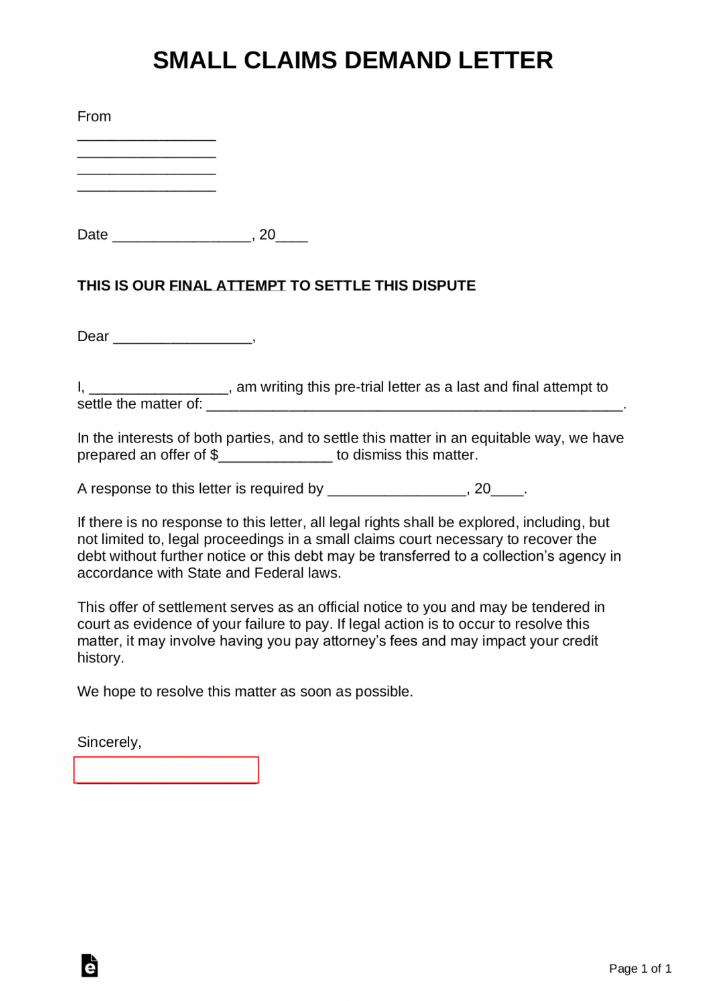
Small Claims Demand Letter

Full Conversation


Money was stolen from me. I simply want to know how to reclaim it.

Lexi

Lexi, Chatbot

Have you already consulted with any other professionals regarding this matter?

No.

Jon

Jon

Hello, and thank you for reaching out! I'm Jon, a licensed attorney with over 13 years of experience, here to help. I understand legal matters can feel overwhelming, but you're in good hands. My goal is to explain things clearly and guide you toward the best possible solution for your situation. Just a quick note: our conversation is for general legal information only and does not create an attorney-client relationship.

Can you tell me which state you're located in?

TN, but the theft happened in MN.

Jon

Jon

Got it, thanks. Could you briefly share a bit more about how the money was stolen, was it through a scam, theft, or another situation?

We had planned to purchase a home together, so I wired 20k into her account. We had a falling out and separated, and when I asked about the money she said it is what it is and had no plans to return it.

So we left on bad terms.

Jon

Jon

I understand and am sorry to hear that. Was there any written agreement or documentation between you and her regarding the $20,000 transfer or your plans to purchase a home together?

No, unfortunately.

Jon

Jon

Do you have records of the wire transfer or any communications (texts, emails, etc.) discussing the purpose of the money?

Or is there anything else you'd like to add before I start working on your answer? If not, I'll get started right away.

Yes, it might be thin. I think there is a note saying "buying a home" but I could be wrong. The transaction record. I can't paste anything here.

Jon

Jon

Got it! I just need a few minutes to put together a complete response for you. It shouldn't take longer than about 4–5 minutes, and I want to make sure it's clear and comprehensive. Thanks so much for waiting, I really appreciate your patience.

Jon

Jon

I'm really sorry you're dealing with this. Losing $20,000 is overwhelming on its own, and going through it during a breakup makes it even harder.

Jon

Jon

Because the money was sent while you were in Minnesota, Minnesota law will most likely control how you try to recover it, even though you now live in Tennessee. While it feels like theft, situations like this are usually handled as civil cases, not criminal ones. Courts typically look at these cases through concepts like unjust enrichment or a broken promise tied to why the money was given.

Even without a written contract, Minnesota law still gives you several possible ways to argue that the money should be returned. One is unjust enrichment, which applies when someone receives a benefit at another person's expense and it would be unfair for them to keep it. Another is promissory estoppel, which can apply if you transferred the money because you relied on her promise that the two of you would buy a home together. When that purpose fell apart, the legal basis for keeping the money may have disappeared. In some cases, a court can also impose what's called a constructive trust, meaning the court treats her as holding the money for you because keeping it would be inequitable or improper.

Since you've said your documentation is limited, it's important to pull together everything you do have. The wire transfer record itself is key because it proves the money was sent. Any memo line on the transfer that mentions a house, home purchase, or similar language helps show the money was not meant to be a gift.

Text messages or emails can also be very important, especially anything where the home purchase was discussed or where she acknowledged receiving the funds. Even a short or dismissive response can still show that she knows she has the money and is choosing not to return it. Because the amount is $20,000, you essentially have two realistic court options in Minnesota. Conciliation Court (MN Stat § 491A.01), which is Minnesota's version of small claims court, has a $15,000 limit. You could file there, but you would have to give up the remaining $5,000 of your claim. The upside is that the process is simpler and you usually don't need a lawyer. The other option is District Court (MN Stat § 484.01), where you can sue for the full $20,000. That route is more formal and more complex and often requires hiring an attorney, but it allows you to pursue the entire amount.

A smart first step is sending a formal demand letter asking for the return of the funds. This can be done by an attorney or on your own and should be sent by certified mail. Sometimes a clear, written demand that explains the legal basis for repayment is enough to prompt a settlement. Given the amount involved, it's also worth scheduling a short consultation with a Minnesota civil litigation attorney. Even a brief meeting can help you understand whether the cost of pursuing the case makes sense compared to what you might recover.

Finally, carefully review any paperwork connected to the wire transfer. If you signed a document stating the money was a gift, such as a gift letter often used in real estate transactions, that can make recovery much more difficult, though not always impossible depending on the circumstances.

Jon

Jon

556 satisfied customers

Jon
Welcome! Have a similar question?

12 lawyers online now

0:00

By messaging AskALawyer, you agree to our Terms and Privacy Policy.

Disclaimer


By messaging AskaLawyer.com, you agree to our Terms and have read our Privacy Policy.

The information provided on AskaLawyer.com is for general informational purposes only and does not constitute legal advice. While we strive to ensure the accuracy and timeliness of the information presented, we make no guarantees regarding its completeness or applicability to your specific circumstances.

Use of this website does not create an attorney-client relationship between you and AskaLawyer.com or any of its attorneys. Communications through this website, including any responses from attorneys, are not privileged or confidential. For advice tailored to your individual situation, we recommend consulting a licensed attorney in your jurisdiction.

AskaLawyer.com disclaims any liability for actions taken or not taken based on the content of this site. We are not responsible for any third-party content that may be accessed through this website. Reliance on any information provided herein is solely at your own risk.

Ask a Lawyer Logo
Ask a Lawyer Logo
Intake Questions
Step  of 3
Loading...

What's your legal question?

Lexi, Chatbot

How would you like your legal question to be answered?

Online

Loading...

How do you like to pay?

By proceeding with payment, you agree to our Terms and Privacy Policy. You authorize us to charge $ today and $ thereafter until canceled. You may cancel anytime in the My Account section to stop future charges.

Total Due:

After purchasing, your chat will begin with an attorney.

By proceeding with payment, you agree to our Terms and Privacy Policy. You authorize us to charge $ today and $ thereafter until canceled. You may cancel anytime in the My Account section to stop future charges.

Total Due:

After purchasing, your chat will begin with an attorney.

After connecting, your chat will begin with an attorney. After choosing, your chat will continue with Legal AI.

It looks like you already have an account with Ask a Lawyer.

We have sent you a magic link to . Click the link in your email to sign in and continue your chat.

spin

Step of 6 •

You'll receive an email at as soon as the lawyer joins the conversation 🙏🏻😊

Over 90% of lawyers connect within 5 minutes. If you're not online at that moment, don't worry — the lawyer will reply to your message while you're away.

You're also welcome to stay in the chat while waiting to be connected 💬✨

Waiting for lawyer

We couldn't send your message. Please try again.

Your lawyer will reply as soon as possible

If there’s a delay, please don’t worry. Your chat will stay open, and they’ll get back to you as soon as they can. There’s no rush on your end either. You’ll receive an email notification as soon as there’s a new message.

You've reached your AI chat limit

Upgrade your plan to continue chatting and get instant domain-specific answers.

0:00