Does a seller keep the earnest money if the buyer fails to close after the due diligence period ends?

Dan
Dan

30,719 satisfied customers

View context
Solved

I understand the concern here, and this is a common point of confusion in real estate deals. When a buyer passes the due diligence period, the earnest money is usually still governed by the contract, and whether the seller keeps it depends on what the agreement says about default, termination rights, and any contingencies that remain open.

First, the most important step is to read the earnest money provision and the termination language together. If the contract says the buyer loses the deposit after the due diligence period, that often helps the seller claim it, but the exact wording matters a lot because some contracts still allow the buyer to back out for other reasons, or require a formal notice before the deposit is released.

Second, check whether the buyer actually failed to close after the due diligence period ended, or whether the contract still gave them a right to terminate for another reason. Legally, that difference matters because earnest money is often tied to whether the buyer was in breach, not just whether the due diligence window expired. If there is any language about the right to accept other offers, that may affect whether the buyer could still withdraw or whether the seller had the ability to continue marketing the property, so the whole contract needs to be read as one package.

Third, the practical next step is to send a written demand or clarification request about the earnest money, if the buyer has not already stated their position. That helps create a record and may prompt the buyer to either agree to release the funds or explain their objection, which is important if there is a dispute later. If the escrow agent is holding the deposit, they will usually not release it without mutual written consent or clear contract authority.

My view is that the best starting point is to have the contract reviewed immediately, then send a simple written notice asking for the buyer's position on closing and the deposit. That is the most useful first move because it protects your rights, clarifies whether the buyer is actually in default, and gives you a clean paper trail if you need to pursue the earnest money later.

0

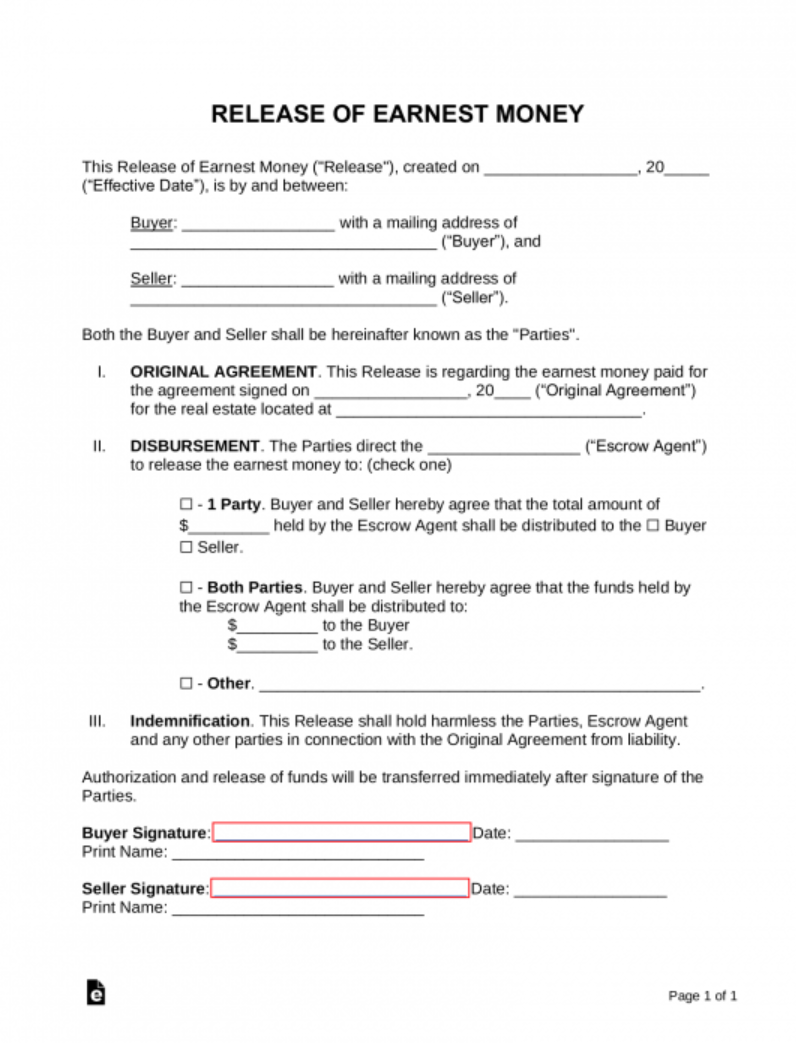
Release of Earnest Money Form

Full Conversation


In real estate, if you pass the due diligence period, do you get the earnest money if the buyers do not come to the conclusion?

Lexi

Lexi, Chatbot

I understand that navigating the due diligence period can be quite stressful. Can you tell me if you are currently involved in a specific real estate transaction?

Yes.

Lexi

Lexi, Chatbot

Have you already communicated with the buyers about their intentions regarding the earnest money?

No.

Lexi

Lexi, Chatbot

Is there anything else the Real Estate Lawyer should know before I connect you? Rest assured they'll be able to help with your earnest money issue.

No.

Dan

Dan

Hello, and welcome to our service. My name is Daniel, and I've been a licensed attorney for over 22 years. I'll do everything I can to help. It sounds like you're dealing with a situation where the due diligence period has passed, and you're wondering about the earnest money if the buyers do not conclude the transaction. Is that right?

Yes.

Dan

Dan

Could you tell me if there are any specific terms in your contract regarding the earnest money and what happens if the buyer does not conclude the transaction?

It doesn't really say. It just says it in reference to the earnest money.

Dan

Dan

Are there any contingencies or conditions mentioned in the contract that might affect the return of the earnest money?

The right to accept other offers.

That's it.

Dan

Dan

I really appreciate you taking the time to clarify that. It helps a lot and gives me a much clearer picture of what you're looking for. I'm pulling everything together now and should have your answer ready for you shortly.

Ok.

Dan

Dan

I understand the concern here, and this is a common point of confusion in real estate deals. When a buyer passes the due diligence period, the earnest money is usually still governed by the contract, and whether the seller keeps it depends on what the agreement says about default, termination rights, and any contingencies that remain open.

First, the most important step is to read the earnest money provision and the termination language together. If the contract says the buyer loses the deposit after the due diligence period, that often helps the seller claim it, but the exact wording matters a lot because some contracts still allow the buyer to back out for other reasons, or require a formal notice before the deposit is released.

Second, check whether the buyer actually failed to close after the due diligence period ended, or whether the contract still gave them a right to terminate for another reason. Legally, that difference matters because earnest money is often tied to whether the buyer was in breach, not just whether the due diligence window expired. If there is any language about the right to accept other offers, that may affect whether the buyer could still withdraw or whether the seller had the ability to continue marketing the property, so the whole contract needs to be read as one package.

Third, the practical next step is to send a written demand or clarification request about the earnest money, if the buyer has not already stated their position. That helps create a record and may prompt the buyer to either agree to release the funds or explain their objection, which is important if there is a dispute later. If the escrow agent is holding the deposit, they will usually not release it without mutual written consent or clear contract authority.

My view is that the best starting point is to have the contract reviewed immediately, then send a simple written notice asking for the buyer's position on closing and the deposit. That is the most useful first move because it protects your rights, clarifies whether the buyer is actually in default, and gives you a clean paper trail if you need to pursue the earnest money later.

Dan

Dan

Thank you for sharing your questions with me! I appreciate the chance to assist you, and I'm glad you reached out. If you have any more questions, now or later, I'm here for you seven days a week. I look forward to helping you again soon. Wishing you all the best!

Dan

Dan

30,719 satisfied customers

Dan
Welcome! Have a similar question?

12 lawyers online now

0:00

By messaging AskALawyer, you agree to our Terms and Privacy Policy.

Disclaimer


By messaging AskaLawyer.com, you agree to our Terms and have read our Privacy Policy.

The information provided on AskaLawyer.com is for general informational purposes only and does not constitute legal advice. While we strive to ensure the accuracy and timeliness of the information presented, we make no guarantees regarding its completeness or applicability to your specific circumstances.

Use of this website does not create an attorney-client relationship between you and AskaLawyer.com or any of its attorneys. Communications through this website, including any responses from attorneys, are not privileged or confidential. For advice tailored to your individual situation, we recommend consulting a licensed attorney in your jurisdiction.

AskaLawyer.com disclaims any liability for actions taken or not taken based on the content of this site. We are not responsible for any third-party content that may be accessed through this website. Reliance on any information provided herein is solely at your own risk.

Ask a Lawyer Logo
Ask a Lawyer Logo
Intake Questions
Step  of 3
Loading...

What's your legal question?

Lexi, Chatbot

How would you like your legal question to be answered?

Online

Loading...

How do you like to pay?

By proceeding with payment, you agree to our Terms and Privacy Policy. You authorize us to charge $ today and $ thereafter until canceled. You may cancel anytime in the My Account section to stop future charges.

Total Due:

After purchasing, your chat will begin with an attorney.

By proceeding with payment, you agree to our Terms and Privacy Policy. You authorize us to charge $ today and $ thereafter until canceled. You may cancel anytime in the My Account section to stop future charges.

Total Due:

After purchasing, your chat will begin with an attorney.

After connecting, your chat will begin with an attorney. After choosing, your chat will continue with Legal AI.

It looks like you already have an account with Ask a Lawyer.

We have sent you a magic link to . Click the link in your email to sign in and continue your chat.

spin

Step of 6 •

You'll receive an email at as soon as the lawyer joins the conversation 🙏🏻😊

Over 90% of lawyers connect within 5 minutes. If you're not online at that moment, don't worry — the lawyer will reply to your message while you're away.

You're also welcome to stay in the chat while waiting to be connected 💬✨

Waiting for lawyer

We couldn't send your message. Please try again.

Your lawyer will reply as soon as possible

If there’s a delay, please don’t worry. Your chat will stay open, and they’ll get back to you as soon as they can. There’s no rush on your end either. You’ll receive an email notification as soon as there’s a new message.

You've reached your AI chat limit

Upgrade your plan to continue chatting and get instant domain-specific answers.

0:00