[ME] If a deed does not state joint tenancy, will my ownership pass automatically to me or can it be affected by a will?

Seth
Seth

8,846 satisfied customers

View context
Solved

Based on your situation, there are several legal considerations and concepts in Maine that could potentially support your case:

A warranty deed is a type of deed where the grantor guarantees that they hold clear title to a piece of real estate and have a right to sell it. This type of deed provides the highest level of protection to the grantee because it includes warranties that the property is free from any encumbrances, except those listed in the deed. (33 ME Rev Stat § 763)

Joint Tenancy with Right of Survivorship (JTWROS) is a form of ownership where two or more individuals hold equal shares of a property, and upon the death of one owner, the deceased owner's share automatically passes to the surviving owner(s). If the deed does not explicitly state "Joint Tenancy" or "Right of Survivorship," it may default to tenants in common, where each party owns a specific share of the property that can be passed to heirs. (33 ME Rev Stat § 159)

The language in the deed stating that it is "subject to the deeds of trust, mortgages, conditions, restrictions, rights of way, easements, and other instruments of record" means that the property is subject to any existing agreements or restrictions that have been recorded against it. This is a common clause in deeds to ensure that all parties are aware of any existing obligations or limitations on the property.

To ensure you become the sole owner, you might need to update the deed to include joint tenancy language or explore other estate planning options.

0

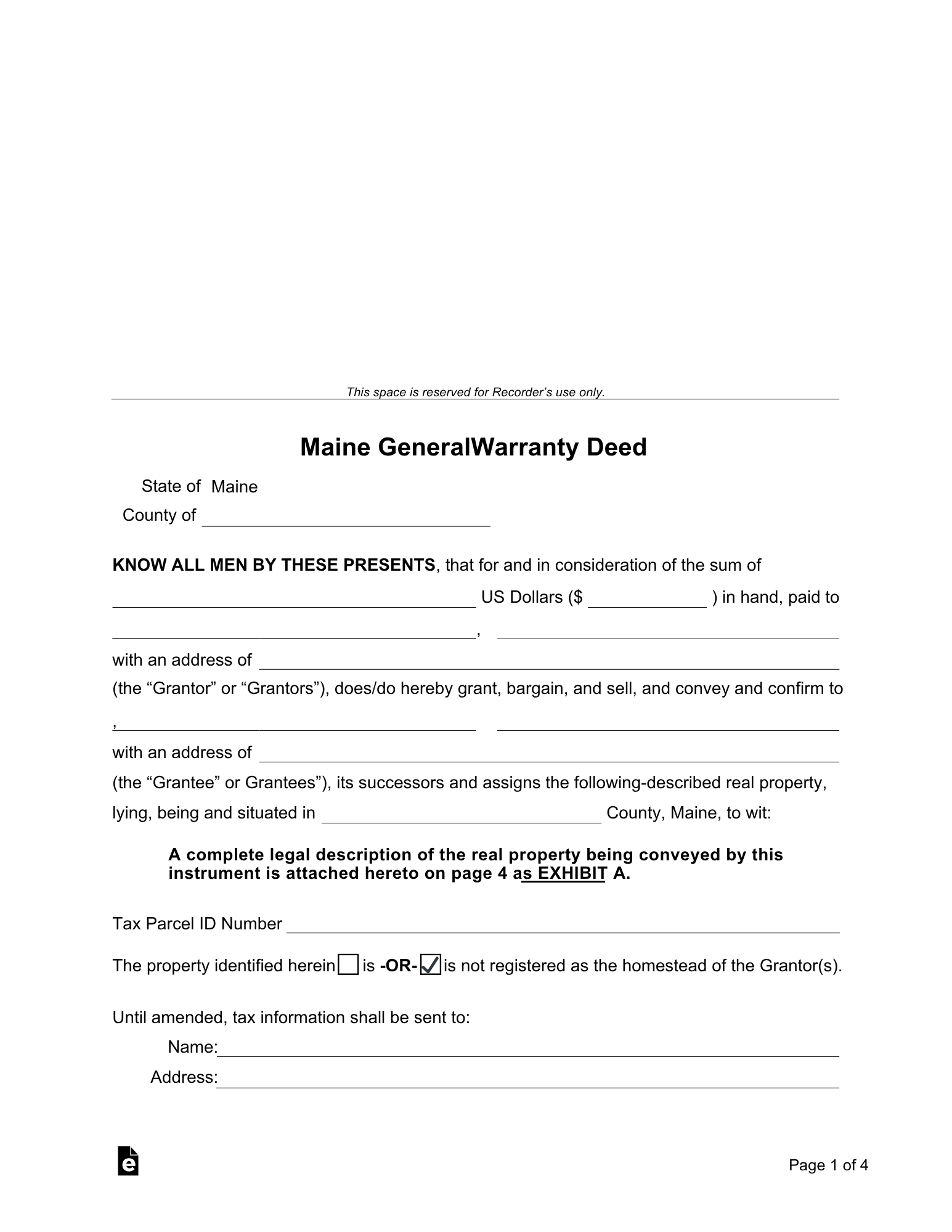
Maine General Warranty Deed

Full Conversation


My father recently added me to the deed for his property and my understanding was that it was to be a deed with joint tenancy (right of survivorship), but "Joint Tenancy" is nowhere to be found on the deed he created online. My concern is that a will or the like would allow his presence in the deed to go to another party, instead of fully to me.

The deed also states that it doesn't take precedence over other documents. Or that's how I'm interpreting the following:

This conveyance is made expressly subject to the deeds of trust, mortgages, conditions, restrictions, rights of way, easements, and other instruments of record, in so far as they may lawfully affect the property.

Lexi

Lexi, Chatbot

I understand how concerning this situation can be regarding your father's property. Can you tell me if the deed was created recently or if it has been in place for some time? Have you had a chance to discuss the specifics of the deed with your father or any other family members?

Yes.

Seth

Seth

Hi there, thank you for your question. I’m Seth, a lawyer here, and I’m already reviewing the details of your question to find the best solution for you right away.

I understand you're dealing with a situation where your father recently added you to the deed for his property, but it doesn't mention "Joint Tenancy" as expected. Have you had a chance to discuss this with a legal professional?

That's what I am attempting to do now.

Seth

Seth

Got it, you're in the right place for some legal guidance. Could you let me know which state or country the property is located in? This can affect the legal advice I provide.

Lincoln County, Maine, USA.

Seth

Seth

Thanks for sharing that. Now, regarding the deed your father created online, do you know if there were any specific instructions or templates he followed when drafting it? This might help us understand why "Joint Tenancy" isn't mentioned.

Yes. I'm not sure what template he used, but it is titled "Warranty Deed."

Seth

Seth

Based on your situation, there are several legal considerations and concepts in Maine that could potentially support your case:

A warranty deed is a type of deed where the grantor guarantees that they hold clear title to a piece of real estate and have a right to sell it. This type of deed provides the highest level of protection to the grantee because it includes warranties that the property is free from any encumbrances, except those listed in the deed. (33 ME Rev Stat § 763)

Joint Tenancy with Right of Survivorship (JTWROS) is a form of ownership where two or more individuals hold equal shares of a property, and upon the death of one owner, the deceased owner's share automatically passes to the surviving owner(s). If the deed does not explicitly state "Joint Tenancy" or "Right of Survivorship," it may default to tenants in common, where each party owns a specific share of the property that can be passed to heirs. (33 ME Rev Stat § 159)

The language in the deed stating that it is "subject to the deeds of trust, mortgages, conditions, restrictions, rights of way, easements, and other instruments of record" means that the property is subject to any existing agreements or restrictions that have been recorded against it. This is a common clause in deeds to ensure that all parties are aware of any existing obligations or limitations on the property.

To ensure you become the sole owner, you might need to update the deed to include joint tenancy language or explore other estate planning options.

Is there any way for me to find out if there are existing agreements or restrictions recorded against it via public record?

Seth

Seth

To determine whether there are any agreements or restrictions recorded against the property, you can search the public records maintained by the Lincoln County, Maine Registry of Deeds, either in person or through any available online database using the property address or your father’s name.

If you locate relevant documents, you may request copies for a small fee. If the search is difficult or you want a more comprehensive review, you can conduct a formal title search to identify any encumbrances or restrictions.

Just to clarify, a warranty deed is a type of deed where the grantor guarantees that they hold clear title to the property and have a right to sell it; means he holds the title to the land, and because there is no Joint Tenancy mentioned, even in death I am not guaranteed to be the sole owner of the property?

Seth

Seth

That is correct. A warranty deed ensures that the grantor has clear title to the property and can transfer it to you.

However, if the deed doesn't specify Joint Tenancy with Right of Survivorship, then the property may not automatically pass to you upon his death. Instead, it could be subject to probate and divided according to his will or state intestacy laws.

Thank you SO MUCH for this clarification.

Seth

Seth

I hope I was able to help resolve your issue! If you have any other questions, feel free to ask. Best of luck!

Seth

Seth

8,846 satisfied customers

Seth
Welcome! Have a similar question?

12 lawyers online now

0:00

By messaging AskALawyer, you agree to our Terms and Privacy Policy.

Disclaimer


By messaging AskaLawyer.com, you agree to our Terms and have read our Privacy Policy.

The information provided on AskaLawyer.com is for general informational purposes only and does not constitute legal advice. While we strive to ensure the accuracy and timeliness of the information presented, we make no guarantees regarding its completeness or applicability to your specific circumstances.

Use of this website does not create an attorney-client relationship between you and AskaLawyer.com or any of its attorneys. Communications through this website, including any responses from attorneys, are not privileged or confidential. For advice tailored to your individual situation, we recommend consulting a licensed attorney in your jurisdiction.

AskaLawyer.com disclaims any liability for actions taken or not taken based on the content of this site. We are not responsible for any third-party content that may be accessed through this website. Reliance on any information provided herein is solely at your own risk.

Ask a Lawyer Logo
Ask a Lawyer Logo
Intake Questions
Step  of 3
Loading...

Lexi, Chatbot

How would you like your legal question to be answered?

Online

Legal AI

Using ChatGPT 4o

Loading...

How do you like to pay?

By proceeding with payment, you agree to our Terms and Privacy Policy. You authorize us to charge $ today and $ thereafter until canceled. You may cancel anytime in the My Account section to stop future charges.

Total Due:

After purchasing, your chat will begin with an attorney.

By proceeding with payment, you agree to our Terms and Privacy Policy. You authorize us to charge $ today and $ thereafter until canceled. You may cancel anytime in the My Account section to stop future charges.

Total Due:

After purchasing, your chat will begin with an attorney.

After connecting, your chat will begin with an attorney.

After choosing, your chat will continue with Legal AI.

It looks like you already have an account with Ask a Lawyer.

We have sent you a magic link to . Click the link in your email to sign in and continue your chat.

spin

Step of 6 •

You'll receive an email at as soon as the lawyer joins the conversation 🙏🏻😊

Over 90% of lawyers connect within 5 minutes. If you're not online at that moment, don't worry — the lawyer will reply to your message while you're away.

You're also welcome to stay in the chat while waiting to be connected 💬✨

Waiting for lawyer

0:00