How do I provide proof of ownership for household items on the small estate affidavit?
1. Understand What Counts as “Proof of Ownership” for Personal Property
For household goods, proof is usually much less formal. It can include:
- A sworn statement or affidavit from you as the surviving spouse, stating that the items belonged to your husband at the time of his death and were in your household.
- Photographs of the items in your home, ideally with some proof of timing (metadata, background showing your home, or the deceased’s personal effects nearby).
- Statements from witnesses (friends, relatives, or neighbors) who can attest that your husband owned the items.
2. Consider an Affidavit of Ownership for Each Item
Since you are already filing an affidavit for the small estate, you can prepare a short sworn statement specifically for these items, for example:
“I, [Your Name], declare under penalty of perjury that the [computer / rocking chair] described in the Affidavit of Small Estate was owned solely by my late husband, [Full Name], at the time of his death on [Date], and that it has remained in my possession since his passing.”
Sign and date it, and have it notarized. This can act as your “proof” when other formal documents do not exist.
3. Attach Supporting Context
Even if you don’t have receipts, you can strengthen your proof with:
- A copy of your husband’s obituary or death certificate to connect his name to the estate
- Photos of the items
- Any old insurance inventory, warranty paperwork, or service/repair receipts with his name
4. Check With the Probate Clerk Before Submitting
Small estate rules vary by state and even by county. Some clerks will accept your sworn affidavit and photos; others may ask for more detail. It’s best to call or visit the probate clerk’s office and explain:
- The items are low-value household goods
- There are no receipts because they were purchased or acquired long ago
- You are willing to submit a sworn statement of ownership
They can confirm whether that will satisfy their documentation requirement.
5. Keep It Consistent With Your Filing
Whatever method you choose, make sure it matches exactly what you put in the Affidavit of Small Estate. If you listed the value as $500 each, don’t provide proof showing a much higher or lower value unless you amend the filing.
0
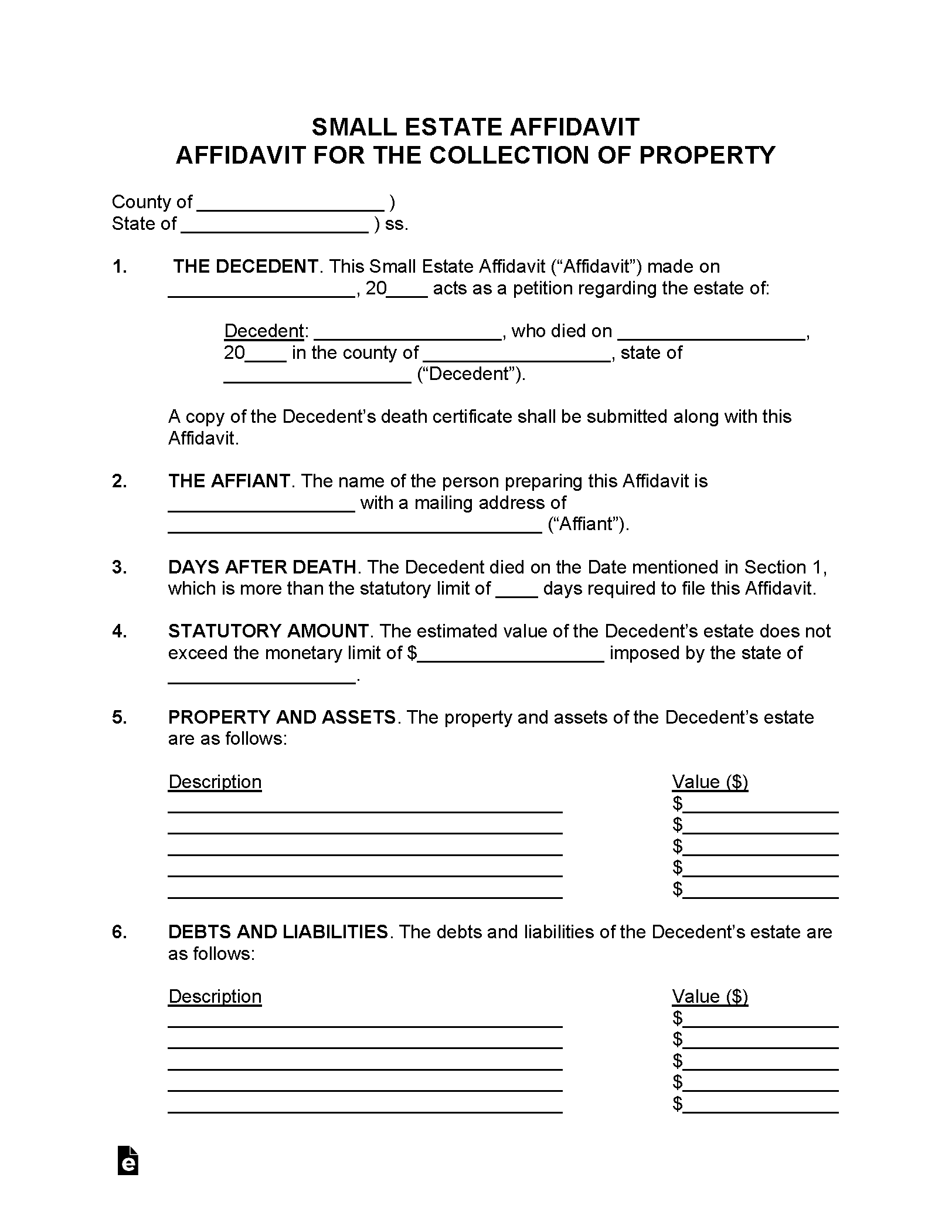
Small Estate Affidavit Form
Full Conversation
On my Affidavit of Small Estate, I put down my daughters as being heirs of my late husband’s property: one being a computer and another a rocking chair. The form says I must attach proof of ownership to the small estate form for these items. I don’t have proof of ownership for these items. Their value is $500 each.
Lexi, Chatbot
Is there anything else the lawyer should know before I connect you? Rest assured they’ll be able to help you with your situation.
No.
Brandon
Hi there and welcome to AskALawyer. My name is Brandon and I’m an attorney. I’d be happy to help you out today. Please note that this discussion is for guidance only and does not constitute an attorney-client relationship. My answers and comments should not be considered legal advice.
Brandon
1. Understand What Counts as “Proof of Ownership” for Personal Property
For household goods, proof is usually much less formal. It can include:
- A sworn statement or affidavit from you as the surviving spouse, stating that the items belonged to your husband at the time of his death and were in your household.
- Photographs of the items in your home, ideally with some proof of timing (metadata, background showing your home, or the deceased’s personal effects nearby).
- Statements from witnesses (friends, relatives, or neighbors) who can attest that your husband owned the items.
2. Consider an Affidavit of Ownership for Each Item
Since you are already filing an affidavit for the small estate, you can prepare a short sworn statement specifically for these items, for example:
“I, [Your Name], declare under penalty of perjury that the [computer / rocking chair] described in the Affidavit of Small Estate was owned solely by my late husband, [Full Name], at the time of his death on [Date], and that it has remained in my possession since his passing.”
Sign and date it, and have it notarized. This can act as your “proof” when other formal documents do not exist.
3. Attach Supporting Context
Even if you don’t have receipts, you can strengthen your proof with:
- A copy of your husband’s obituary or death certificate to connect his name to the estate
- Photos of the items
- Any old insurance inventory, warranty paperwork, or service/repair receipts with his name
4. Check With the Probate Clerk Before Submitting
Small estate rules vary by state and even by county. Some clerks will accept your sworn affidavit and photos; others may ask for more detail. It’s best to call or visit the probate clerk’s office and explain:
- The items are low-value household goods
- There are no receipts because they were purchased or acquired long ago
- You are willing to submit a sworn statement of ownership
They can confirm whether that will satisfy their documentation requirement.
5. Keep It Consistent With Your Filing
Whatever method you choose, make sure it matches exactly what you put in the Affidavit of Small Estate. If you listed the value as $500 each, don’t provide proof showing a much higher or lower value unless you amend the filing.
12
3
Answered 2 weeks ago
34
12
Answered 2 weeks ago
22
9
Answered 2 weeks ago
Disclaimer
By messaging AskaLawyer.com, you agree to our Terms and have read our Privacy Policy.
The information provided on AskaLawyer.com is for general informational purposes only and does not constitute legal advice. While we strive to ensure the accuracy and timeliness of the information presented, we make no guarantees regarding its completeness or applicability to your specific circumstances.
Use of this website does not create an attorney-client relationship between you and AskaLawyer.com or any of its attorneys. Communications through this website, including any responses from attorneys, are not privileged or confidential. For advice tailored to your individual situation, we recommend consulting a licensed attorney in your jurisdiction.
AskaLawyer.com disclaims any liability for actions taken or not taken based on the content of this site. We are not responsible for any third-party content that may be accessed through this website. Reliance on any information provided herein is solely at your own risk.