Should I elect S Corp or C Corp status for my consulting LLC if I’m adding a member, and how much insurance do I need?

Brandon
Brandon

17,510 satisfied customers

View context
Solved

Tax Classification: C Corp vs. S Corp.

Your LLC can choose how it’s taxed, which is one of its biggest advantages. Here’s a quick breakdown:

  1. Default LLC status (Disregarded Entity or Partnership):
    • If you’re the only member, the IRS treats your LLC as a “disregarded entity.” You’ll report profits and losses directly on your personal tax return (Schedule C).
    • If you add another member, the LLC becomes a “partnership” by default, meaning it will file an informational return (Form 1065) and issue K-1s to members.
    • This route is simple, and you avoid corporate-level taxes. However, all profits are subject to self-employment tax (roughly 15.3%).
  2. Electing S Corp status:
    • You can file IRS Form 2553 to elect S Corporation status. This allows you to pay yourself a “reasonable salary” and take the remaining profit as a distribution, which is not subject to self-employment tax.
    • The main advantage is tax savings once your net income is significant enough (often $60K+ annually after expenses).
    • You’ll have added paperwork, including payroll filings and a separate S Corp tax return, but many consultants find the tax benefit worth it.
  3. C Corp option:
    • A C Corp pays its own taxes and can retain earnings, which may be useful if you plan to reinvest heavily in the business.
    • However, you’ll face “double taxation” (corporate tax plus tax on dividends to you personally), which most small consulting firms try to avoid.
  4. For you:
    • Given that you’re just starting, I would lean toward keeping the LLC default classification or filing as an S Corp once your profits justify it. That combination keeps things simple early while still allowing future flexibility.

Adding a Member

If you’re bringing in one additional member, you’ll want to:

  1. Amend your Operating Agreement to reflect ownership percentages, roles, and voting rights.
  2. Decide how profits and losses will be split (equally or based on contribution).
  3. Clarify responsibilities—if one of you handles operations or client work while the other manages business development, put that in writing.
  4. Ensure both members sign the agreement before opening your business bank account. Your bank may request your EIN, the signed operating agreement, and Articles of Organization. Some banks also require a resolution authorizing account signatories.

Insurance Coverage

  • Consulting and professional services in the water and wastewater sector often involve both liability and regulatory exposure. Here’s what I’d suggest:
    1. Professional Liability (Errors & Omissions Insurance): This is the most important coverage. It protects you if a client claims your advice or services caused financial harm. For consulting work, policies typically start at $1 million per claim / $2 million aggregate.
    2. General Liability: Covers bodily injury or property damage that occurs in the course of your work (for example, visiting a plant site). Usually, $1 million per occurrence / $2 million aggregate is standard.
    3. Workers’ Compensation: Required if you hire employees or bring on subcontractors in most states.
    4. Business Personal Property / Equipment: Covers your laptop, tools, and testing equipment.
    5. Commercial Auto or Umbrella Policy: If you’re frequently on-site or transporting materials, consider this as an add-on.

Next Steps

  • Here’s a simple checklist before you open your account and begin taking clients:
    1. Finalize your Operating Agreement with both members listed.
    2. Obtain an EIN (if you haven’t already) from the IRS website—it’s free and instant.
    3. Decide if you’ll elect S Corp status now or later by filing Form 2553.
    4. Get your insurance quotes before engaging your first client—many municipalities require proof of coverage.
    5. Open your business bank account using your LLC name and EIN.
    6. Keep separate books from day one—using accounting software like QuickBooks or Wave will simplify tax season.

0

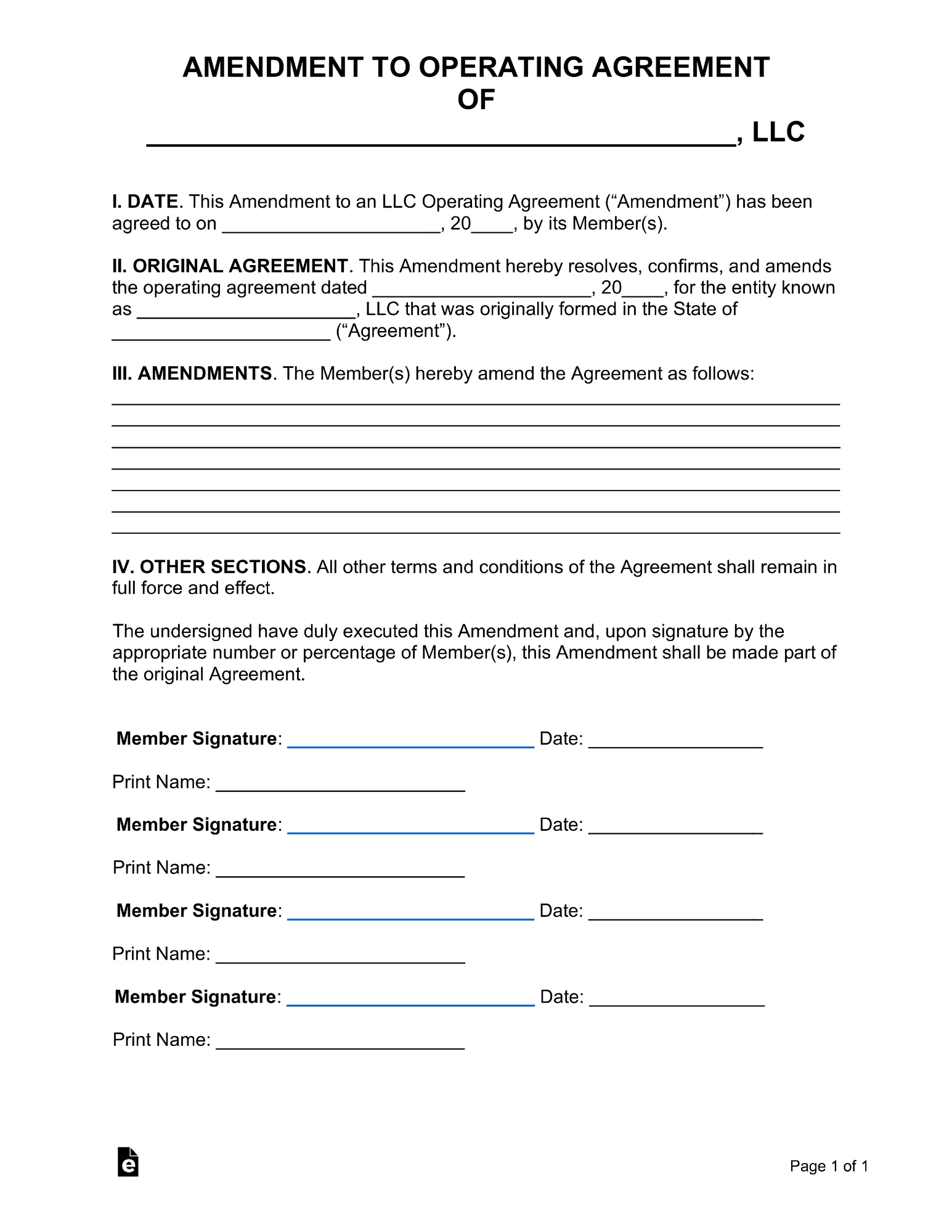
Amendment to LLC Operating Agreement
Full Conversation


I started an LLC to provide consulting and professional services to drinking water and wastewater treatment plants. I want to open a bank account and need this operating agreement. I want to add one person as a member. How should I classify the tax status? Would C Corp be fine or S Corp? How much insurance would I need?

Lexi

Lexi, Chatbot

I understand that setting up your LLC and getting the necessary documents can be challenging. Have you already drafted an operating agreement, or are you starting from scratch?

I used this system from scratch.

Lexi

Lexi, Chatbot

Is the additional member someone who will be actively involved in the business, or will they have a more passive role?

Active.

Brandon

Brandon

Hi there. My name is Brandon and I'm an attorney. I'll be happy to help you out today. Please note that this discussion is for guidance only and does not constitute an Attorney-Client Relationship. My answers and comments should not be considered legal advice.

Please also note that I am human, that I often need to research your answer to give you an accurate response, that I work with other customers and get up from time to time. So please be patient while waiting for a response. If more than 30 minutes have passed, please feel free to reach out.

Can you tell me more about your business?

I am wanting to provide consultation and professional services to wastewater and drinking water plants. I have been working as a Process Control and Instrumentation Technician for a little over 20 years and want to help water treatment plants. I want to bring in a friend who has over 20 years of experience in laboratory and operations of wastewater and drinking water plants.

Brandon

Brandon

Understood.

Brandon

Brandon

Tax Classification: C Corp vs. S Corp.

Your LLC can choose how it’s taxed, which is one of its biggest advantages. Here’s a quick breakdown:

  1. Default LLC status (Disregarded Entity or Partnership):
    • If you’re the only member, the IRS treats your LLC as a “disregarded entity.” You’ll report profits and losses directly on your personal tax return (Schedule C).
    • If you add another member, the LLC becomes a “partnership” by default, meaning it will file an informational return (Form 1065) and issue K-1s to members.
    • This route is simple, and you avoid corporate-level taxes. However, all profits are subject to self-employment tax (roughly 15.3%).
  2. Electing S Corp status:
    • You can file IRS Form 2553 to elect S Corporation status. This allows you to pay yourself a “reasonable salary” and take the remaining profit as a distribution, which is not subject to self-employment tax.
    • The main advantage is tax savings once your net income is significant enough (often $60K+ annually after expenses).
    • You’ll have added paperwork, including payroll filings and a separate S Corp tax return, but many consultants find the tax benefit worth it.
  3. C Corp option:
    • A C Corp pays its own taxes and can retain earnings, which may be useful if you plan to reinvest heavily in the business.
    • However, you’ll face “double taxation” (corporate tax plus tax on dividends to you personally), which most small consulting firms try to avoid.
  4. For you:
    • Given that you’re just starting, I would lean toward keeping the LLC default classification or filing as an S Corp once your profits justify it. That combination keeps things simple early while still allowing future flexibility.

Adding a Member

If you’re bringing in one additional member, you’ll want to:

  1. Amend your Operating Agreement to reflect ownership percentages, roles, and voting rights.
  2. Decide how profits and losses will be split (equally or based on contribution).
  3. Clarify responsibilities—if one of you handles operations or client work while the other manages business development, put that in writing.
  4. Ensure both members sign the agreement before opening your business bank account. Your bank may request your EIN, the signed operating agreement, and Articles of Organization. Some banks also require a resolution authorizing account signatories.

Insurance Coverage

  • Consulting and professional services in the water and wastewater sector often involve both liability and regulatory exposure. Here’s what I’d suggest:
    1. Professional Liability (Errors & Omissions Insurance): This is the most important coverage. It protects you if a client claims your advice or services caused financial harm. For consulting work, policies typically start at $1 million per claim / $2 million aggregate.
    2. General Liability: Covers bodily injury or property damage that occurs in the course of your work (for example, visiting a plant site). Usually, $1 million per occurrence / $2 million aggregate is standard.
    3. Workers’ Compensation: Required if you hire employees or bring on subcontractors in most states.
    4. Business Personal Property / Equipment: Covers your laptop, tools, and testing equipment.
    5. Commercial Auto or Umbrella Policy: If you’re frequently on-site or transporting materials, consider this as an add-on.

Next Steps

  • Here’s a simple checklist before you open your account and begin taking clients:
    1. Finalize your Operating Agreement with both members listed.
    2. Obtain an EIN (if you haven’t already) from the IRS website—it’s free and instant.
    3. Decide if you’ll elect S Corp status now or later by filing Form 2553.
    4. Get your insurance quotes before engaging your first client—many municipalities require proof of coverage.
    5. Open your business bank account using your LLC name and EIN.
    6. Keep separate books from day one—using accounting software like QuickBooks or Wave will simplify tax season.
Brandon

Brandon

Did you understand my answer and did it address your concern? I wish you the best.

Brandon

Brandon

17,510 satisfied customers

Brandon
Welcome! Have a similar question?

12 lawyers online now

0:00

By messaging AskALawyer, you agree to our Terms and Privacy Policy.

Disclaimer


By messaging AskaLawyer.com, you agree to our Terms and have read our Privacy Policy.

The information provided on AskaLawyer.com is for general informational purposes only and does not constitute legal advice. While we strive to ensure the accuracy and timeliness of the information presented, we make no guarantees regarding its completeness or applicability to your specific circumstances.

Use of this website does not create an attorney-client relationship between you and AskaLawyer.com or any of its attorneys. Communications through this website, including any responses from attorneys, are not privileged or confidential. For advice tailored to your individual situation, we recommend consulting a licensed attorney in your jurisdiction.

AskaLawyer.com disclaims any liability for actions taken or not taken based on the content of this site. We are not responsible for any third-party content that may be accessed through this website. Reliance on any information provided herein is solely at your own risk.

Ask a Lawyer Logo
Ask a Lawyer Logo
Intake Questions
Step  of 3
Loading...

Lexi, Chatbot

How would you like your legal question to be answered?

Online

Legal AI

Using ChatGPT 4o

Loading...

How do you like to pay?

By proceeding with payment, you agree to our Terms and Privacy Policy. You authorize us to charge $ today and $ thereafter until canceled. You may cancel anytime in the My Account section to stop future charges.

Total Due:

After purchasing, your chat will begin with an attorney.

By proceeding with payment, you agree to our Terms and Privacy Policy. You authorize us to charge $ today and $ thereafter until canceled. You may cancel anytime in the My Account section to stop future charges.

Total Due:

After purchasing, your chat will begin with an attorney.

After connecting, your chat will begin with an attorney.

After choosing, your chat will continue with Legal AI.

It looks like you already have an account with Ask a Lawyer.

We have sent you a magic link to . Click the link in your email to sign in and continue your chat.

spin

Step of 6 •

You'll receive an email at as soon as the lawyer joins the conversation 🙏🏻😊

Over 90% of lawyers connect within 5 minutes. If you're not online at that moment, don't worry — the lawyer will reply to your message while you're away.

You're also welcome to stay in the chat while waiting to be connected 💬✨

Waiting for lawyer

0:00