[IN] What legal grounds justify vacating an eviction judgment when a land contract buyer was wrongfully treated as a tenant?

Brandon
Brandon

17,789 satisfied customers

View context
Solved

What Indiana Trial Rule 60(B) is designed to do: Trial Rule 60(B) allows a court to set aside or modify a final judgment when something went seriously wrong in the process or when enforcing the judgment would be unjust. It is not meant to relitigate the case just because the outcome was bad. It is meant to address situations where the judgment was entered based on false assumptions, missing facts, procedural defects, or misconduct.

In real estate cases, especially those involving land contracts mischaracterized as leases, Indiana courts focus less on labels and more on what actually happened between the parties.

Grounds that Indiana courts commonly accept under Rule 60(B):

Here are the subsections most relevant to your situation, explained in plain terms and tied directly to what you described.

Rule 60(B)(1): Mistake, surprise, or excusable neglect

Courts will sometimes grant relief if the judgment was entered based on a fundamental mistake about the nature of the legal relationship. If the court treated you as tenants when the facts show a buyer seller relationship, that can qualify as a legal and factual mistake.

This is especially persuasive if:

  • You paid a down payment rather than a security deposit
  • You made monthly payments consistent with a purchase price
  • You paid for repairs, improvements, taxes, or insurance
  • The seller exercised no landlord type control over the property

This subsection has a strict one year deadline from the date of judgment, so timing matters.

Rule 60(B)(2): Newly discovered evidence

This applies if you now have evidence that was not available at the time of the eviction case and could not reasonably have been obtained earlier.

Examples that matter in land contract disputes include:

  • Proof that the seller never countersigned or returned the contract
  • Banking records showing payments labeled as purchase payments
  • Evidence of improvements that only an owner would reasonably make
  • Evidence that the seller was unreachable or intentionally avoiding contact

The key is showing the court that this evidence would likely have changed the outcome if it had been presented earlier.

Rule 60(B)(3): Fraud, misrepresentation, or misconduct by the opposing party

This is one of your strongest potential arguments based on what you described.

Indiana courts take this seriously when a party:

  • Accepts a down payment and monthly payments under a supposed land contract
  • Fails to return a fully executed contract while continuing to accept money
  • Represents to the eviction court that the occupants were mere tenants
  • Withholds material facts that would trigger statutory buyer protections

You do not need to prove criminal fraud. You need to show that the seller's conduct prevented the court from seeing the true nature of the transaction.

Rule 60(B)(6): Judgment is void

This applies if the court lacked authority to enter the judgment it did.

In land contract cases, this argument can work if:

  • The court applied landlord tenant eviction procedures when the law required foreclosure type protections (IN Code ยง 32-30-3-1)
  • You were entitled to statutory notice or redemption rights that were never given
  • The court lacked subject matter jurisdiction over what was actually a real estate forfeiture

If the judgment is truly void, there is no time limit to raise this argument.

Rule 60(B)(8): Any other reason justifying relief

This is the equity provision. Courts use it sparingly, but it is powerful when applied correctly.

Indiana courts look at:

  • Whether enforcing the judgment would be fundamentally unfair
  • Whether one party received a windfall through misconduct
  • Whether the moving party acted promptly after learning of the problem

In your case, the combination of a down payment, years of payments, major improvements, and loss of possession without buyer protections fits squarely into the kind of injustice courts address under this subsection.

What you should be prepared to present to the court:

A strong Rule 60(B) motion is evidence driven. Courts want documentation, not conclusions. Helpful materials include:

  • The unsigned or partially executed land contract you returned to the seller
  • Proof you sent it back and never received a countersigned copy
  • Bank records showing payments made over time
  • Receipts for repairs, improvements, or maintenance
  • Photos showing upgrades or long term occupancy
  • Any attempts you made to contact the seller
  • Court filings from both proceedings showing how you were labeled as tenants

It is also important to clearly explain why you stopped paying and to frame it as an attempt to force communication, not abandonment.

Timing and posture matter:

Indiana courts expect Rule 60(B) motions to be filed within a reasonable time. Even when there is no strict deadline, unexplained delay can hurt credibility. If you discovered the legal significance of the land contract issue only after the eviction, say that plainly and explain why.

0

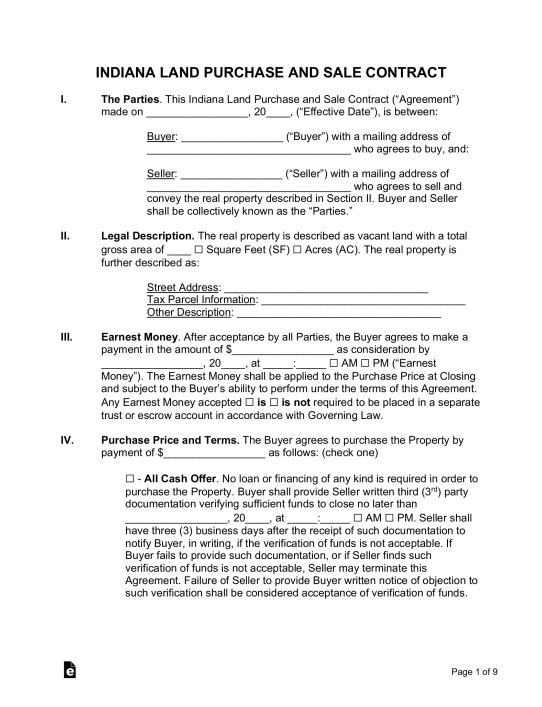
Indiana Land Contract Template

Full Conversation


What all does a court in Indiana consider to be acceptable under Trial Rule 60(b)?

Lexi

Lexi, Chatbot

I understand that navigating court rules can be quite challenging. Can you please share if you are currently involved in a legal case in Indiana?

Yes and no. The case already has a judgment entered, but I need to know what I can present to the court that would get a motion granted under Indiana Trial Rule 60(b).

Lexi

Lexi, Chatbot

Are you seeking information for yourself or on behalf of someone else?

Myself.

Lexi

Lexi, Chatbot

Is there anything else the Family Lawyer should know before I connect you? Rest assured they'll be able to help with your motion under Indiana Trial Rule 60(b).

Yes, this has to do with real estate, a land contract that the seller never returned to us after we signed the contract and sent a fully executed copy back to us. The seller is committing fraud, theft and conversion, etc., and just keeps getting away with it.

Brandon

Brandon

Hi there, and welcome. My name is Brandon, and I'm an attorney. I'll be happy to help you out today. Please note that this discussion is for guidance only and does not constitute an Attorney-Client Relationship. My answers and comments should not be considered legal advice. Please also note that I am human, that I often need to research your answer to give you an accurate response, and that I work with other customers and get up from time to time. So please be patient while waiting for a response. Please feel free to reach out if more than 30 minutes have passed.

Can you tell me more about what has happened?

Sure, long story short is we entered into what we thought was a land contract, the seller never returned a fully executed copy of the contract to us, we made a down payment, monthly payments, repairs, improvements, and handled all maintenance for the home. After 2 years of living there with no returned contract and being unable to contact the seller to inquire about our contract, we stopped payments hoping to finally have communication with the seller, but that still never happened. Instead, we were put through 2 different court proceedings and the 2nd resulted in us being wrongly evicted.

We were not given the protections that Indiana law has for land contract buyers and we were treated as tenants just renting the home.

Brandon

Brandon

What Indiana Trial Rule 60(B) is designed to do: Trial Rule 60(B) allows a court to set aside or modify a final judgment when something went seriously wrong in the process or when enforcing the judgment would be unjust. It is not meant to relitigate the case just because the outcome was bad. It is meant to address situations where the judgment was entered based on false assumptions, missing facts, procedural defects, or misconduct.

In real estate cases, especially those involving land contracts mischaracterized as leases, Indiana courts focus less on labels and more on what actually happened between the parties.

Grounds that Indiana courts commonly accept under Rule 60(B):

Here are the subsections most relevant to your situation, explained in plain terms and tied directly to what you described.

Rule 60(B)(1): Mistake, surprise, or excusable neglect

Courts will sometimes grant relief if the judgment was entered based on a fundamental mistake about the nature of the legal relationship. If the court treated you as tenants when the facts show a buyer seller relationship, that can qualify as a legal and factual mistake.

This is especially persuasive if:

  • You paid a down payment rather than a security deposit
  • You made monthly payments consistent with a purchase price
  • You paid for repairs, improvements, taxes, or insurance
  • The seller exercised no landlord type control over the property

This subsection has a strict one year deadline from the date of judgment, so timing matters.

Rule 60(B)(2): Newly discovered evidence

This applies if you now have evidence that was not available at the time of the eviction case and could not reasonably have been obtained earlier.

Examples that matter in land contract disputes include:

  • Proof that the seller never countersigned or returned the contract
  • Banking records showing payments labeled as purchase payments
  • Evidence of improvements that only an owner would reasonably make
  • Evidence that the seller was unreachable or intentionally avoiding contact

The key is showing the court that this evidence would likely have changed the outcome if it had been presented earlier.

Rule 60(B)(3): Fraud, misrepresentation, or misconduct by the opposing party

This is one of your strongest potential arguments based on what you described.

Indiana courts take this seriously when a party:

  • Accepts a down payment and monthly payments under a supposed land contract
  • Fails to return a fully executed contract while continuing to accept money
  • Represents to the eviction court that the occupants were mere tenants
  • Withholds material facts that would trigger statutory buyer protections

You do not need to prove criminal fraud. You need to show that the seller's conduct prevented the court from seeing the true nature of the transaction.

Rule 60(B)(6): Judgment is void

This applies if the court lacked authority to enter the judgment it did.

In land contract cases, this argument can work if:

  • The court applied landlord tenant eviction procedures when the law required foreclosure type protections (IN Code ยง 32-30-3-1)
  • You were entitled to statutory notice or redemption rights that were never given
  • The court lacked subject matter jurisdiction over what was actually a real estate forfeiture

If the judgment is truly void, there is no time limit to raise this argument.

Rule 60(B)(8): Any other reason justifying relief

This is the equity provision. Courts use it sparingly, but it is powerful when applied correctly.

Indiana courts look at:

  • Whether enforcing the judgment would be fundamentally unfair
  • Whether one party received a windfall through misconduct
  • Whether the moving party acted promptly after learning of the problem

In your case, the combination of a down payment, years of payments, major improvements, and loss of possession without buyer protections fits squarely into the kind of injustice courts address under this subsection.

What you should be prepared to present to the court:

A strong Rule 60(B) motion is evidence driven. Courts want documentation, not conclusions. Helpful materials include:

  • The unsigned or partially executed land contract you returned to the seller
  • Proof you sent it back and never received a countersigned copy
  • Bank records showing payments made over time
  • Receipts for repairs, improvements, or maintenance
  • Photos showing upgrades or long term occupancy
  • Any attempts you made to contact the seller
  • Court filings from both proceedings showing how you were labeled as tenants

It is also important to clearly explain why you stopped paying and to frame it as an attempt to force communication, not abandonment.

Timing and posture matter:

Indiana courts expect Rule 60(B) motions to be filed within a reasonable time. Even when there is no strict deadline, unexplained delay can hurt credibility. If you discovered the legal significance of the land contract issue only after the eviction, say that plainly and explain why.

What if the plaintiff failed to present the full contract, including an omitted affidavit stating the purchase was for investment purposes? The inclusion of this affidavit allowed the seller to circumvent applicable Indiana and federal laws which denied us protection under Indiana law. Also, the lack of notice to us of a mediation meeting, and that mediation was held without us and without us knowing, violated our due process rights.

So with Rule 60(b), how can I successfully write a motion to file with the court? The judgment was entered on February 18, 2025. I know my deadline is approaching fast and I need to file it ASAP.

Brandon

Brandon

Why the omitted affidavit and secret mediation matter under Rule 60(B):

What you described is not a minor technical issue. It goes to the integrity of the judgment itself.

Failure to present the full contract and omitted affidavit:

If the plaintiff selectively presented parts of the contract while omitting an affidavit that materially changed how the transaction would be classified, that supports relief under Rule 60(B)(3) for fraud, misrepresentation, or misconduct.

Indiana courts focus on whether the opposing party's conduct prevented you from fully and fairly presenting your case. Here, you can argue that:
The court was led to believe this was a landlord tenant relationship.
The omitted affidavit was used to characterize the transaction as an investment purchase.
That characterization allowed the plaintiff to bypass Indiana land contract protections and potentially federal consumer protections.
You were never given notice or an opportunity to challenge the affidavit or its legal effect.

You do not need to prove criminal fraud. You need to show that the court was deprived of the full picture and entered judgment based on incomplete or misleading information.

Mediation without notice and without your participation:

This raises serious due process concerns, which supports relief under Rule 60(B)(6) and potentially Rule 60(B)(8).

Indiana courts require notice and an opportunity to be heard before a party's rights are affected. A mediation held without notice to you is not harmless. It undermines the fairness of the process itself.

You should clearly state that:
You were not served notice of the mediation.
You did not waive participation.
Decisions or positions resulting from that mediation influenced the proceedings.
You were deprived of the opportunity to resolve or contest the matter.

Courts are especially sensitive to due process violations when real property and possession are involved.

Your deadline and why you must file now:

Your judgment was entered on February 18, 2025. For Rule 60(B)(1), (2), and (3), Indiana imposes a one year outer deadline, meaning February 18, 2026 is the last possible day. Courts also require filing within a "reasonable time," which means the sooner you file, the better your credibility.

Given the seriousness of the issues and the approaching deadline, filing immediately is the right move, even if the court later allows supplementation.

How to structure a strong Rule 60(B) motion:

Here is a clear, court-ready structure you can follow.

  1. Caption and title
    Use the same case caption as the eviction case.
    Title it plainly: Defendants' Verified Motion for Relief from Judgment Pursuant to Indiana Trial Rule 60(B)
    "Verified" matters if you are attaching sworn statements.
  2. Opening paragraph
    State exactly what you are asking for and why, in simple terms.
    Example structure:
    Identify the judgment and date.
    State that relief is sought under Rule 60(B)(3), (6), and (8).
    State that the judgment was entered based on misrepresentation, withheld evidence, and violations of due process.
  3. Procedural background
    Brief and factual. No argument yet.
    Date you entered possession
    Existence of a land contract
    Payments made
    Improvements performed
    Two court proceedings
    Date of eviction judgment
  4. Statement of material facts supporting relief
    This is the heart of the motion.
    Use numbered paragraphs and include facts such as:
    You signed and returned the land contract.
    The seller never returned a fully executed copy.
    You paid a down payment and monthly payments.
    You performed owner-level maintenance and improvements.
    The plaintiff failed to disclose the full contract and omitted the investment affidavit.
    The affidavit was used to recharacterize the transaction.
    Mediation occurred without notice to you.
    You had no opportunity to be heard on these issues.
    Attach exhibits and reference them clearly.
  5. Legal grounds for relief
    This is where you tie facts to Rule 60(B).
    Rule 60(B)(3): Fraud, misrepresentation, or misconduct. Explain how selective disclosure and omission misled the court and deprived you of protections under Indiana law.
    Rule 60(B)(6): Void or improper judgment. Argue that the court lacked authority to treat this as a landlord tenant eviction because the facts establish a land contract purchaser relationship.
    Rule 60(B)(8): Equity and fairness. Explain why enforcing the judgment would unjustly reward misconduct and strip you of real property interests without statutory protections.
    Keep this section clear and grounded in facts, not emotion.
  6. Due process violations
    This deserves its own subsection.
    Lack of notice
    Lack of opportunity to participate
    Mediation held without your knowledge
    Resulting prejudice
    Courts take this seriously.
  7. Relief requested
    Be specific. Ask the court to:
    Vacate the eviction judgment
    Set aside any writ of possession
    Restore possession or stay enforcement
    Set the matter for an evidentiary hearing
  8. Verification and signature
    Sign under penalty of perjury if you are verifying facts.

Practical filing advice given the time crunch:

File the motion even if:

  • The record is incomplete
  • You plan to add more exhibits later
  • The court needs briefing later
  • A timely filing preserves your rights.

Okay. I will get a new motion ready and filed. Thank you so much for your help! You have been more help than I have received in the past year!

Brandon

Brandon

You are very welcome. I wish you the best.

Also, after I file the motion on Rule 60(b), can I subsequently file a motion for leave to file a counterclaim?

Brandon

Brandon

Indiana Trial Rule 60(B) provides a mechanism for relief from a judgment under certain circumstances, such as mistake, newly discovered evidence, fraud, misrepresentation, or misconduct by an opposing party. In your case, the failure to present the full contract, including the omitted affidavit, could be seen as misrepresentation or misconduct, which might have influenced the court's decision.

The omitted affidavit stating the purchase was for investment purposes could have been used to circumvent applicable Indiana and federal laws, denying you protection under Indiana law. This could be relevant under Rule 60(B)(3), which addresses fraud and misconduct.

Additionally, the lack of notice regarding the mediation meeting and the fact that it was held without your knowledge could be a violation of your due process rights. Due process requires that parties have notice and an opportunity to be heard, and this could be a significant factor under Rule 60(B)(6) or (8).

These legal considerations focus on ensuring that judgments are based on complete and accurate information and that all parties have a fair opportunity to present their case.

So I won't be able to file a motion for leave to file a counterclaim after I file the motion on Rule 60(b)?

Brandon

Brandon

Filing a Rule 60(B) motion does not automatically bar you from later seeking leave to file a counterclaim, but the order and posture matter a great deal, and doing it in the wrong sequence can cause the court to deny the counterclaim even if the underlying facts are strong.

How do I argue that a lot of the items in the judgment are inaccurate? For example, in my judgment it states, "10. Defendants submitted an offer for the property. 11. The offer was never accepted by seller." But yet we actually didn't submit that offer, rather we were handed an Offer to Purchase by the seller's agent. We were unaware of how to properly fill out the offer and what amounts to use, so we called the seller and he instructed us on what to put down for the purchase price, interest rate, and the duration and amount of our monthly payments, and WE accepted those amounts and agreed to enter the contract in November 2020, yet didn't receive the contract until the last day of March in 2021. How do I challenge the "findings" of the court in the judgment in the Rule 60(b) motion, along with everything else? And the judge also states in the judgment, "14.

Also, how do I challenge this finding in the judgment? The judge states in the judgment, "14. Defendants never accepted the offer made by Plaintiff and no contract for the sale of real estate was signed to avoid application of the statute of frauds. I.C. 32-21-1-1(b)(4)."

Brandon

Brandon

To challenge specific findings in the judgment, such as the ones you've mentioned, you can include these points in your Rule 60(B) motion by focusing on the following:

  1. Present clear evidence: Gather any documentation or evidence that contradicts the court's findings. This could include communications with the seller, any written agreements, or records of payments made.
  2. Affidavits and testimonies: Consider including affidavits from yourself or any witnesses who can attest to the facts as you described them. This can help establish the true nature of the agreement and the interactions with the seller.
  3. Explain misunderstandings: Clearly explain how the court's findings are based on misunderstandings or misrepresentations of the facts. For example, clarify how the offer was actually presented and accepted, and how the contract was handled.
  4. Statute of frauds argument: Address the statute of frauds issue by explaining any exceptions that might apply, such as partial performance (e.g., making payments, improvements) that indicate a contract existed despite the lack of a formal signed document.
  5. Legal grounds for relief: Tie these factual inaccuracies to the legal grounds under Rule 60(B), such as mistake, misrepresentation, or newly discovered evidence.

By presenting a well-documented and clear argument, you can effectively challenge the court's findings and seek relief from the judgment.

Okay, awesome, thank you so much! I don't know if you are able to do the following, and if so that would be the best thing ever for my situation, but if not I totally understand. Once I have my finalized Motion for Relief finished, can I paste a copy to you and have you, in a sense, "grade" my motion?

Brandon

Brandon

My role here is to provide general legal information, not to review specific documents.

Okay, that's what I thought. Could you point me in the direction of someone who possibly could review specific documents? I'm sorry for bothering you like this, but my situation has me extremely anxious, stressed, more than likely too much of a perfectionist, and I catastrophize everything. I feel as though I have a much greater chance at sabotaging my case just by being overly meticulous and too much of a perfectionist.

But you have no idea how grateful I am for all of the information you have been able to share with me thus far! This entire situation has actually made me want to pursue my education and continue on my personal journey into the legal field that I initially started back in 2010 and had to make the hardest decision ever at the time when I had to quit college.

Brandon

Brandon

I can only recommend lawyers.com or avvo.com to find local attorneys.

Okay, again, thank you so very much for your help. You have helped me out the most so far! I must say I am forever grateful to you, and AskaLawyer.com!

Brandon

Brandon

You are very welcome.

Brandon

Brandon

17,789 satisfied customers

Brandon
Welcome! Have a similar question?

12 lawyers online now

0:00

By messaging AskALawyer, you agree to our Terms and Privacy Policy.

Brandon
Brandon

Attorney

4.58 (17,789)

[VA] Can a condominium board member be held liable for defamation?

13

3

Answered 1 week ago

Disclaimer


By messaging AskaLawyer.com, you agree to ourย Terms and have read ourย Privacy Policy.

The information provided on AskaLawyer.com is for general informational purposes only and does not constitute legal advice. While we strive to ensure the accuracy and timeliness of the information presented, we make no guarantees regarding its completeness or applicability to your specific circumstances.

Use of this website does not create an attorney-client relationship between you and AskaLawyer.com or any of its attorneys. Communications through this website, including any responses from attorneys, are not privileged or confidential. For advice tailored to your individual situation, we recommend consulting a licensed attorney in your jurisdiction.

AskaLawyer.com disclaims any liability for actions taken or not taken based on the content of this site. We are not responsible for any third-party content that may be accessed through this website. Reliance on any information provided herein is solely at your own risk.

Ask a Lawyer Logo
Ask a Lawyer Logo
Intake Questions
Step  of 3
Loading...

What's your legal question?

Lexi, Chatbot

How would you like your legal question to be answered?

Online

Loading...

How do you like to pay?

By proceeding with payment, you agree to our Terms and Privacy Policy. You authorize us to charge $ today and $ thereafter until canceled. You may cancel anytime in the My Account section to stop future charges.

Total Due:

After purchasing, your chat will begin with an attorney.

By proceeding with payment, you agree to our Terms and Privacy Policy. You authorize us to charge $ today and $ thereafter until canceled. You may cancel anytime in the My Account section to stop future charges.

Total Due:

After purchasing, your chat will begin with an attorney.

After connecting, your chat will begin with an attorney. After choosing, your chat will continue with Legal AI.

It looks like you already have an account with Ask a Lawyer.

We have sent you a magic link to . Click the link in your email to sign in and continue your chat.

spin

Step of 6 โ€ข

You'll receive an email at as soon as the lawyer joins the conversation ๐Ÿ™๐Ÿป๐Ÿ˜Š

Over 90% of lawyers connect within 5 minutes. If you're not online at that moment, don't worry โ€” the lawyer will reply to your message while you're away.

You're also welcome to stay in the chat while waiting to be connected ๐Ÿ’ฌโœจ

Waiting for lawyer

We couldn't send your message. Please try again.

Your lawyer will reply as soon as possible

If there’s a delay, please don’t worry. Your chat will stay open, and they’ll get back to you as soon as they can. There’s no rush on your end either. You’ll receive an email notification as soon as there’s a new message.

You've reached your AI chat limit

Upgrade your plan to continue chatting and get instant domain-specific answers.

0:00