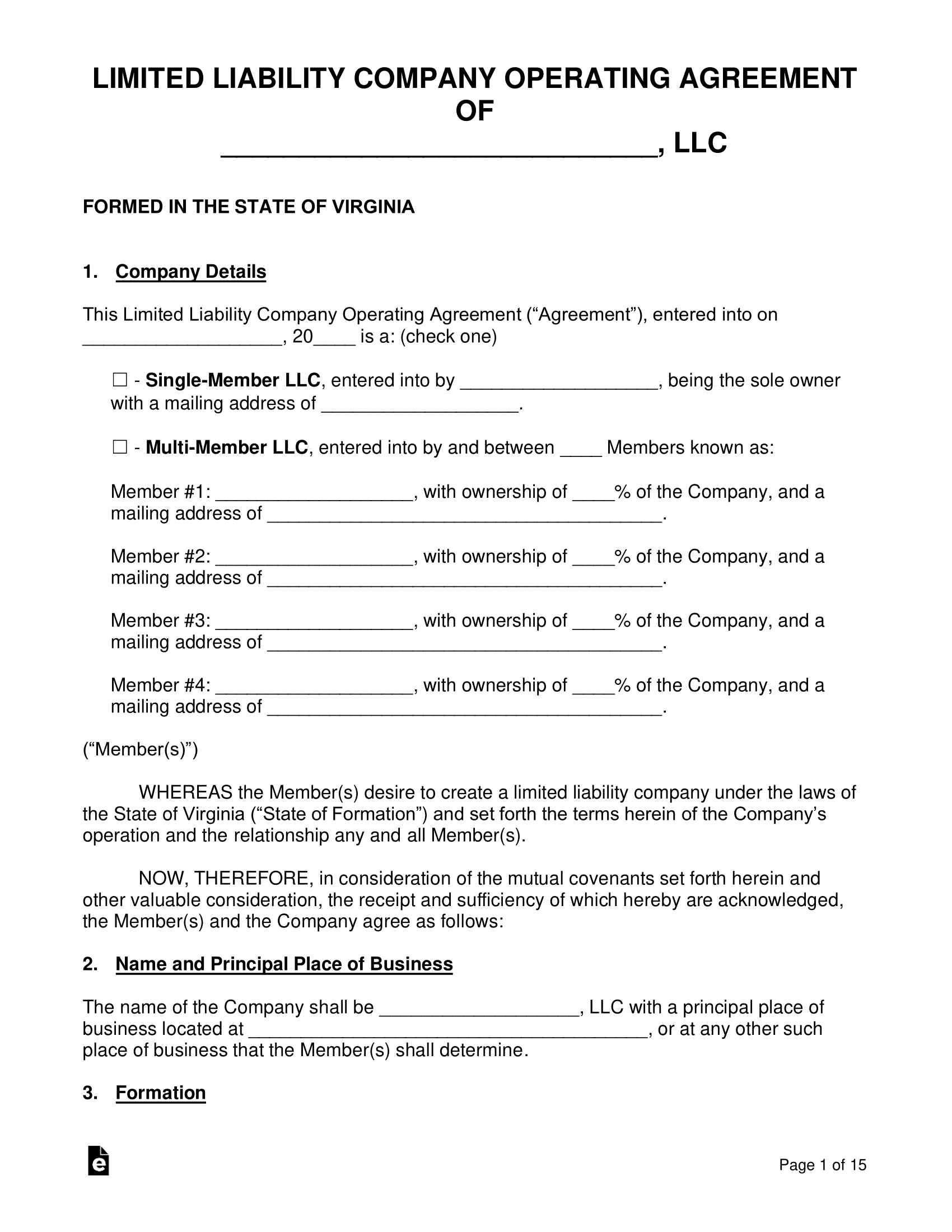
Does the ownership split in my operating agreement comply with Virginia law?
Also, the Owner wanted to add the following statement: In the event of a disagreement where all parties cannot come to a unanimous agreement after mediation, the final vote will be Current Owner 51%, to the remaining 49% vote. Is this binding and does it not contradict with the ownership agreement of 40 - 60?
The disagreement resolution clause you mentioned adds a layer of complexity. It proposes that if the members can’t agree after mediation, the current owner would have 51% of the voting power, while the remaining members would have 49%. This could create tension because, even though the new members hold the majority of ownership (60%), the current owner could still have the final say in decisions if there’s a dispute. This provision could potentially override the majority’s wishes in certain situations, which is something to carefully consider.
For this clause to be compliant with Virginia LLC law, it needs to be very clear and precise in terms of when it applies, what kinds of disagreements it covers, and how mediation is to be handled (VA Code § 13.1-1023(A)(1)). Also, it’s essential that all members—especially your group—agree to this clause fully, and there should be evidence of that mutual consent. If the clause is not integrated properly into the Operating Agreement, it could cause problems down the line.
Virginia law allows significant flexibility in drafting LLC agreements, but there are limits (VA Code § 13.1-1003). Clauses that are unfair, violate basic contract principles, or contradict mandatory laws could be challenged. Additionally, the current owner still has a legal duty to act in the best interests of the LLC and treat all members fairly. If the owner tries to use their voting power to benefit themselves at the expense of the minority members, it could be seen as a breach of their fiduciary duties, giving your group grounds for legal action.
The practical effect of this clause could shift control dynamics. Even though your group has a majority stake, the current owner could override your votes on important decisions if they invoke this clause after a disagreement. This underscores the need for careful consideration before agreeing to this clause. It might be worth negotiating alternatives, like limiting which decisions are subject to this rule, adding a time limit (sunset clause), or exploring other dispute resolution methods that better protect everyone’s interests.
In summary, while the ownership split seems fine under Virginia law, the disagreement resolution clause could put your group at a disadvantage, despite having the majority. It’s critical to ensure the clause is clear, fair, and legally sound.
Full Conversation

I am starting a business with three members in an LLC, and we as a group will be entering into a business agreement to partner with another LLC that is going under. The agreement ownership reads 40% to the current owner and the new partners (my group) reads 20% per member. Is this a legal agreement giving the group 60% of the business?

I understand the importance of clarifying ownership percentages in a business agreement. Are you looking to confirm if the ownership structure outlined in the agreement is legally binding?

Yes.

Have you reviewed the terms of the agreement with a corporate lawyer to ensure that it aligns with your group's expectations and protects your interests?

No.

Is there anything else the Corporate Lawyer should know before I connect you? Rest assured they'll be able to help with ownership percentages.

The Owner wanted to add the following statement: In the event of a disagreement where all parties cannot come to a unanimous agreement after mediation, the final vote will be Current Owner 51%, to the remaining 49% vote. Is this binding and does it not contradict with the ownership agreement of 40 - 60?

Hello! I'm delighted that you've chosen to contact AskaLawyer for assistance. My name is Jon, and I'm here to assist you as an attorney.

What state is the LLC formed in?

Virginia.

Ok, and you want to know if that is legal?

Yes.

Understood! I think I have all the information I need, but is there anything else you'd like to add before I get started on your answer? If not, I'll start working on a response for you right away.

No, thank you.

In Virginia, when setting up a Limited Liability Company (LLC) with multiple members, it’s important to clearly define ownership shares and how the company will be run. In your case, where the existing owner keeps 40% and the new group of three members shares 60% (20% each), this setup is generally acceptable under Virginia law, as long as it’s properly documented in the LLC’s Operating Agreement.
This agreement is the key document that governs the LLC, outlining each member’s rights, responsibilities, and contributions. To avoid any future legal issues, it's crucial that the Operating Agreement accurately reflects the agreed-upon ownership split.

The disagreement resolution clause you mentioned adds a layer of complexity. It proposes that if the members can’t agree after mediation, the current owner would have 51% of the voting power, while the remaining members would have 49%. This could create tension because, even though the new members hold the majority of ownership (60%), the current owner could still have the final say in decisions if there’s a dispute. This provision could potentially override the majority’s wishes in certain situations, which is something to carefully consider.
For this clause to be compliant with Virginia LLC law, it needs to be very clear and precise in terms of when it applies, what kinds of disagreements it covers, and how mediation is to be handled (VA Code § 13.1-1023(A)(1)). Also, it’s essential that all members—especially your group—agree to this clause fully, and there should be evidence of that mutual consent. If the clause is not integrated properly into the Operating Agreement, it could cause problems down the line.
Virginia law allows significant flexibility in drafting LLC agreements, but there are limits (VA Code § 13.1-1003). Clauses that are unfair, violate basic contract principles, or contradict mandatory laws could be challenged. Additionally, the current owner still has a legal duty to act in the best interests of the LLC and treat all members fairly. If the owner tries to use their voting power to benefit themselves at the expense of the minority members, it could be seen as a breach of their fiduciary duties, giving your group grounds for legal action.
The practical effect of this clause could shift control dynamics. Even though your group has a majority stake, the current owner could override your votes on important decisions if they invoke this clause after a disagreement. This underscores the need for careful consideration before agreeing to this clause. It might be worth negotiating alternatives, like limiting which decisions are subject to this rule, adding a time limit (sunset clause), or exploring other dispute resolution methods that better protect everyone’s interests.
In summary, while the ownership split seems fine under Virginia law, the disagreement resolution clause could put your group at a disadvantage, despite having the majority. It’s critical to ensure the clause is clear, fair, and legally sound.

I highly recommend consulting with a local Virginia business attorney who can review the full agreement, address potential risks, and ensure your group’s interests are protected before finalizing the partnership.

Thank you, can I get a copy of the chat answer you provided?

You can copy/paste this into a document, or I recommend reaching out to AskaLawyer's customer service team and maybe they can send it to you. They’ll be more than happy to assist you!

And great! I'm so glad I could assist you with your question. It was a pleasure working with you.
Wishing you a fantastic rest of the day!

You as well!