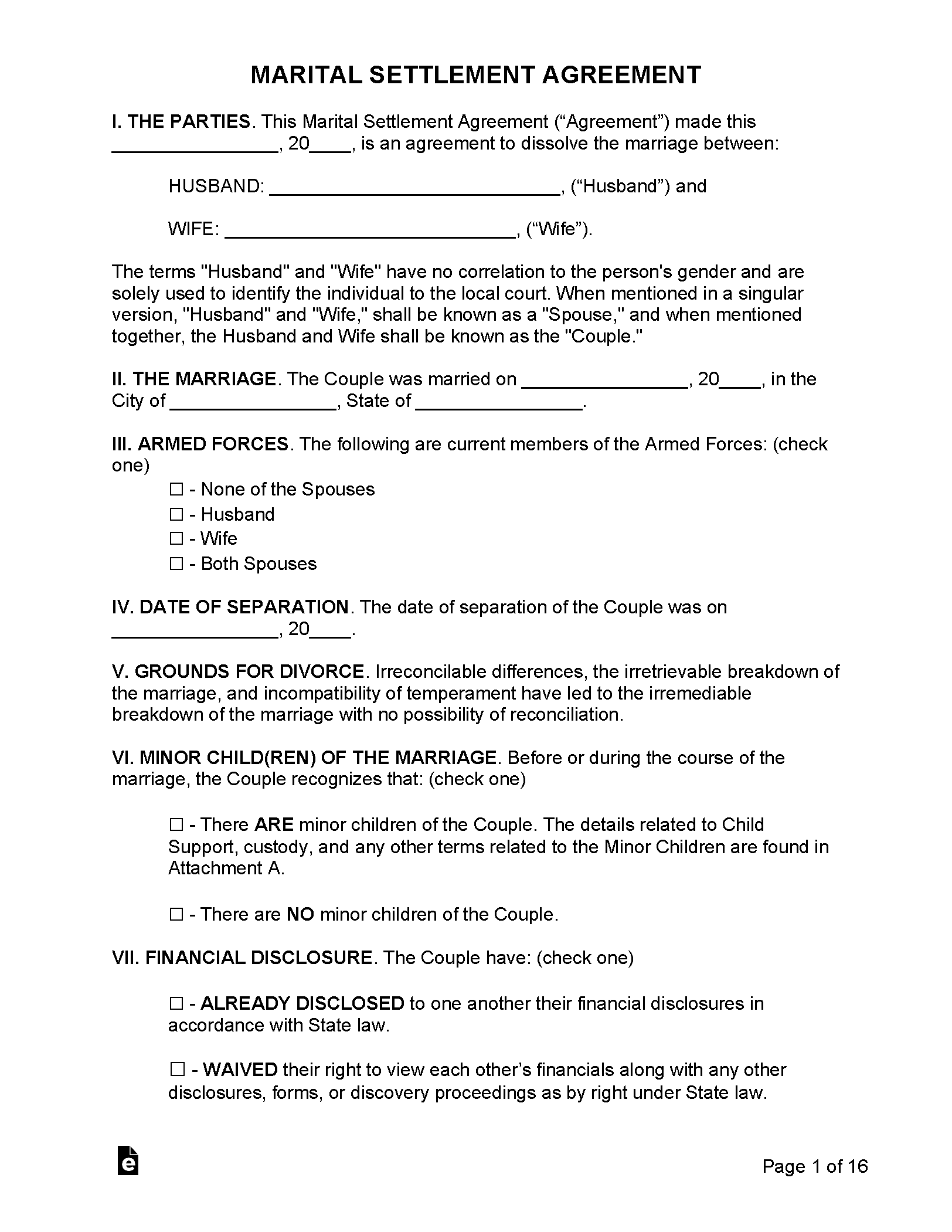
In order to initiate a marital dissolution (divorce), the specific paperwork required depends on the state where you reside, as divorce laws and required forms vary by jurisdiction. Generally, the primary document needed to start the divorce process is the Petition for Dissolution of Marriage, sometimes called a Divorce Petition or Complaint for Divorce. This is the formal legal document that notifies the court that you are seeking to end your marriage and outlines basic information such as spousal details, residency, grounds for divorce, and any requests for division of assets, spousal support, or child custody if applicable.
This form must typically be filed with the family or superior court in the county where either spouse resides, along with the payment of a filing fee. If you are seeking a no-fault divorce, meaning neither party is blaming the other for the breakdown of the marriage, you can typically cite irreconcilable differences as the reason for the divorce.
Once the divorce petition is filed, the other spouse must be served with the paperwork, which is required under due process laws to ensure they have notice of the proceedings and an opportunity to respond. The rules for service of process vary, but most states require a third-party process server, sheriff, or certified mail service to officially deliver the papers to the other spouse.
After service, the spouse will have a limited timeframe (usually 20-30 days) to file a response or answer with the court. If both spouses agree on the divorce terms, such as property division, spousal support, and child custody arrangements, the process may proceed as an uncontested divorce, which is typically faster and less expensive. However, if one spouse contests any aspect of the divorce, it may result in a contested divorce, requiring mediation or court hearings to resolve disputes.
If you are completing the paperwork yourself, many state courts provide self-help legal resources online, often through the official court website or through organizations that assist with family law matters. Websites like eForms, LawHelp.org, and the state’s judicial branch website often provide free or low-cost downloadable divorce forms, including financial disclosures, child custody agreements, and marital settlement agreements. Some states also require a waiting period before the divorce is finalized, ranging from 30 days to six months, depending on the state’s laws. If children are involved, courts may require parenting classes, custody evaluations, or child support calculations before issuing a final divorce decree.
Full Conversation

I am interested in completing paperwork for a marital divorce. How do I do this?

I understand you're looking to complete paperwork for a marital dissolution. Have you already started the process or are you looking to begin it?

No. I would like a divorce. Paperwork for a marital divorce, please.

Are you seeking assistance with filling out the paperwork yourself, or are you looking for a lawyer to handle the entire process for you?

I am looking for the paperwork on this website to complete the information.

Is there anything else the lawyer should know before I connect you? Rest assured they'll be able to help with your divorce paperwork.

Can it be found on eForms? What is the name of the paperwork?

Good afternoon and welcome to AskaLawyer.

In order to initiate a marital dissolution (divorce), the specific paperwork required depends on the state where you reside, as divorce laws and required forms vary by jurisdiction. Generally, the primary document needed to start the divorce process is the Petition for Dissolution of Marriage, sometimes called a Divorce Petition or Complaint for Divorce. This is the formal legal document that notifies the court that you are seeking to end your marriage and outlines basic information such as spousal details, residency, grounds for divorce, and any requests for division of assets, spousal support, or child custody if applicable.
This form must typically be filed with the family or superior court in the county where either spouse resides, along with the payment of a filing fee. If you are seeking a no-fault divorce, meaning neither party is blaming the other for the breakdown of the marriage, you can typically cite irreconcilable differences as the reason for the divorce.
Once the divorce petition is filed, the other spouse must be served with the paperwork, which is required under due process laws to ensure they have notice of the proceedings and an opportunity to respond. The rules for service of process vary, but most states require a third-party process server, sheriff, or certified mail service to officially deliver the papers to the other spouse.
After service, the spouse will have a limited timeframe (usually 20-30 days) to file a response or answer with the court. If both spouses agree on the divorce terms, such as property division, spousal support, and child custody arrangements, the process may proceed as an uncontested divorce, which is typically faster and less expensive. However, if one spouse contests any aspect of the divorce, it may result in a contested divorce, requiring mediation or court hearings to resolve disputes.
If you are completing the paperwork yourself, many state courts provide self-help legal resources online, often through the official court website or through organizations that assist with family law matters. Websites like eForms, LawHelp.org, and the state’s judicial branch website often provide free or low-cost downloadable divorce forms, including financial disclosures, child custody agreements, and marital settlement agreements. Some states also require a waiting period before the divorce is finalized, ranging from 30 days to six months, depending on the state’s laws. If children are involved, courts may require parenting classes, custody evaluations, or child support calculations before issuing a final divorce decree.

Does that make sense?