[CO] How should we answer the living will question on a MPOA if she already has one from California?

Craig
Craig

5,068 satisfied customers

View context
Solved

Based on your situation, there are several legal arguments and considerations in the context of moving a trust and medical power of attorney from California to Colorado that could potentially support your case:

1.Full Faith and Credit Clause: Under the U.S. Constitution, states are generally required to respect the public acts, records, and judicial proceedings of other states. This means that a trust or medical power of attorney established in California should be recognized in Colorado, although there may be nuances in how each state interprets these documents. (CO Rev Stat § 15-14-509)

2. State-specific requirements: While the Full Faith and Credit Clause provides a broad framework, each state can have specific requirements for medical powers of attorney. For instance, Colorado might have different witnessing or notarization requirements compared to California, which could affect the enforceability of the document if not updated.

3. Tax implications: Trusts are generally honored across state lines, but there can be tax implications when a trust is administered in a different state than where it was created. This is particularly relevant for estate taxes and income taxes on trust assets, which can vary significantly between states.

4. Healthcare directives: Medical power of attorney documents often include healthcare directives, which can be subject to state-specific laws. It's important to ensure that these directives comply with Colorado's regulations to avoid any issues during medical decision-making.

To address your concern about marking the box on the medical power of attorney (MPOA) form regarding the living will, here's what you can consider:

1.Review the existing living will.

Since your mother-in-law's living will still reflects her current wishes, you should ensure that it is attached or referenced in the MPOA document. This ensures that her healthcare preferences are clearly documented and accessible.

2. Marking the box.

If the MPOA form asks whether there is an existing living will, you should mark “Yes” since she already has one in place. This indicates that her healthcare decisions are guided by the existing living will.

3. Consult Colorado law.

While the living will is generally recognized across states, it's wise to consult with a Colorado attorney to ensure compliance with any specific state requirements. This might include witnessing or notarization standards that differ from California.

4. Consider updating the MPOA.

Even though the living will is valid, updating the MPOA to reflect Colorado laws can prevent potential issues during medical decision-making. This might involve re-executing the document with the appropriate formalities required by Colorado.

5. Trust and financial considerations.

As for the trust, while it is recognized nationwide, reviewing it with a Colorado estate attorney can help address any state-specific tax implications or administrative requirements.

0

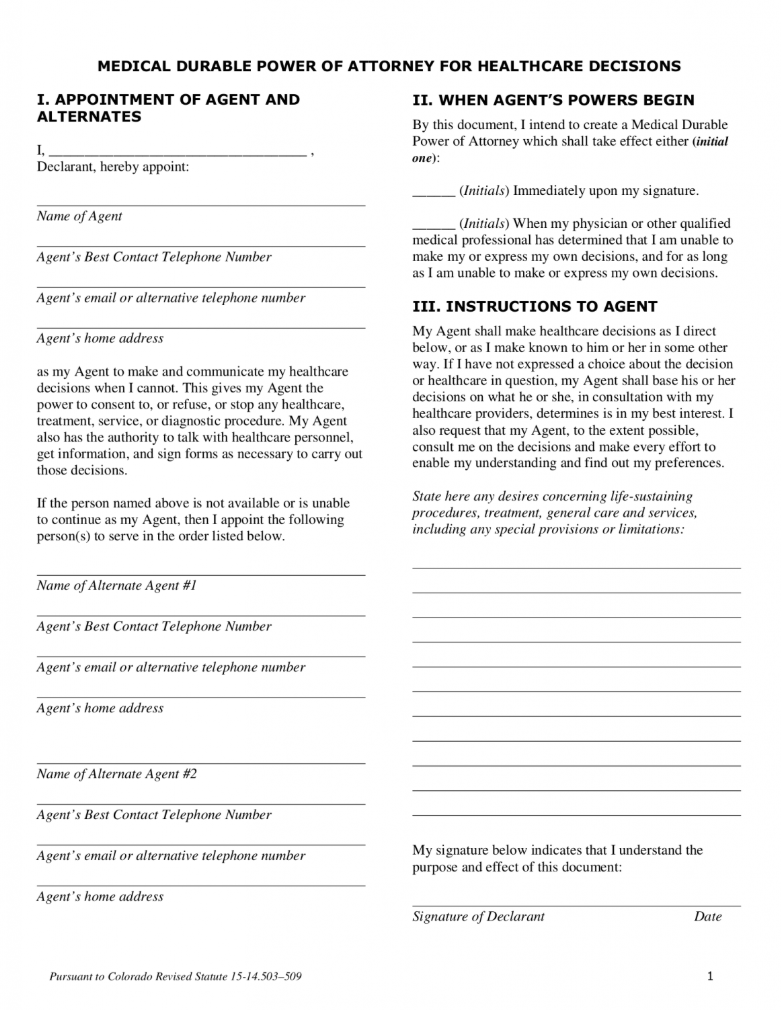
Colorado Medical Power of Attorney Form
Full Conversation


My mother in law lives with us. She is 97 years old. She has a living will and trust which was established in 1993 and covers her medical power of attorney. Her husband is now deceased and she lives with us in a different state from where the original was written. She is clear minded and healthy but is concerned her medical power of attorney needs to be updated to current. On this MPOA form we are stumped on the question concerning a living will. Because she has one in place, how should we mark the box in this question?

Lexi

Lexi, Chatbot

It sounds like you're navigating a complex situation with your mother-in-law's medical power of attorney. Can you tell me if the living will she has in place still reflects her current wishes?

Yes it does.

Lexi

Lexi, Chatbot

Have there been any significant changes in her health or circumstances since the living will and trust were established?

No other than older. She is very clear minded and healthy for her age.

Craig

Craig

Hey there! I'm Craig, an attorney with many years of experience.

Craig

Craig

I understand you're dealing with a situation involving your mother-in-law's medical power of attorney and living will. Could you share more about the specific concerns you have regarding updating her medical power of attorney?

The main issue is with state jurisdiction. Her trust was established in California and she now lives in Colorado with us. Her husband passed in 2019. She is now concerned the medical power of attorney could be an issue with her treatment if it is not updated to the current state. We have received confusing counsel from a local estate attorney.

Craig

Craig

I understand your concern about the jurisdictional issues with the medical power of attorney. Could you tell me more about the specific advice or concerns the local estate attorney shared with you? This will help me understand the situation better.

Her daughter, my wife, is still listed as the first agent. She believes the entire trust should be re-written to reflect the new state as it might affect settlement of financial issues first and foremost. She said the medical POA is important to update again mainly due to state law, etc. I have read that the trust is honored throughout the USA, but taxes in settlement might be the only issue.

She is the attorney, not my wife.

Craig

Craig

Thanks for sharing that. It sounds like there are a few layers to consider here. Could you let me know if there have been any changes in the assets or beneficiaries since the trust was originally established? This might help in understanding if a full update is necessary.

One of her children passed in 2019. Her daughter is the only surviving child. Her son's children will receive his settlement upon my mother in law's death. That has already been updated in the trust by her lawyer in California in 2019. No other changes.

Craig

Craig

Got it, thanks for clarifying that. It sounds like the trust is mostly up to date with the changes in beneficiaries. Let's move on to discuss how you might address the jurisdictional concerns with the medical power of attorney and whether any updates are needed to align with Colorado's laws.

Ok. No other questions other than the first. How to mark the box.

Craig

Craig

Based on your situation, there are several legal arguments and considerations in the context of moving a trust and medical power of attorney from California to Colorado that could potentially support your case:

1.Full Faith and Credit Clause: Under the U.S. Constitution, states are generally required to respect the public acts, records, and judicial proceedings of other states. This means that a trust or medical power of attorney established in California should be recognized in Colorado, although there may be nuances in how each state interprets these documents. (CO Rev Stat § 15-14-509)

2. State-specific requirements: While the Full Faith and Credit Clause provides a broad framework, each state can have specific requirements for medical powers of attorney. For instance, Colorado might have different witnessing or notarization requirements compared to California, which could affect the enforceability of the document if not updated.

3. Tax implications: Trusts are generally honored across state lines, but there can be tax implications when a trust is administered in a different state than where it was created. This is particularly relevant for estate taxes and income taxes on trust assets, which can vary significantly between states.

4. Healthcare directives: Medical power of attorney documents often include healthcare directives, which can be subject to state-specific laws. It's important to ensure that these directives comply with Colorado's regulations to avoid any issues during medical decision-making.

To address your concern about marking the box on the medical power of attorney (MPOA) form regarding the living will, here's what you can consider:

1.Review the existing living will.

Since your mother-in-law's living will still reflects her current wishes, you should ensure that it is attached or referenced in the MPOA document. This ensures that her healthcare preferences are clearly documented and accessible.

2. Marking the box.

If the MPOA form asks whether there is an existing living will, you should mark “Yes” since she already has one in place. This indicates that her healthcare decisions are guided by the existing living will.

3. Consult Colorado law.

While the living will is generally recognized across states, it's wise to consult with a Colorado attorney to ensure compliance with any specific state requirements. This might include witnessing or notarization standards that differ from California.

4. Consider updating the MPOA.

Even though the living will is valid, updating the MPOA to reflect Colorado laws can prevent potential issues during medical decision-making. This might involve re-executing the document with the appropriate formalities required by Colorado.

5. Trust and financial considerations.

As for the trust, while it is recognized nationwide, reviewing it with a Colorado estate attorney can help address any state-specific tax implications or administrative requirements.

Thank you.

Craig

Craig

I hope I was able to help resolve your issue! If you have any other questions, feel free to ask. Don't hesitate to reach out whenever you need assistance!

Craig

Craig

5,068 satisfied customers

Craig
Welcome! Have a similar question?

12 lawyers online now

0:00

By messaging AskALawyer, you agree to our Terms and Privacy Policy.

Disclaimer


By messaging AskaLawyer.com, you agree to our Terms and have read our Privacy Policy.

The information provided on AskaLawyer.com is for general informational purposes only and does not constitute legal advice. While we strive to ensure the accuracy and timeliness of the information presented, we make no guarantees regarding its completeness or applicability to your specific circumstances.

Use of this website does not create an attorney-client relationship between you and AskaLawyer.com or any of its attorneys. Communications through this website, including any responses from attorneys, are not privileged or confidential. For advice tailored to your individual situation, we recommend consulting a licensed attorney in your jurisdiction.

AskaLawyer.com disclaims any liability for actions taken or not taken based on the content of this site. We are not responsible for any third-party content that may be accessed through this website. Reliance on any information provided herein is solely at your own risk.

Ask a Lawyer Logo
Ask a Lawyer Logo
Intake Questions
Step  of 3
Loading...

Lexi, Chatbot

How would you like your legal question to be answered?

Online

Legal AI

Using ChatGPT 4o

Loading...

How do you like to pay?

By proceeding with payment, you agree to our Terms and Privacy Policy. You authorize us to charge $ today and $ thereafter until canceled. You may cancel anytime in the My Account section to stop future charges.

Total Due:

After purchasing, your chat will begin with an attorney.

By proceeding with payment, you agree to our Terms and Privacy Policy. You authorize us to charge $ today and $ thereafter until canceled. You may cancel anytime in the My Account section to stop future charges.

Total Due:

After purchasing, your chat will begin with an attorney.

After connecting, your chat will begin with an attorney.

After choosing, your chat will continue with Legal AI.

It looks like you already have an account with Ask a Lawyer.

We have sent you a magic link to . Click the link in your email to sign in and continue your chat.

spin

Step of 6 •

You'll receive an email at as soon as the lawyer joins the conversation 🙏🏻😊

Over 90% of lawyers connect within 5 minutes. If you're not online at that moment, don't worry — the lawyer will reply to your message while you're away.

You're also welcome to stay in the chat while waiting to be connected 💬✨

Waiting for lawyer

0:00