[NJ] What do I need to do if my parent passed away before I could act under a power of attorney?

Andres Sanchez
Andres Sanchez

22,292 satisfied customers

View context
Solved

Here’s how this process works in New Jersey, with the relevant legal authority included.

Obtain death certificates
You should obtain multiple certified copies of your mother’s death certificate. Financial institutions, insurers, and the Surrogate’s Court will all require certified copies to release information or assets. This is a practical requirement rather than a statutory one, but it is standard in New Jersey probate practice.

Identify assets and debts
You’ll need to identify and inventory your mother’s assets (such as bank accounts, life insurance, vehicles, and any real property) and outstanding debts. This information will be required when administering the estate and when completing documents for the Surrogate’s Court. The administrator has a fiduciary duty to marshal estate assets and address liabilities under N.J.S.A. 3B:10-23.

Apply to be appointed administrator
Because there is no will, the estate is administered as an intestate estate under N.J.S.A. 3B:5-1 et seq. You must apply to the Hudson County Surrogate’s Court to be appointed as administrator of the estate. Authority for appointment and issuance of Letters of Administration comes from N.J.S.A. 3B:10-2 and 3B:10-4. Once appointed, you will receive Letters of Administration, which give you legal authority to act on behalf of the estate.

Notify banks and other institutions
After appointment, you provide the institutions holding your mother’s assets with:

  • certified death certificate, and
  • Your Letters of Administration.

This allows accounts to be accessed, frozen funds to be released to the estate, or assets to be transferred properly. Institutions generally will not act without these documents.

Pay debts and distribute assets
Under N.J.S.A. 3B:22-2, estate assets must first be used to pay valid debts, funeral expenses, and administrative costs. Only after those obligations are satisfied may remaining assets be distributed to heirs. Distribution follows New Jersey intestacy law under N.J.S.A. 3B:5-3 through 3B:5-14, depending on surviving relatives.

Handle taxes
You are responsible for ensuring that any required final income tax returns are filed. Depending on the size and composition of the estate, additional filings may be required, including potential New Jersey inheritance tax returns under N.J.S.A. 54:34-1 et seq. (New Jersey no longer has an estate tax, but the inheritance tax may still apply depending on the beneficiaries).

If you want, I can help you understand how intestate distribution works in New Jersey, what documents the Hudson County Surrogate’s Court will require for appointment, or how to deal with specific banks or insurance companies during administration.

0

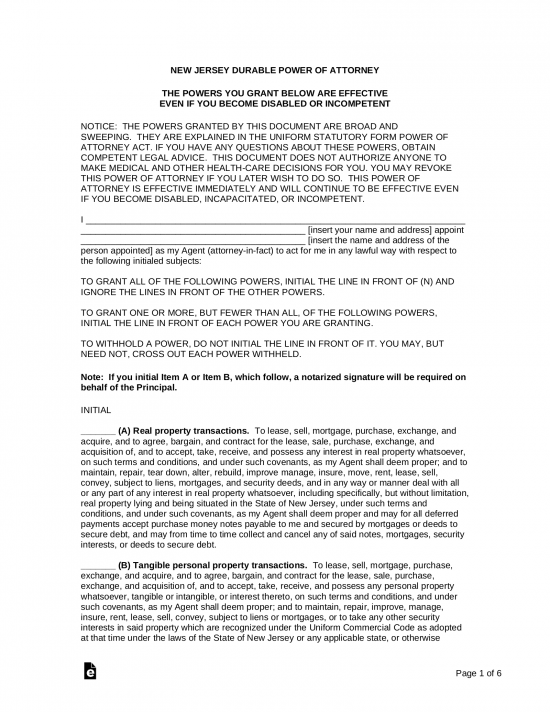
New Jersey Durable Power of Attorney
Full Conversation


Good afternoon. My mom passed away last week and I was supposed to become her power of attorney, but I’m not sure what is needed.

Lexi

Lexi, Chatbot

I’m very sorry for your loss. I know this is a difficult time. Did your mom have a will or any estate planning documents that you’re aware of?

I didn’t find anything in her personal belongings.

Lexi

Lexi, Chatbot

I didn’t find anything in her personal belongings.

Yes.

Andres Sanchez

Andres Sanchez

Hi, I’m Andres Sanchez, an attorney with many years of experience. I understand you’re dealing with your mom’s recent passing and need guidance. I’m here to help you work through this.

Thank you.

Andres Sanchez

Andres Sanchez

To make sure I give you accurate information, can you tell me where you’re located? Also, have you been appointed as the executor of your mom’s estate, or is someone else handling that?

We’re in New Jersey. My mom lived in Bayonne, NJ, and I live in Jersey City, NJ.

Andres Sanchez

Andres Sanchez

Thank you. That helps narrow things down under New Jersey law. Did your mom have any bank accounts, property, or other assets that you know of?

I will be handling everything for my mom. She had bank accounts, no home, and she did have life insurance policies.

Andres Sanchez

Andres Sanchez

Understood. Here’s an important clarification first: a power of attorney automatically ends when a person passes away. So even if you were intended to be her power of attorney, that authority cannot be used after death.

Because your mom passed away without a will, her estate is considered intestate under New Jersey law. That means the Surrogate’s Court will appoint an administrator to handle her estate, and that can be you.

If you’re ready, I can walk you through the next steps.

Let’s move forward.

Andres Sanchez

Andres Sanchez

Here’s how this process works in New Jersey, with the relevant legal authority included.

Obtain death certificates
You should obtain multiple certified copies of your mother’s death certificate. Financial institutions, insurers, and the Surrogate’s Court will all require certified copies to release information or assets. This is a practical requirement rather than a statutory one, but it is standard in New Jersey probate practice.

Identify assets and debts
You’ll need to identify and inventory your mother’s assets (such as bank accounts, life insurance, vehicles, and any real property) and outstanding debts. This information will be required when administering the estate and when completing documents for the Surrogate’s Court. The administrator has a fiduciary duty to marshal estate assets and address liabilities under N.J.S.A. 3B:10-23.

Apply to be appointed administrator
Because there is no will, the estate is administered as an intestate estate under N.J.S.A. 3B:5-1 et seq. You must apply to the Hudson County Surrogate’s Court to be appointed as administrator of the estate. Authority for appointment and issuance of Letters of Administration comes from N.J.S.A. 3B:10-2 and 3B:10-4. Once appointed, you will receive Letters of Administration, which give you legal authority to act on behalf of the estate.

Notify banks and other institutions
After appointment, you provide the institutions holding your mother’s assets with:

  • certified death certificate, and
  • Your Letters of Administration.

This allows accounts to be accessed, frozen funds to be released to the estate, or assets to be transferred properly. Institutions generally will not act without these documents.

Pay debts and distribute assets
Under N.J.S.A. 3B:22-2, estate assets must first be used to pay valid debts, funeral expenses, and administrative costs. Only after those obligations are satisfied may remaining assets be distributed to heirs. Distribution follows New Jersey intestacy law under N.J.S.A. 3B:5-3 through 3B:5-14, depending on surviving relatives.

Handle taxes
You are responsible for ensuring that any required final income tax returns are filed. Depending on the size and composition of the estate, additional filings may be required, including potential New Jersey inheritance tax returns under N.J.S.A. 54:34-1 et seq. (New Jersey no longer has an estate tax, but the inheritance tax may still apply depending on the beneficiaries).

If you want, I can help you understand how intestate distribution works in New Jersey, what documents the Hudson County Surrogate’s Court will require for appointment, or how to deal with specific banks or insurance companies during administration.

Andres Sanchez

Andres Sanchez

22,292 satisfied customers

Andres Sanchez
Welcome! Have a similar question?

12 lawyers online now

0:00

By messaging AskALawyer, you agree to our Terms and Privacy Policy.

Disclaimer


By messaging AskaLawyer.com, you agree to our Terms and have read our Privacy Policy.

The information provided on AskaLawyer.com is for general informational purposes only and does not constitute legal advice. While we strive to ensure the accuracy and timeliness of the information presented, we make no guarantees regarding its completeness or applicability to your specific circumstances.

Use of this website does not create an attorney-client relationship between you and AskaLawyer.com or any of its attorneys. Communications through this website, including any responses from attorneys, are not privileged or confidential. For advice tailored to your individual situation, we recommend consulting a licensed attorney in your jurisdiction.

AskaLawyer.com disclaims any liability for actions taken or not taken based on the content of this site. We are not responsible for any third-party content that may be accessed through this website. Reliance on any information provided herein is solely at your own risk.

Ask a Lawyer Logo
Ask a Lawyer Logo
Intake Questions
Step  of 3
Loading...

Lexi, Chatbot

How would you like your legal question to be answered?

Online

Legal AI

Using ChatGPT 4o

Loading...

How do you like to pay?

By proceeding with payment, you agree to our Terms and Privacy Policy. You authorize us to charge $ today and $ thereafter until canceled. You may cancel anytime in the My Account section to stop future charges.

Total Due:

After purchasing, your chat will begin with an attorney.

By proceeding with payment, you agree to our Terms and Privacy Policy. You authorize us to charge $ today and $ thereafter until canceled. You may cancel anytime in the My Account section to stop future charges.

Total Due:

After purchasing, your chat will begin with an attorney.

After connecting, your chat will begin with an attorney.

After choosing, your chat will continue with Legal AI.

It looks like you already have an account with Ask a Lawyer.

We have sent you a magic link to . Click the link in your email to sign in and continue your chat.

spin

Step of 6 •

You'll receive an email at as soon as the lawyer joins the conversation 🙏🏻😊

Over 90% of lawyers connect within 5 minutes. If you're not online at that moment, don't worry — the lawyer will reply to your message while you're away.

You're also welcome to stay in the chat while waiting to be connected 💬✨

Waiting for lawyer

0:00