[MD] How do I transfer my primary residence into a revocable living trust and record the new deed?

Jessica B
Jessica B

30,891 satisfied customers

View context
Solved

In Maryland, transferring real estate into a revocable living trust involves changing the title of the property from your name to the name of the trust. This process is known as “funding the trust.” The deed must be prepared correctly to reflect this change, and it typically requires recording the new deed with the local county recorder’s office. Additionally, Maryland law allows you to transfer property into a trust (MD Estates and Trusts Code § 14-404 ) without affecting the mortgage or existing liens, but you should still check your mortgage documents or notify the lender if there is an outstanding loan.

It’s perfectly acceptable to name the trust after yourself (for example, “[Your Full Name] Revocable Living Trust”). To add your home to the trust, you’ll need to prepare a new deed transferring ownership from your individual name to the trust, often using a quitclaim deed or warranty deed. Once prepared and signed, the deed must be recorded with the county land records office where the property is located so the public record reflects the trust as the owner. If you have a mortgage, it’s also wise to notify the lender and update your homeowner’s insurance to list the trust as an additional insured or owner.

0

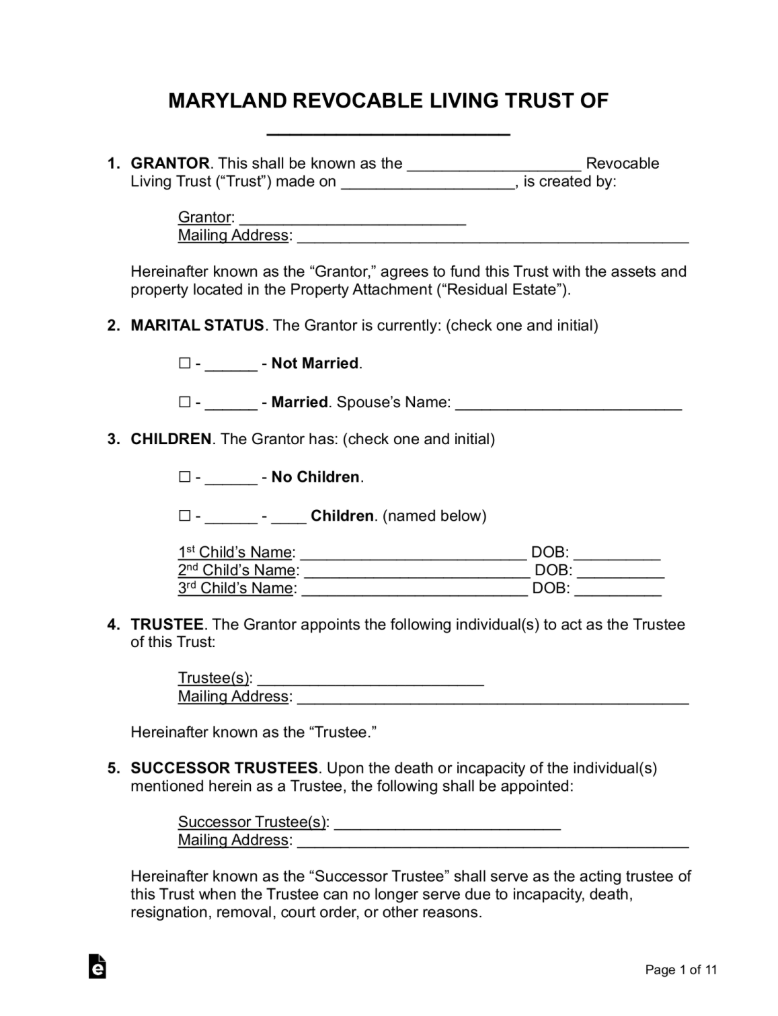
Maryland Living Trust Form (Revocable)
Full Conversation


Good day, I’ve just completed a revocable living trust. What next steps to ensure it’s legally enforced?

Lexi

Lexi, Chatbot

I understand that ensuring your revocable living trust is legally enforced is important to you. Have you already funded the trust by transferring your assets into it?

No, I would like to add my real estate.

Lexi

Lexi, Chatbot

Are you aware of the specific state laws that may affect the enforcement of your trust?

I don’t know.

Jessica B

Jessica B

Hey there! I'm Jessica B., an attorney with many years of experience. I understand you've just completed a revocable living trust and want to ensure it's legally enforced. Have you considered the specific steps needed to add your real estate to the trust?

Based on the eForm, I have the ability to add it in. Will you be able to assist?

Jessica B

Jessica B

I can definitely guide you through the process of adding your real estate to the trust. First, could you let me know which state you're in? This will help me provide the most accurate advice.

In the state of Maryland.

Jessica B

Jessica B

Great, thanks for letting me know you're in Maryland. Could you tell me a bit more about the real estate you want to add to the trust? For example, is it your primary residence or an investment property?

It’s my primary residence.

Jessica B

Jessica B

Got it, thanks! Do you have the deed to your primary residence handy? This will be important for transferring the property into the trust.

Yes. I named the trust my full name. Should I change it? How do I record the new deed?

Jessica B

Jessica B

In Maryland, transferring real estate into a revocable living trust involves changing the title of the property from your name to the name of the trust. This process is known as “funding the trust.” The deed must be prepared correctly to reflect this change, and it typically requires recording the new deed with the local county recorder’s office. Additionally, Maryland law allows you to transfer property into a trust (MD Estates and Trusts Code § 14-404 ) without affecting the mortgage or existing liens, but you should still check your mortgage documents or notify the lender if there is an outstanding loan.

It’s perfectly acceptable to name the trust after yourself (for example, “[Your Full Name] Revocable Living Trust”). To add your home to the trust, you’ll need to prepare a new deed transferring ownership from your individual name to the trust, often using a quitclaim deed or warranty deed. Once prepared and signed, the deed must be recorded with the county land records office where the property is located so the public record reflects the trust as the owner. If you have a mortgage, it’s also wise to notify the lender and update your homeowner’s insurance to list the trust as an additional insured or owner.

Thank you very much, Jessica.

Jessica B

Jessica B

I hope I was able to help resolve your issue! If you have any other questions, feel free to ask. Don’t hesitate to reach out whenever you need assistance.

Jessica B

Jessica B

30,891 satisfied customers

Jessica B
Welcome! Have a similar question?

12 lawyers online now

0:00

By messaging AskALawyer, you agree to our Terms and Privacy Policy.

Jessica B
Jessica B

Attorney

4.73 (30,891)

[FL] Does the agent need to sign a power of attorney?

17

7

Answered 2 days ago

Disclaimer


By messaging AskaLawyer.com, you agree to our Terms and have read our Privacy Policy.

The information provided on AskaLawyer.com is for general informational purposes only and does not constitute legal advice. While we strive to ensure the accuracy and timeliness of the information presented, we make no guarantees regarding its completeness or applicability to your specific circumstances.

Use of this website does not create an attorney-client relationship between you and AskaLawyer.com or any of its attorneys. Communications through this website, including any responses from attorneys, are not privileged or confidential. For advice tailored to your individual situation, we recommend consulting a licensed attorney in your jurisdiction.

AskaLawyer.com disclaims any liability for actions taken or not taken based on the content of this site. We are not responsible for any third-party content that may be accessed through this website. Reliance on any information provided herein is solely at your own risk.

Ask a Lawyer Logo
Ask a Lawyer Logo
Intake Questions
Step  of 3
Loading...

Lexi, Chatbot

How would you like your legal question to be answered?

Online

Legal AI

Using ChatGPT 4o

Loading...

How do you like to pay?

By proceeding with payment, you agree to our Terms and Privacy Policy. You authorize us to charge $ today and $ thereafter until canceled. You may cancel anytime in the My Account section to stop future charges.

Total Due:

After purchasing, your chat will begin with an attorney.

By proceeding with payment, you agree to our Terms and Privacy Policy. You authorize us to charge $ today and $ thereafter until canceled. You may cancel anytime in the My Account section to stop future charges.

Total Due:

After purchasing, your chat will begin with an attorney.

After connecting, your chat will begin with an attorney.

After choosing, your chat will continue with Legal AI.

It looks like you already have an account with Ask a Lawyer.

We have sent you a magic link to . Click the link in your email to sign in and continue your chat.

spin

Step of 6 •

You'll receive an email at as soon as the lawyer joins the conversation 🙏🏻😊

Over 90% of lawyers connect within 5 minutes. If you're not online at that moment, don't worry — the lawyer will reply to your message while you're away.

You're also welcome to stay in the chat while waiting to be connected 💬✨

Waiting for lawyer

0:00