[CA] How do I start a small claims case for disputed apartment move-out charges?

TJ, Esq.
TJ, Esq.

17,778 satisfied customers

View context
Solved

Hey, great question. Here is the situation. You should not pay the $1,500 on the 22nd. Paying them now and trying to get a refund later puts you in a much weaker position. Once you pay, the landlord has no incentive to refund you, and you would have to sue to get it back. If you do not pay by the 22nd, you can still sue them, and in small claims court the burden is on the landlord to prove you owe them money, not the other way around. That is a huge advantage for you.

The landlord might threaten to report you to a collection agency or take other action, but here is the thing. They cannot legally force you to pay for normal wear and tear. (CA Civ Code § 1950.5) If they sue you or send it to collections, you can defend yourself with the same argument, that it is normal wear and tear and the photos prove it. In fact, if they pursue collections on a debt that is illegal under tenant law, that could actually strengthen your case against them.

Small claims court in your state is designed for exactly this kind of situation. You do not need an attorney, the filing fees are low, around $30 to $100 depending on the amount, and the process is straightforward. (CA Civ Pro Code § 116.221) Here is how to get started:

  1. Gather all your evidence, the photos from the landlord's inspection report, the written report itself, any move-in documentation or photos you have, and any written communication with the landlord about the charges.
  2. Contact your local courthouse, search small claims court plus your county name online, and ask for information about filing a case for return of security deposit deductions. They will tell you the filing fee and give you the forms.
  3. Fill out the small claims complaint form. You will list the landlord as the defendant, explain that you are disputing the deduction as normal wear and tear, and ask for the $1,500 back. Keep the explanation simple and factual.
  4. File the complaint at the courthouse and pay the filing fee. You will get a court date, usually thirty to sixty days out.
  5. Serve the landlord with the complaint, deliver or mail copies to them according to court rules.
  6. Show up on your court date with your photos and documentation. Explain to the judge that the landlord's own report said the apartment was overall OK and that minor scratches are normal wear and tear, not damage you should pay for.

This approach avoids paying now and fighting later. It puts the burden on the landlord to justify their charges, and based on what you have told me, the evidence is on your side.

0

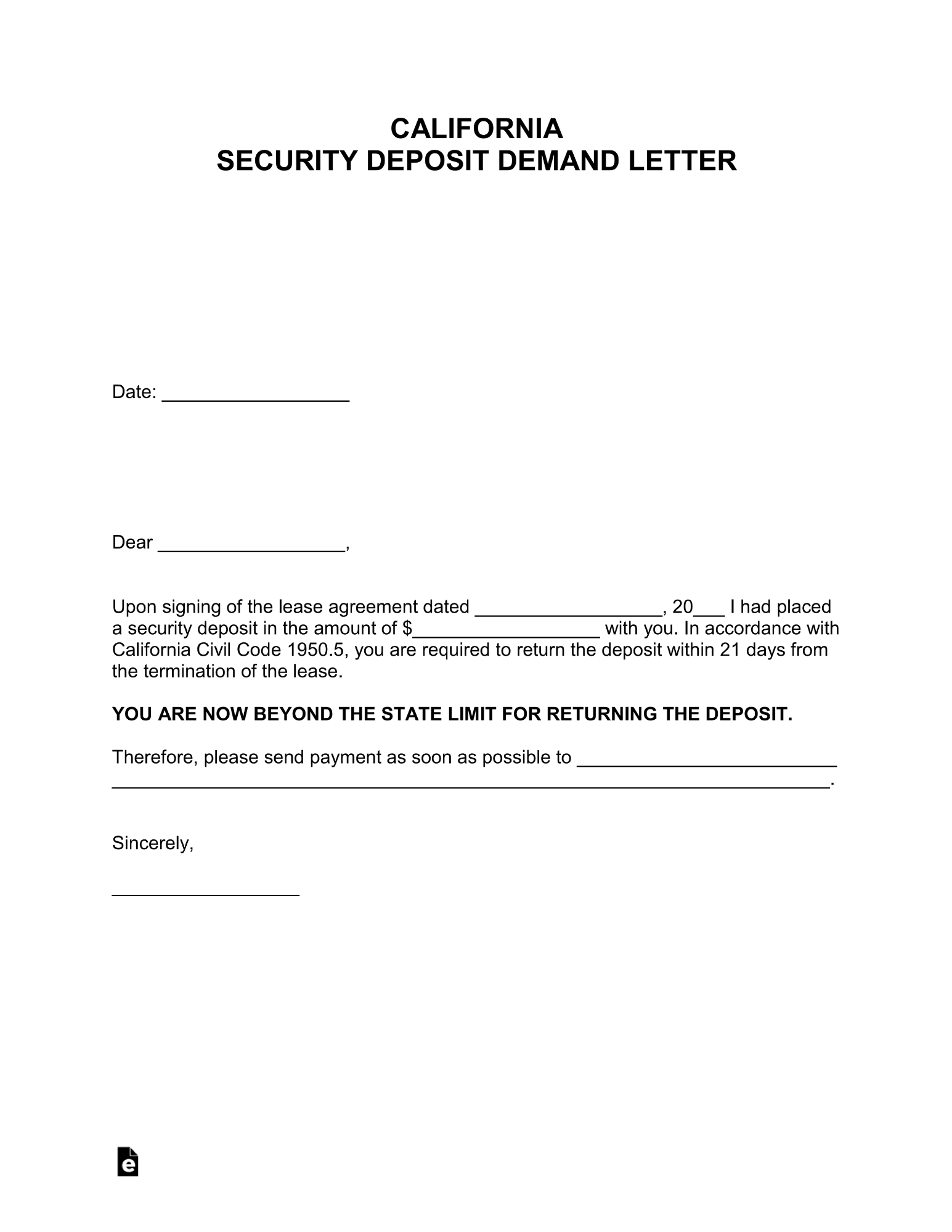
California Security Deposit Demand Letter
Full Conversation


I was previously renting an apartment. Last month we moved out. The landlord wants me to pay for making the apartment like new again. They said they wanted it like new. I feel I am being overcharged for redoing the floor where it didn't need to be replaced.

Lexi

Lexi, Chatbot

I understand how frustrating it can be to deal with unexpected charges from a landlord. Can you tell me if you have a written lease agreement that outlines the responsibilities for repairs and maintenance?

I don't know.

Lexi

Lexi, Chatbot

Have you documented the condition of the apartment when you moved out, including any photos or communication with the landlord regarding the floor?

They did pictures. The pictures show that the floors were not in bad condition.

Lexi

Lexi, Chatbot

Is there anything else the Landlord-Tenant Lawyer should know before I connect you? Rest assured they'll be able to help with your landlord charges.

TJ, Esq.

TJ, Esq.

Hello! My name is TJ and I’m an attorney. Thanks so much for the opportunity to assist you! I understand how important your legal question is, and I’m giving it my full attention. I’ll share my initial thoughts shortly, and I may also ask for a few additional details. That information will help me understand your situation more clearly so I can offer a more complete and helpful answer.

VERY IMPORTANT INFORMATION: If you don’t hear from me right away, please know I will always get back to you. I may be researching, preparing your answer, or occasionally dealing with a technical issue, so there can be a short wait between messages. However, your message will stay right where it is, and you’ll be notified as soon as I reply.

TJ, Esq.

TJ, Esq.

This is a situation where landlord-tenant law might actually be working in your favor. Landlords have what is called a duty to make repairs, meaning they cannot charge tenants for normal wear and tear. The key word is normal. A floor that shows normal wear from everyday living should not be replaced at the tenant's expense, even if a landlord wants everything like new. The pictures the landlord took are actually helpful to you because they document the condition. If those photos show the floors were in reasonable condition, not damaged, stained, or unusually worn, then charging you to replace them could be illegal.

A couple of questions. First, what did the landlord's written estimate or bill say about why the floors needed replacement? And second, do you have photos of the apartment's condition when you moved in, or do you remember what the floors looked like back then?

The apartment was supposed to have been new when we moved in. They were in good condition. The photos of the issues that they had are in the report. The report also said that overall was OK. The response was that they wanted it to look brand new.

During the final inspection, several vinyl planks were found to have deep scratches that could not be repaired through routine turnover methods. As a result, plank replacement was deemed necessary. The flooring charges assessed to your account were prorated based on the remaining useful life of the flooring and do not represent the full replacement cost. Our goal is to deliver each apartment home to new residents in the same condition in which it was originally received—free of scratches, with clean carpeting and freshly painted walls. The flooring work completed was required to meet that standard.

I don't believe the “deep scratches.” You can look at the photos they took and I don’t think there are deep scratches like they say. I would like to know how to fight it legally. The cost is about $1,500. I am willing to pay more to defend than to pay them.

TJ, Esq.

TJ, Esq.

I am glad you have those photos and the landlord's written explanation, that is exactly what you need. Here is the legal issue. Landlords can only charge tenants for damage that goes beyond normal wear and tear. Normal wear and tear means the gradual damage that happens just from living in a place. Deep scratches from everyday living usually fall into that category. The fact that the landlord's own report says overall was OK actually works against them, it contradicts their claim that the floors were in bad condition. The landlord's statement about wanting everything like new is actually a problem for them legally. They cannot use that as an excuse to charge you. The law does not require tenants to return an apartment in pristine condition, it requires them to return it in the condition it was in when they moved in, minus normal wear and tear. If the apartment was new when you moved in and the photos show only minor scratches, you have a solid argument.

Here is what I would suggest. First, send the landlord a written letter, email is fine, explaining that the damage shown in the photos is normal wear and tear, and that you are requesting they return the $1,500. Reference their own report that said overall was OK. Keep it professional and factual. Sometimes landlords back down when they get a written response. If they do not, you would file a claim in small claims court. You would bring the photos, the landlord's inspection report, and explain to the judge that these are normal scratches, not damage requiring replacement. The judge would likely agree with you based on what you have described.

What state are you in?

I am in California. How do I start the small claim court process? Also, they want the money on the 22nd of this month. Do I just pay and then get a refund later?

TJ, Esq.

TJ, Esq.

Hey, great question. Here is the situation. You should not pay the $1,500 on the 22nd. Paying them now and trying to get a refund later puts you in a much weaker position. Once you pay, the landlord has no incentive to refund you, and you would have to sue to get it back. If you do not pay by the 22nd, you can still sue them, and in small claims court the burden is on the landlord to prove you owe them money, not the other way around. That is a huge advantage for you.

The landlord might threaten to report you to a collection agency or take other action, but here is the thing. They cannot legally force you to pay for normal wear and tear. (CA Civ Code § 1950.5) If they sue you or send it to collections, you can defend yourself with the same argument, that it is normal wear and tear and the photos prove it. In fact, if they pursue collections on a debt that is illegal under tenant law, that could actually strengthen your case against them.

Small claims court in your state is designed for exactly this kind of situation. You do not need an attorney, the filing fees are low, around $30 to $100 depending on the amount, and the process is straightforward. (CA Civ Pro Code § 116.221) Here is how to get started:

  1. Gather all your evidence, the photos from the landlord's inspection report, the written report itself, any move-in documentation or photos you have, and any written communication with the landlord about the charges.
  2. Contact your local courthouse, search small claims court plus your county name online, and ask for information about filing a case for return of security deposit deductions. They will tell you the filing fee and give you the forms.
  3. Fill out the small claims complaint form. You will list the landlord as the defendant, explain that you are disputing the deduction as normal wear and tear, and ask for the $1,500 back. Keep the explanation simple and factual.
  4. File the complaint at the courthouse and pay the filing fee. You will get a court date, usually thirty to sixty days out.
  5. Serve the landlord with the complaint, deliver or mail copies to them according to court rules.
  6. Show up on your court date with your photos and documentation. Explain to the judge that the landlord's own report said the apartment was overall OK and that minor scratches are normal wear and tear, not damage you should pay for.

This approach avoids paying now and fighting later. It puts the burden on the landlord to justify their charges, and based on what you have told me, the evidence is on your side.

TJ, Esq.

TJ, Esq.

Did I completely answer your question about how to handle the payment deadline and the small claims process? Is there anything you would like me to clarify, or do you have follow-up questions about any of these steps?

Thanks again for reaching out with this question, I am confident you have a solid case here.

Last question, I have good credit and don't want to risk damaging my credit. If I pay and then seek refund, how bad does it damage my case besides them not paying me? How bad do you think it might damage it in front of a judge?

TJ, Esq.

TJ, Esq.

Good to hear from you again. Paying now and then suing for a refund does hurt your case, but maybe not as badly as you might think. Here is why. A judge will still look at the core issue, whether the charges were legal. If the photos show normal wear and tear, that fact does not change just because you paid. The judge will see that you paid under pressure, the deadline, and then tried to recover money you should not have had to pay in the first place. That is actually a reasonable position to take.

However, it does create a couple of problems. First, it looks like you accepted the charges by paying them. Some judges might see that as you admitting you owe the money, even if that is not what you meant. Second, it gives the landlord an argument that you voluntarily paid and now you are just trying to get your money back, which is weaker than saying I never owed this in the first place. Third, if they have already kept your money and you are suing for a refund, you are asking the judge to take money back from them rather than preventing them from taking it in the first place. Judges sometimes view those situations differently.

That said, if you have strong photo evidence and the landlord's own report saying the apartment was overall OK, a judge will likely still side with you. The evidence matters more than whether you paid first or refused to pay.

As for credit damage, that is actually a separate issue from the court case. If you do not pay by the 22nd and the landlord sends it to collections, that could hurt your credit. But here is the reality. They would have to actually pursue collections, and that takes time. You could file your small claims case before they even get that far. Plus, if you win in small claims, any collection action becomes invalid because you have proven in court that you do not owe the debt.

So the real question is whether you are willing to risk a potential collections threat in order to keep a stronger legal position. Based on your evidence, I would lean toward not paying and filing the small claims case instead. But I understand the credit concern is real.

Did I completely answer your question about how paying now would affect your case and your credit? Do you need clarification on anything, or do you have other follow-up questions?

Thanks again for using this service, I hope this helps you make the right decision.

Yes, thank you!

TJ, Esq.

TJ, Esq.

You’re very welcome and I’m happy I could help!

TJ, Esq.

TJ, Esq.

17,778 satisfied customers

TJ, Esq.
Welcome! Have a similar question?

12 lawyers online now

0:00

By messaging AskALawyer, you agree to our Terms and Privacy Policy.

Disclaimer


By messaging AskaLawyer.com, you agree to our Terms and have read our Privacy Policy.

The information provided on AskaLawyer.com is for general informational purposes only and does not constitute legal advice. While we strive to ensure the accuracy and timeliness of the information presented, we make no guarantees regarding its completeness or applicability to your specific circumstances.

Use of this website does not create an attorney-client relationship between you and AskaLawyer.com or any of its attorneys. Communications through this website, including any responses from attorneys, are not privileged or confidential. For advice tailored to your individual situation, we recommend consulting a licensed attorney in your jurisdiction.

AskaLawyer.com disclaims any liability for actions taken or not taken based on the content of this site. We are not responsible for any third-party content that may be accessed through this website. Reliance on any information provided herein is solely at your own risk.

Ask a Lawyer Logo
Ask a Lawyer Logo
Intake Questions
Step  of 3
Loading...

Lexi, Chatbot

How would you like your legal question to be answered?

Online

Legal AI

Using ChatGPT 4o

Loading...

How do you like to pay?

By proceeding with payment, you agree to our Terms and Privacy Policy. You authorize us to charge $ today and $ thereafter until canceled. You may cancel anytime in the My Account section to stop future charges.

Total Due:

After purchasing, your chat will begin with an attorney.

By proceeding with payment, you agree to our Terms and Privacy Policy. You authorize us to charge $ today and $ thereafter until canceled. You may cancel anytime in the My Account section to stop future charges.

Total Due:

After purchasing, your chat will begin with an attorney.

After connecting, your chat will begin with an attorney.

After choosing, your chat will continue with Legal AI.

It looks like you already have an account with Ask a Lawyer.

We have sent you a magic link to . Click the link in your email to sign in and continue your chat.

spin

Step of 6 •

You'll receive an email at as soon as the lawyer joins the conversation 🙏🏻😊

Over 90% of lawyers connect within 5 minutes. If you're not online at that moment, don't worry — the lawyer will reply to your message while you're away.

You're also welcome to stay in the chat while waiting to be connected 💬✨

Waiting for lawyer

0:00