Brandon
What Indiana Trial Rule 60(B) is designed to do: Trial Rule 60(B) allows a court to set aside or modify a final judgment when something went seriously wrong in the process or when enforcing the judgment would be unjust. It is not meant to relitigate the case just because the outcome was bad. It is meant to address situations where the judgment was entered based on false assumptions, missing facts, procedural defects, or misconduct.
In real estate cases, especially those involving land contracts mischaracterized as leases, Indiana courts focus less on labels and more on what actually happened between the parties.
Grounds that Indiana courts commonly accept under Rule 60(B):
Here are the subsections most relevant to your situation, explained in plain terms and tied directly to what you described.
Rule 60(B)(1): Mistake, surprise, or excusable neglect
Courts will sometimes grant relief if the judgment was entered based on a fundamental mistake about the nature of the legal relationship. If the court treated you as tenants when the facts show a buyer seller relationship, that can qualify as a legal and factual mistake.
This is especially persuasive if:
- You paid a down payment rather than a security deposit
- You made monthly payments consistent with a purchase price
- You paid for repairs, improvements, taxes, or insurance
- The seller exercised no landlord type control over the property
This subsection has a strict one year deadline from the date of judgment, so timing matters.
Rule 60(B)(2): Newly discovered evidence
This applies if you now have evidence that was not available at the time of the eviction case and could not reasonably have been obtained earlier.
Examples that matter in land contract disputes include:
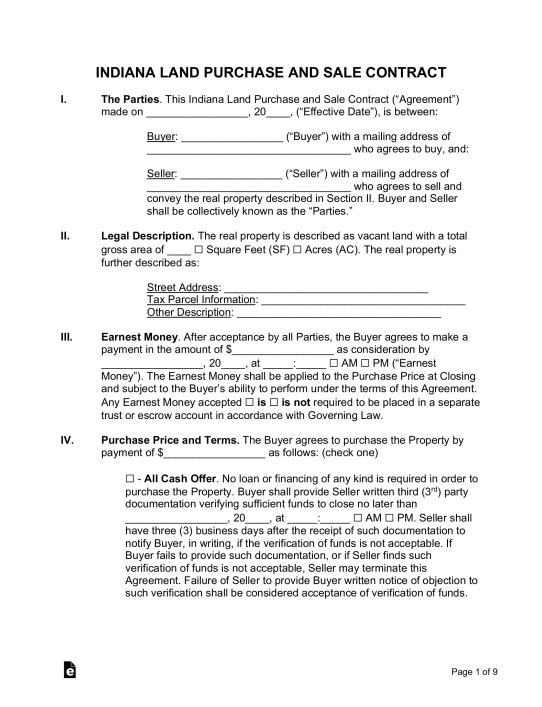
- Proof that the seller never countersigned or returned the contract
- Banking records showing payments labeled as purchase payments
- Evidence of improvements that only an owner would reasonably make
- Evidence that the seller was unreachable or intentionally avoiding contact
The key is showing the court that this evidence would likely have changed the outcome if it had been presented earlier.
Rule 60(B)(3): Fraud, misrepresentation, or misconduct by the opposing party
This is one of your strongest potential arguments based on what you described.
Indiana courts take this seriously when a party:
- Accepts a down payment and monthly payments under a supposed land contract
- Fails to return a fully executed contract while continuing to accept money
- Represents to the eviction court that the occupants were mere tenants
- Withholds material facts that would trigger statutory buyer protections
You do not need to prove criminal fraud. You need to show that the seller's conduct prevented the court from seeing the true nature of the transaction.
Rule 60(B)(6): Judgment is void
This applies if the court lacked authority to enter the judgment it did.
In land contract cases, this argument can work if:
- The court applied landlord tenant eviction procedures when the law required foreclosure type protections (IN Code ยง 32-30-3-1)
- You were entitled to statutory notice or redemption rights that were never given
- The court lacked subject matter jurisdiction over what was actually a real estate forfeiture
If the judgment is truly void, there is no time limit to raise this argument.
Rule 60(B)(8): Any other reason justifying relief
This is the equity provision. Courts use it sparingly, but it is powerful when applied correctly.
Indiana courts look at:
- Whether enforcing the judgment would be fundamentally unfair
- Whether one party received a windfall through misconduct
- Whether the moving party acted promptly after learning of the problem
In your case, the combination of a down payment, years of payments, major improvements, and loss of possession without buyer protections fits squarely into the kind of injustice courts address under this subsection.
What you should be prepared to present to the court:
A strong Rule 60(B) motion is evidence driven. Courts want documentation, not conclusions. Helpful materials include:
- The unsigned or partially executed land contract you returned to the seller
- Proof you sent it back and never received a countersigned copy
- Bank records showing payments made over time
- Receipts for repairs, improvements, or maintenance
- Photos showing upgrades or long term occupancy
- Any attempts you made to contact the seller
- Court filings from both proceedings showing how you were labeled as tenants
It is also important to clearly explain why you stopped paying and to frame it as an attempt to force communication, not abandonment.
Timing and posture matter:
Indiana courts expect Rule 60(B) motions to be filed within a reasonable time. Even when there is no strict deadline, unexplained delay can hurt credibility. If you discovered the legal significance of the land contract issue only after the eviction, say that plainly and explain why.