[TX] Can a merchant cash advance lender freeze my new LLC’s bank account?

Ray
Ray

67,858 satisfied customers

View context
Solved

Based on your situation, there are several legal arguments and legal concepts in Texas that could potentially support your case.

Under basic contract law, a Merchant Cash Advance (MCA) agreement is generally enforceable only against the parties who actually signed it or clearly guaranteed it. If the MCA contract and any personal guaranty list you (and/or your old LLC) as the debtor, and do not list the buyer or the buyer’s new LLC, then the MCA company’s contractual rights are normally limited to you and any entity that actually agreed to be bound. A completely new LLC with a different EIN that never signed the MCA documents is usually treated as a separate legal person, not automatically responsible for another company’s debts.

Under secured transactions law, including Article 9 of the Uniform Commercial Code (UCC) as adopted in Texas (Texas Business and Commerce Code, Chapter 9), a creditor that files a UCC-1 financing statement is a “secured party” only as to the debtor named in that filing and the collateral described in it. A financing statement must identify the debtor by name (Tex. Bus. & Com. Code § 9.502), and a security interest attaches only to collateral in which the debtor has rights (Tex. Bus. & Com. Code § 9.203). If the UCC-1 lists only you personally as the debtor, then the secured party’s perfected security interest is tied to your property and any collateral described in the filing, not to property owned by a different legal entity that isn’t named as a debtor. A UCC lien in your personal name and home address, without the new LLC as a debtor, generally doesn’t create a security interest in assets that legally belong to that new LLC.

Texas law and UCC principles also distinguish between a “debtor” and an “account debtor” or third party. A creditor that wants to reach funds held by a third party (like a payment processor or vendor) typically needs a valid legal basis, such as a security interest in specific receivables, an assignment of accounts, or a court order like a garnishment (TX Civ Prac & Rem Code § 63.007) or turnover order ((TX Civ Prac & Rem Code § 31.002)). If the funds in the vendor’s hands are legally owed to the new LLC, and the new LLC isn’t a debtor under the MCA or the UCC filing, then there’s a legal argument that the MCA company has no direct right to intercept or freeze those funds based solely on your personal UCC filing.

There are also potential arguments under Texas deceptive trade practices (Tex. Bus. & Com. Code § 17.46) and unfair collection concepts. When a creditor uses leverage over a third party’s funds to coerce payment of someone else’s debt, that conduct can be characterized as overreaching or abusive, especially if the third party never agreed to be responsible for the debt. If the MCA company is conditioning release of the new LLC’s funds on the new owner paying off your MCA and then restructuring the obligation on worse terms, that can be framed as an attempt to obtain an involuntary guaranty or new obligation through economic pressure rather than through a voluntary, informed agreement.

Privacy and confidentiality concepts can also be relevant. Financial institutions and creditors are generally expected to limit disclosure of a borrower’s personal information to what’s reasonably necessary to service or collect the account, or as authorized by law or by contract. If the MCA company has shared detailed personal or financial information about you with the new owner without your consent and beyond what’s necessary to address the account, that raises potential issues under privacy policies, contractual confidentiality clauses, and, in some cases, consumer protection principles.

Texas law also recognizes tort concepts like wrongful interference with business relations or contracts. If a creditor, without a valid legal right, causes a vendor or processor to freeze funds that belong to a third party, and that freeze disrupts that third party’s business or contractual relationships, there can be an argument that the creditor has wrongfully interfered with those relationships. The strength of that argument depends heavily on whether the creditor actually had a legitimate lien or legal process that extended to those specific funds.

Finally, there are general due process and procedural fairness concepts. To reach a third party’s property through court process in Texas, a creditor usually needs to obtain a judgment and then use legally recognized tools like garnishment or turnover orders, which involve notice and an opportunity to be heard. If no judgment exists against the new LLC, and no court order names that LLC or its accounts, then any hold placed on its funds based solely on your personal UCC filing can be challenged as lacking proper legal foundation.

Let me know if you have any questions or clarifications, if not I'll move forward with guidance.

0

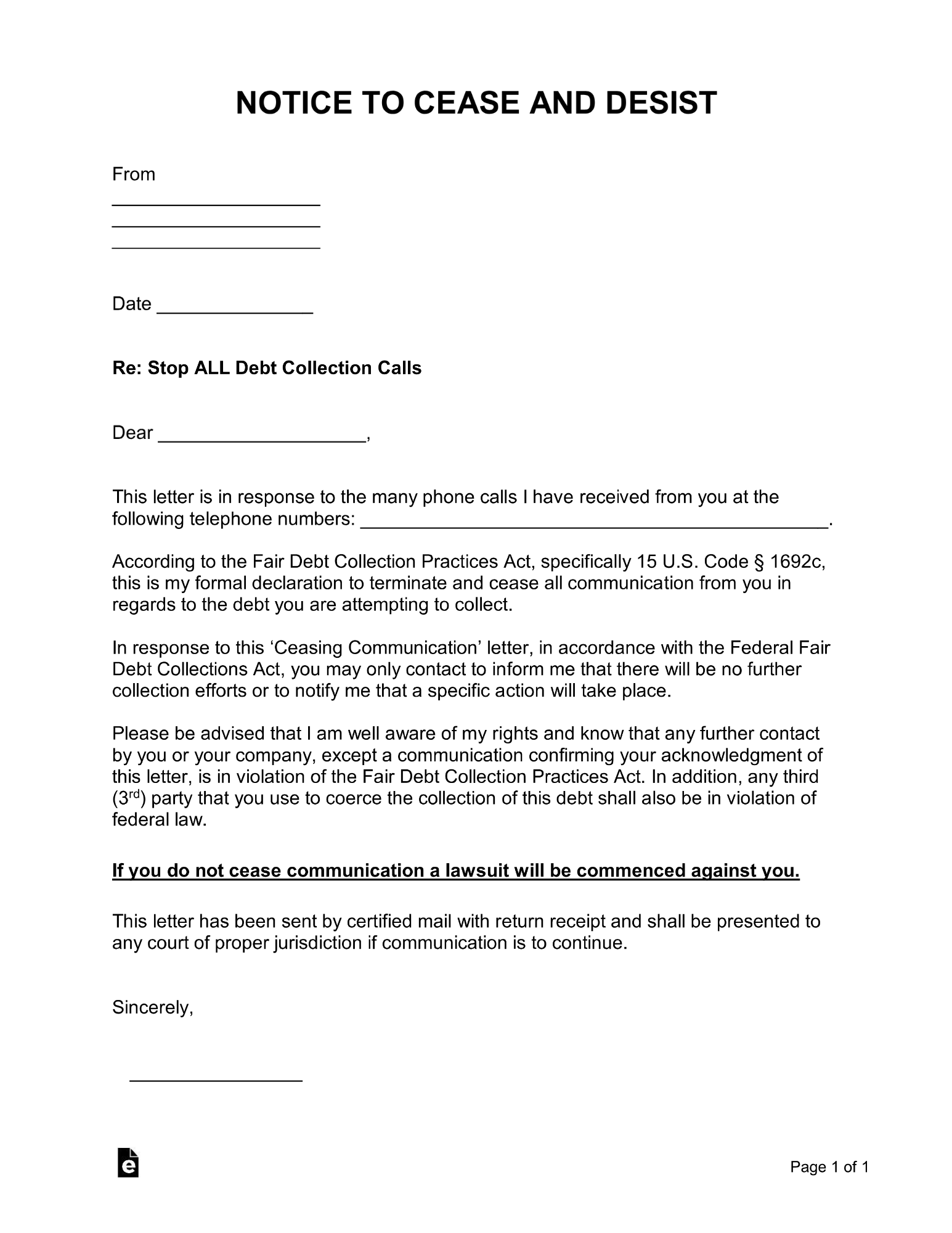
Cease and Desist Letter

Full Conversation


I had a Merchant Cash Advance (MCA) with my old business, an LLC. I sold the business and the buyer formed a completely new LLC with a different EIN. I did NOT transfer the MCA to the buyer. I’m still personally paying on a restructured MCA agreement and I’m current.

Recently, the MCA company used a vendor to put a hold on funds that belong to the new owner’s LLC, not my company. All of the money that’s frozen was generated by the new owner after the sale. The MCA company is refusing to release the hold unless the new owner uses those funds to pay off my MCA, and then they want me to reimburse the new owner on much worse terms.

I need to know if the MCA company has any legal right to those funds from the new LLC, and I need help getting the hold released and stopping them from pressuring us into a bad agreement.

Lexi

Lexi, Chatbot

I understand how frustrating this situation must be for you. Can you confirm whether there was any written agreement regarding the handling of the MCA after the sale of your business?

No agreement of the handling of the MCA I just continued working with the MCA and got into a diff agreement with diff terms to help me better since I was continuing to pay it

Lexi

Lexi, Chatbot

Have you had any communication with the MCA company or the new owner regarding this issue, and if so, what was discussed?

Yes I have they are mean and adamant they want paid in full with the money since they know it is there

Lexi

Lexi, Chatbot

Is there anything else the Corporate Lawyer should know before I connect you? Rest assured they'll be able to help with your frozen funds issue.

Yes.

Ray

Ray

Hey there! Welcome to our service. I'm Ray, an attorney with many years of experience in business law.

From what you’ve shared, you had a Merchant Cash Advance with your old LLC, you sold the business and the buyer formed a new LLC with a different EIN, you did not transfer the MCA, you’re still personally paying on a restructured agreement and are current, and now the MCA company has caused a hold to be placed on funds belonging to the buyer’s new LLC and is demanding those funds be used to pay off your MCA. To get oriented, what state are you in and where is the MCA company based?

Yes correct Texas.

Ray

Ray

Got it, thanks for confirming you’re in Texas.

Do you know if the MCA company (or its vendor) filed any kind of UCC lien, judgment, or court case that they’re using as the basis for freezing the new LLC’s funds, or have you only seen the hold with no legal paperwork behind it?

The vendor that has hold has applied it to the new owner entity account I am no where on that account it should have never been applied there but I can't get them to do anything without a release from lender or court order is what they told me

Ray

Ray

That’s really helpful, and I agree it sounds like the hold was misapplied if you’re not on that account at all.

Have you received anything in writing from either the MCA company or the vendor explaining the legal basis for the hold (for example, a copy of a UCC filing, assignment, garnishment, or even just an email/letter saying why they froze it)?

I UCC Lien I could attach it but I don't see attach option and it is my name and my home address.

Ray

Ray

Got it, that helps a lot. The UCC being in your personal name and home address is important. Do you know when that UCC lien was filed (roughly the date or at least the year), and was it filed under the old LLC’s name as debtor as well, or only you personally?

UCC Lien was only under me filed [redacted: filing date] when I took out the loan initially I have no idea what hold they sent to the Vender I have asked they wont talk to me or send me anything the only response I got was......the funds belong to the EIN on hold. Well I am sure they belong to EIN on hold and it isn't mine from what I got from the new owner. The lender is only talking to the new owner not me much because I am explaining to them they can't do this. It isn't my money to give them. Which irritates me they shared all my info to the new owner and talking to him etc. I gave no permission to that.

Ray

Ray

Based on your situation, there are several legal arguments and legal concepts in Texas that could potentially support your case.

Under basic contract law, a Merchant Cash Advance (MCA) agreement is generally enforceable only against the parties who actually signed it or clearly guaranteed it. If the MCA contract and any personal guaranty list you (and/or your old LLC) as the debtor, and do not list the buyer or the buyer’s new LLC, then the MCA company’s contractual rights are normally limited to you and any entity that actually agreed to be bound. A completely new LLC with a different EIN that never signed the MCA documents is usually treated as a separate legal person, not automatically responsible for another company’s debts.

Under secured transactions law, including Article 9 of the Uniform Commercial Code (UCC) as adopted in Texas (Texas Business and Commerce Code, Chapter 9), a creditor that files a UCC-1 financing statement is a “secured party” only as to the debtor named in that filing and the collateral described in it. A financing statement must identify the debtor by name (Tex. Bus. & Com. Code § 9.502), and a security interest attaches only to collateral in which the debtor has rights (Tex. Bus. & Com. Code § 9.203). If the UCC-1 lists only you personally as the debtor, then the secured party’s perfected security interest is tied to your property and any collateral described in the filing, not to property owned by a different legal entity that isn’t named as a debtor. A UCC lien in your personal name and home address, without the new LLC as a debtor, generally doesn’t create a security interest in assets that legally belong to that new LLC.

Texas law and UCC principles also distinguish between a “debtor” and an “account debtor” or third party. A creditor that wants to reach funds held by a third party (like a payment processor or vendor) typically needs a valid legal basis, such as a security interest in specific receivables, an assignment of accounts, or a court order like a garnishment (TX Civ Prac & Rem Code § 63.007) or turnover order ((TX Civ Prac & Rem Code § 31.002)). If the funds in the vendor’s hands are legally owed to the new LLC, and the new LLC isn’t a debtor under the MCA or the UCC filing, then there’s a legal argument that the MCA company has no direct right to intercept or freeze those funds based solely on your personal UCC filing.

There are also potential arguments under Texas deceptive trade practices (Tex. Bus. & Com. Code § 17.46) and unfair collection concepts. When a creditor uses leverage over a third party’s funds to coerce payment of someone else’s debt, that conduct can be characterized as overreaching or abusive, especially if the third party never agreed to be responsible for the debt. If the MCA company is conditioning release of the new LLC’s funds on the new owner paying off your MCA and then restructuring the obligation on worse terms, that can be framed as an attempt to obtain an involuntary guaranty or new obligation through economic pressure rather than through a voluntary, informed agreement.

Privacy and confidentiality concepts can also be relevant. Financial institutions and creditors are generally expected to limit disclosure of a borrower’s personal information to what’s reasonably necessary to service or collect the account, or as authorized by law or by contract. If the MCA company has shared detailed personal or financial information about you with the new owner without your consent and beyond what’s necessary to address the account, that raises potential issues under privacy policies, contractual confidentiality clauses, and, in some cases, consumer protection principles.

Texas law also recognizes tort concepts like wrongful interference with business relations or contracts. If a creditor, without a valid legal right, causes a vendor or processor to freeze funds that belong to a third party, and that freeze disrupts that third party’s business or contractual relationships, there can be an argument that the creditor has wrongfully interfered with those relationships. The strength of that argument depends heavily on whether the creditor actually had a legitimate lien or legal process that extended to those specific funds.

Finally, there are general due process and procedural fairness concepts. To reach a third party’s property through court process in Texas, a creditor usually needs to obtain a judgment and then use legally recognized tools like garnishment or turnover orders, which involve notice and an opportunity to be heard. If no judgment exists against the new LLC, and no court order names that LLC or its accounts, then any hold placed on its funds based solely on your personal UCC filing can be challenged as lacking proper legal foundation.

Let me know if you have any questions or clarifications, if not I'll move forward with guidance.

Now the new owner is wanting his money released and thinks the only way is to pay off my loan and he has his attorney with the lender draw up an agreement for me to review and he said I could pay him back but it wouldn't be long drawn out well if i had thousands of free dollars I would be paying the loan more. I am in a payment structure that is doable for me and I am irritated they are planning what I am going to do without me.

Ray

Ray

You’re absolutely right to be irritated. They don’t get to plan a new deal for you without your consent, and you’re not required to blow up a manageable payment plan just because they froze someone else’s money. Let me walk you through this in clear steps and options:

What this situation really means legally.

From what you've told me: The MCA and the UCC-1 are in your personal name (and possibly your old business), not the new LLC. The new LLC never agreed to take over your MCA. The vendor has frozen funds that legally belong to the new LLC, based on something the lender sent them. The lender is now trying to use that freeze to force a payoff and a new side deal between you and the buyer.

Legally, that looks like the lender is trying to use leverage over money that isn’t yours to change the terms of your debt. That’s not how contracts are supposed to work. Your obligation is what’s in your MCA and any modification you actually signed. You’re current and in a payment structure that works for you. There is no automatic right for them to demand a lump-sum playoff just because they found a pot of money that belongs to someone else.

Your core positions (what you should be clear about to everyone).

Before you respond to anyone’s “plan,” it helps to be very clear in your own mind about your bottom lines:

  • You did not authorize the MCA company to go after the new LLC’s funds.
  • You did not transfer the MCA to the buyer or the new LLC.
  • You are current on your restructured payment plan and intend to keep paying under that plan.
  • You will not sign any agreement that forces you into worse terms or a lump-sum you can’t afford.

You’re allowed to say, very simply: “I’m not agreeing to any new deal. I’m current on my existing agreement and I’m going to keep paying that."

How to respond to the new owner (so you protect the relationship but don’t get trapped).

Right now, the new owner is scared and just wants his money released, so he’s grabbing at what the lender is telling him. You need to calmly reset expectations. The key is: be empathetic, but firm. You’re not the one who decided to freeze his account. The lender did. The legal fight about that freeze is between the new owner and the lender/vendor. You're already doing what you're supposed to do: paying your own debt.

How to respond to the lender and their proposed agreement.

You do not have to sign anything just because they drafted it. In fact, in your shoes, I would treat any new agreement they send as something to be very suspicious of. You can respond (in writing, email is fine) with something like: “I do not consent to any modification of my current payment arrangement. I am current and will continue to perform under the existing agreement.”

If they keep pushing, you can add: "Any further attempts to pressure me into a new agreement by using a third party’s frozen funds will be documented and may be raised with regulators or counsel as abusive collection conduct." That puts them on notice that you see what they’re doing and you’re not going along quietly.

Options for getting the hold released (without you taking on a bad deal)

There are really two main tracks here, and they can happen at the same time.

  • Option A: The new owner and his attorney push back directly. The new owner’s attorney should be focusing on the lender and the vendor, not on drafting a repayment agreement for you. This keeps the pressure where it belongs: on the lender who caused the freeze, not on you.
  • Option B: You get your own Texas attorney to send a strong letter. Because your name and UCC are being used as the excuse for this freeze, it can help a lot if a Texas business/consumer attorney writes on your behalf. Sometimes a firm letter from counsel is enough to make a lender back off the “pay us in full now or else” posture.

Why you should not sign the proposed agreement as-is.

Based on a false premise: that the only way to release the funds is for the new owner to pay off your loan on “much worse terms” for you than your current payment plan. Signing something under that kind of pressure can lock you into a repayment schedule you can’t realistically meet. Unless and until a lawyer you trust reviews that agreement and tells you it’s safe and in your interest, you should assume it’s not.

Practical next steps for you

  1. First, stop engaging in back-and-forth about “how” you’ll repay the new owner. You can simply say: “I’m not agreeing to that. I’m staying on my current plan.”
  2. Second, put your position in writing to the lender (short email is fine): you’re current, you’re not consenting to any new deal, and you object to them using the new LLC’s funds.
  3. Third, if at all possible, have a Texas attorney review the MCA, the UCC-1, and any draft agreement the new owner’s attorney sent. Even a short paid consult can give you a very clear yes/no on whether to sign anything and can generate a strong letter on your behalf.
  4. Fourth, keep making your scheduled payments exactly on time. That keeps your hands clean and makes it much harder for them to justify any aggressive action against you.

What to watch out for (red flags). Be very cautious if:

  • The lender or the new owner says things like “If you don’t sign this, we’ll keep his money frozen and it’ll be your fault.” That’s emotional pressure, not law.
  • They refuse to give anything in writing about the legal basis for the hold.
  • The new agreement includes confessions of judgment, waivers of defenses, or very short default triggers.

Those are all signs they know their current position is weak and they’re trying to lock in something stronger.

Great Information and All of what I thought already. So is there something I need to request or ask for from lender about the hold or lien or whatever they sent to the vendor. I have asked what EIN was included and they will not reply back.

Ray

Ray

Yes. You should put a very clear, specific request in writing to the lender so there’s a record of what you asked for and their refusal to answer. If they ignore or refuse to answer, that actually helps your case later with a lawyer or regulator, because it shows they’re not being transparent about a very serious action.

Great! Thank You so much!

Ray

Ray

My pleasure.

Ray

Ray

67,858 satisfied customers

Ray
Welcome! Have a similar question?

12 lawyers online now

0:00

By messaging AskALawyer, you agree to our Terms and Privacy Policy.

Disclaimer


By messaging AskaLawyer.com, you agree to our Terms and have read our Privacy Policy.

The information provided on AskaLawyer.com is for general informational purposes only and does not constitute legal advice. While we strive to ensure the accuracy and timeliness of the information presented, we make no guarantees regarding its completeness or applicability to your specific circumstances.

Use of this website does not create an attorney-client relationship between you and AskaLawyer.com or any of its attorneys. Communications through this website, including any responses from attorneys, are not privileged or confidential. For advice tailored to your individual situation, we recommend consulting a licensed attorney in your jurisdiction.

AskaLawyer.com disclaims any liability for actions taken or not taken based on the content of this site. We are not responsible for any third-party content that may be accessed through this website. Reliance on any information provided herein is solely at your own risk.

Ask a Lawyer Logo
Ask a Lawyer Logo
Intake Questions
Step  of 3
Loading...

What's your legal question?

Lexi, Chatbot

How would you like your legal question to be answered?

Online

Loading...

How do you like to pay?

By proceeding with payment, you agree to our Terms and Privacy Policy. You authorize us to charge $ today and $ thereafter until canceled. You may cancel anytime in the My Account section to stop future charges.

Total Due:

After purchasing, your chat will begin with an attorney.

By proceeding with payment, you agree to our Terms and Privacy Policy. You authorize us to charge $ today and $ thereafter until canceled. You may cancel anytime in the My Account section to stop future charges.

Total Due:

After purchasing, your chat will begin with an attorney.

After connecting, your chat will begin with an attorney. After choosing, your chat will continue with Legal AI.

It looks like you already have an account with Ask a Lawyer.

We have sent you a magic link to . Click the link in your email to sign in and continue your chat.

spin

Step of 6 •

You'll receive an email at as soon as the lawyer joins the conversation 🙏🏻😊

Over 90% of lawyers connect within 5 minutes. If you're not online at that moment, don't worry — the lawyer will reply to your message while you're away.

You're also welcome to stay in the chat while waiting to be connected 💬✨

Waiting for lawyer

We couldn't send your message. Please try again.

Your lawyer will reply as soon as possible

If there’s a delay, please don’t worry. Your chat will stay open, and they’ll get back to you as soon as they can. There’s no rush on your end either. You’ll receive an email notification as soon as there’s a new message.

You've reached your AI chat limit

Upgrade your plan to continue chatting and get instant domain-specific answers.

0:00