[TX] Can I recover unpaid royalties from my publishing administrator without paying for expensive litigation?

Phil (Immigration Phil)

3,662 satisfied customers

View context
Solved

No, you're not screwed, and you're not powerless here, even against a company with deep pockets. Here are the main paths you realistically have, in order.

  1. Get more out of your current attorney. Their side is stalling, which is common when they hope you'll give up. Ask your attorney to send a revised demand using the higher, corrected numbers from their own reports, with a simple summary schedule attached. He should also set clear written deadlines making it explicit that you'll file suit or bring in new counsel if they don't respond.
  2. Look for contingency or hybrid-fee litigators. For a six-figure underpayment, some lawyers will take a case on partial or full contingency. You already have what makes a case attractive to them: written contracts, a written admission, their own royalty reports showing discrepancies, and a clear damages range. (Texas law also generally allows a party who prevails on a claim under an oral or written contract to recover reasonable attorney's fees from the other side, subject to exceptions for certain entities such as religious and charitable organizations ( TX Civ Prac & Rem Code § 38.001). Send a short, organized package to entertainment or business litigators in Dallas, Houston, or Austin and ask directly: "Would you consider this on contingency or a hybrid fee?"
  3. Treat a forensic accountant as a second step. Because you've already done much of the groundwork, you may be able to limit the accountant's scope to verifying and formalizing what you found. Get a clear engagement letter on scope and cost, and make sure the work product stays usable if you change lawyers.
  4. File a narrow lawsuit to force a response. Once suit is filed, they can't ignore you, and you gain discovery tools such as document requests, interrogatories, and depositions Texas Rules of Civil Procedure, Rules 190 through 215. The expensive part of litigation is the long discovery and motion practice, not the filing. Some lawyers will file on a modest retainer and push for early mediation or a Rule 11 agreement before costs grow.
  5. Apply industry pressure, carefully. Through counsel, you can make clear that you're prepared to notify royalty organizations or co-writers about the accounting discrepancies, and to seek contract termination and reversion of your rights, not just back pay. Clear any public statements with a lawyer first so you don't risk a defamation claim.
  6. Protect your timeline. In Texas, most breach-of-contract claims have a four-year statute of limitations (TX Civ Prac & Rem Code § 16.051). That clock usually runs from when each underpayment happened, not from when you discovered it, so an underpayment in mid-2021 would normally expire sometime in mid-2025. Discovering everything in May this year doesn't wipe out your rights, but the oldest quarters age out first, so you can't wait forever.
  7. You're not on the "lose end." Written contracts, pre-signing texts explaining the 75/25 split, a written admission, their own mismatched reports, and six-figure damages are exactly the facts that attract the right litigator. The admin's size gives them more stamina, but it also gives them more to lose.

What I'd do over the next few weeks: keep your current lawyer working the negotiation, but pin him down on timing in writing. At the same time, quietly send your case summary to 2-3 Texas litigators and ask about contingency or hybrid fees. That way, if the admin keeps stalling, you're not starting from zero.

You and your wife have already done the hard part: you found the problem, documented it, and got them to admit at least part of it. Now it's about using time wisely so you don't let them win just by dragging things out.

Please let me know if you have further questions.

0

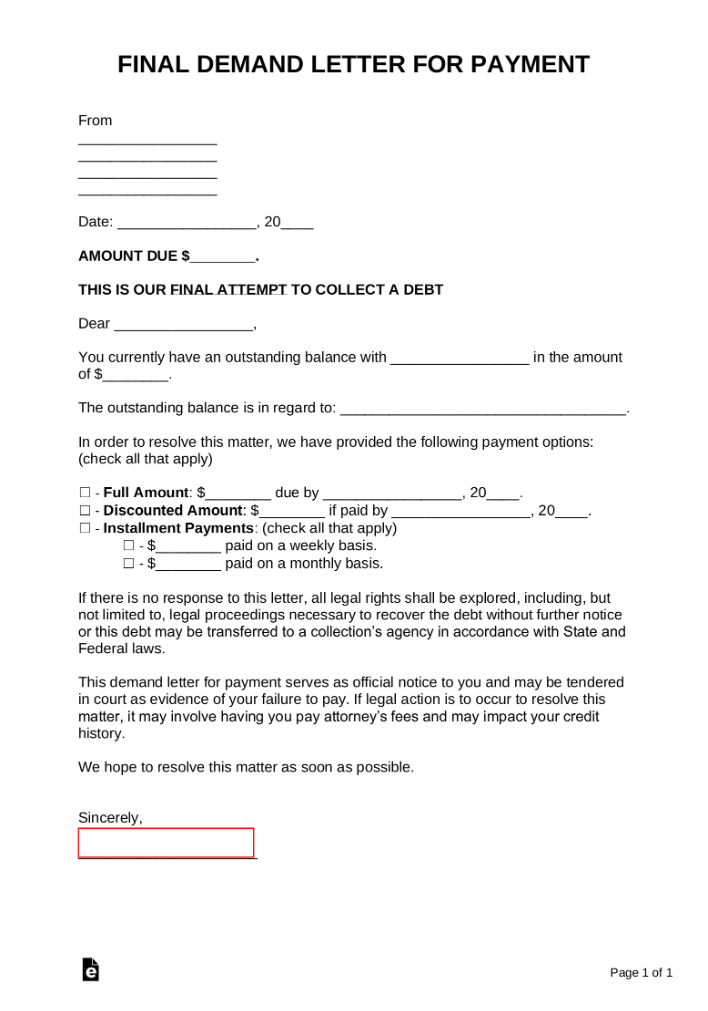
Final Demand Letter for Payment

Full Conversation


I need help with a music publishing situation I have a dispute with a music publishing admin. My wife and I are songwriters on christian music we have a hit song from a christian music group we realized our admin is not collecting properly or possibly stealing.. I have an attorney negotiating a settlement but they don't answer and he doesn't litigate.. its been 2 months almost and the amount of underpayment is anywhere between 200 to 400k I've tried to figure out options to find a litigator but its expensive and my wife and me don't have that kind of economic power.. an attorney was charging us 100k for lawsuit and even he said its an investment cause he know we would win and can get back the money on the lawsuit is something we don't have. What options do we have? Is there's still hope?

Lexi

Lexi, Chatbot

I understand how frustrating it must be to deal with this situation regarding your music publishing dispute. Can you tell me more about the specific terms of your agreement with the music publishing admin?

its a co pub.

Phil (Immigration Phil)

Phil (Immigration Phil)

Have you already explored any alternative dispute resolution options, such as mediation or arbitration, with your current attorney?

Yes and haven't got a response yet.

Phil (Immigration Phil)

Phil (Immigration Phil)

Is there anything else the Lawyer should know before I connect you? Rest assured they'll be able to help with your music publishing dispute.

Well we've presented our evidence to other attorneys and they said its strong evidence but the problem is on the finances i want to see what options we have cause it is frustrating.

Phil (Immigration Phil)

Phil (Immigration Phil)

Hey, there! Welcome to our service. I'm Attorney Philip, an attorney with many years of experience.

From what you've shared, you and your wife are co-publishers and songwriters on a successful Christian song, and you believe your publishing admin has seriously underpaid you, possibly by hundreds of thousands of dollars, and your current lawyer doesn't litigate and hasn't gotten a response on settlement.

Could you share which country or state you and your wife are based in, and where the publishing agreement with the admin was signed?

Yes we are from Texas and also the jurisdiction from our contract is from here

Phil (Immigration Phil)

Phil (Immigration Phil)

Got it, Texas law and courts would apply, which helps narrow things down. To understand the situation better, when did you first sign the co-publishing / admin agreement with this company (roughly what month and year)?

Ok I'm gonna do a long story short of our situation

Phil (Immigration Phil)

Phil (Immigration Phil)

Go ahead and share the long story in your own words, starting with when you first realized the admin wasn't paying you correctly.

THE TWO CONTRACTS

Contract 1: Administration Agreement, signed February 2021. The publishing administrator administers our catalog and takes a 15% fee. The contract specifically ties that 15% to publishing rights administration only, not total income. Two-year term, no renewal clause anywhere, so it technically expired after about two years. The administrator kept operating and collecting under it for over a year past that with nothing signed, until a second contract came later. No audit clause in this contract at all.

Contract 2: Co-Publishing Agreement, signed a bit over a year later. 50/50 split between us and the administrator. The contract specifically says that 50/50 is of publishing rights, not the whole song. Five-year term, auto-renewing, no audit clause, no accounting schedule anywhere in it either.

WHAT HAPPENED

We started digging through the administrator's own royalty reports, from several different royalty organizations, mechanical, church licensing, streaming, and physical products. Nothing reconciled. What they say they collected, what their statement claims is payable, and what they actually paid us, all three numbers are different and don't add up consistently at any stage.

We also found entire reporting quarters completely missing across multiple organizations, right during our biggest earning years. And we found several songs the administrator is actively collecting money on that were never added to either signed contract.

The administrator's own representative admitted in writing that they owe us a certain amount. But once we checked their own numbers against their own reports properly, the real documented shortfall came out noticeably higher, already sent in a formal letter.

WHAT I FOUND WITH A FRIEND SONGWRITER

A co-writer on our biggest song, a friend, is administered by a completely different company, independent of ours. His real, actual paid statements show something specific: his writer's share gets paid to him in full, untouched, and only his publisher's share gets split with his administrator. Same song, same type of royalty organizations, handled the correct, standard way.

WHAT A FORMER REP SAID VS. WHAT THE CONTRACT SAYS

Days before we signed the second contract, the administrator's own Publishing Director at the time texted me directly explaining the split: we get 75% of total income, our full writer's share plus half the publisher's share, and the administrator only gets 25%. That's in writing, dated, sent right before signing.

But what the administrator has actually been paying works out to close to a flat 50% of everything, not 75%. That's the core of what we believe is happening, they told us one thing before we signed and have been applying something else since, keeping money, our writer's share specifically, that was never supposed to be part of their cut at all.

WHAT OUR ATTORNEY ASKED AND CONFIRMED

Our entertainment attorney sent a formal demand letter asking for a significant sum, based on what we knew at the time. The administrator's counsel acknowledged it, then mostly went quiet for weeks. Separately, when I asked our attorney directly about the split, he confirmed, unprompted, in writing, the exact same 75/25 structure the former rep described, on his own, without me showing him those messages first.

THE CORRECTED NUMBERS

Using the real 75/25 split instead of the incorrect flat rate that's actually been applied, the documented underpayment, based entirely on the administrator's own reports, comes out significantly higher than the original demand. Add in the missing reporting quarters, and the realistic total owed is meaningfully higher still.

WHAT THE LITIGATION ATTORNEY SAID

We consulted a litigation attorney directly. He reviewed everything and told us plainly he believes we can win this case. His recommended path: hire a forensic accountant with music publishing experience first, to produce an official, independent accounting, then use that to push for a settlement, contract termination, and return of our song rights through him directly. If that fails, full litigation would need a much larger amount upfront, since he doesn't do contingency for this kind of case. He called the accountant's cost an investment, since he's confident we'd recover it.

We are talking about 6 figures number that they owe us and right now we are kind of with our arms tight cause we don't have the economic power to sue and they don't respond we are like well this is lost then.

Phil (Immigration Phil)

Phil (Immigration Phil)

I'm really sorry you and your wife are going through this, especially with that much money on the line. What you've uncovered is very serious, and it's not "lost" just because you don't have a big budget right now.

First thing I want to pin down so I can think clearly about timing: when did you and your wife first discover the underpayments and missing quarters (roughly what month and year)?

We discovered everything this year around May. That's when i went digging and started doing accountings and found the shocking mount. As soon as i wrote them a little after my negotiating attorney came to the picture with a demand letter. They admitted to owe us 77k but they didn't know that i have info and when doing the accounting and everything they have missing everything is in the 200-400k.

Phil (Immigration Phil)

Phil (Immigration Phil)

Got it. Please allow me to first set up the relevant legal framework before I provide specific guidance. Based on your situation, there are several legal arguments and contract and copyright concepts in Texas and U.S. law that could potentially support your case.

One key concept is breach of contract. When a written administration or co-publishing agreement sets out specific percentages, terms, and scope of rights, and one party pays in a way that doesn't match those terms, that can be treated as a breach. If the contracts clearly limit the administrator's share to administration of publishing rights (and not the entire song or writer's share), then taking a larger share than allowed, or applying a different split than what's written, can be characterized as a failure to perform under the contract.

Another important concept is the interpretation of written contracts versus pre-contract statements. Under general contract law, the written contract usually controls, but pre-contract emails, texts, and explanations can sometimes be used to interpret ambiguous language in the contract. If the contract language about "50/50 of publishing rights" is unclear or could reasonably be read more than one way, then the text messages from the publishing director and the understanding confirmed by your entertainment attorney can be relevant evidence of what both sides understood the deal to be at the time.

There's also the issue of underpayment and accounting. Even if a contract doesn't contain a formal audit clause, Texas contract law still recognizes that a party who is obligated to collect and pay over money has a duty to account accurately and honestly. If the administrator's own royalty reports don't reconcile, show missing quarters, or show them collecting on songs that aren't covered by the contracts, that can support claims that they've breached their accounting and payment obligations and possibly converted money that belongs to you.

The fact that the first administration agreement had a two-year term with no renewal clause raises questions about whether they had any contractual authority to continue collecting after it expired, at least until the second contract was signed. Continuing to collect without a valid contract in place can support arguments that they were acting without authority for that period, which can tie into claims for unjust enrichment or conversion of royalties that should have gone directly to you.

The written admission from the administrator that they owe you a certain amount is also legally significant. An admission of owing money, especially in writing, can be used as evidence of liability and of at least a minimum amount of damages. If your later, more detailed accounting based on their own data shows a higher shortfall, that can support the argument that their initial figure was incomplete or inaccurate, not that they owed nothing.

In the music publishing context, there's also a standard industry distinction between writer's share and publisher's share. It's common practice that the writer's share is paid 100% to the songwriter, and only the publisher's share is split with an administrator or co-publisher. Evidence that your co-writer is being paid that way by a different administrator for the same song, and that your administrator instead took a cut of your writer's share, can be used to show that what they did with you is out of line with normal industry practice and inconsistent with how such deals are usually understood.

Texas law also recognizes claims like fraud or negligent misrepresentation if one party makes specific, material statements about how a deal will work (for example, promising a 75/25 split of total income) that induce the other party to sign, and then the paying party knowingly or recklessly applies a different split in practice. The pre-signing text from the publishing director describing the 75/25 structure, if it conflicts with how they actually paid you, can be relevant to those kinds of claims.

Finally, there are statute of limitations issues. In Texas, most contract claims have a four-year limitations period, which generally runs from when the breach occurred or when it reasonably should have been discovered. Because you discovered the underpayments in 2024, and the contracts and payments go back a few years, the timing of when each underpayment happened and when you could reasonably have discovered it can matter for how far back you can recover.

Let me know if you have any questions or clarifications, if not I'll move forward with specific guidance.

Got it makes sense. yes i would love for some guidance cause right now we are on the waiting with my attorney which it is negotiating a settlement but they haven't responded and every time he writer the publishers attorney he says his client hasn't respond yet.. he told me they might be stalling and I'm ok waiting but i also want to move on and see what things i can do to escalate this situation if needed cause i don't want this people to take advantage of us... some one told me once i was in the lose end cause usually the biggest wallet wins and I've heard that so many times but something in me cant understand how is possible that there's nothing i can do while this people keep taking advantage.

Every time i reach for litigation help is an excruciating amount of money and I'm like omg what can we do. Ok well i discover the situation this year not on 2024 it was may this year idk if that changes things or if we are screwed already... they admitted in writing owing us from 2021 but idk if that changes things.

Phil (Immigration Phil)

Phil (Immigration Phil)

No, you're not screwed, and you're not powerless here, even against a company with deep pockets. Here are the main paths you realistically have, in order.

  1. Get more out of your current attorney. Their side is stalling, which is common when they hope you'll give up. Ask your attorney to send a revised demand using the higher, corrected numbers from their own reports, with a simple summary schedule attached. He should also set clear written deadlines making it explicit that you'll file suit or bring in new counsel if they don't respond.
  2. Look for contingency or hybrid-fee litigators. For a six-figure underpayment, some lawyers will take a case on partial or full contingency. You already have what makes a case attractive to them: written contracts, a written admission, their own royalty reports showing discrepancies, and a clear damages range. (Texas law also generally allows a party who prevails on a claim under an oral or written contract to recover reasonable attorney's fees from the other side, subject to exceptions for certain entities such as religious and charitable organizations ( TX Civ Prac & Rem Code § 38.001). Send a short, organized package to entertainment or business litigators in Dallas, Houston, or Austin and ask directly: "Would you consider this on contingency or a hybrid fee?"
  3. Treat a forensic accountant as a second step. Because you've already done much of the groundwork, you may be able to limit the accountant's scope to verifying and formalizing what you found. Get a clear engagement letter on scope and cost, and make sure the work product stays usable if you change lawyers.
  4. File a narrow lawsuit to force a response. Once suit is filed, they can't ignore you, and you gain discovery tools such as document requests, interrogatories, and depositions Texas Rules of Civil Procedure, Rules 190 through 215. The expensive part of litigation is the long discovery and motion practice, not the filing. Some lawyers will file on a modest retainer and push for early mediation or a Rule 11 agreement before costs grow.
  5. Apply industry pressure, carefully. Through counsel, you can make clear that you're prepared to notify royalty organizations or co-writers about the accounting discrepancies, and to seek contract termination and reversion of your rights, not just back pay. Clear any public statements with a lawyer first so you don't risk a defamation claim.
  6. Protect your timeline. In Texas, most breach-of-contract claims have a four-year statute of limitations (TX Civ Prac & Rem Code § 16.051). That clock usually runs from when each underpayment happened, not from when you discovered it, so an underpayment in mid-2021 would normally expire sometime in mid-2025. Discovering everything in May this year doesn't wipe out your rights, but the oldest quarters age out first, so you can't wait forever.
  7. You're not on the "lose end." Written contracts, pre-signing texts explaining the 75/25 split, a written admission, their own mismatched reports, and six-figure damages are exactly the facts that attract the right litigator. The admin's size gives them more stamina, but it also gives them more to lose.

What I'd do over the next few weeks: keep your current lawyer working the negotiation, but pin him down on timing in writing. At the same time, quietly send your case summary to 2-3 Texas litigators and ask about contingency or hybrid fees. That way, if the admin keeps stalling, you're not starting from zero.

You and your wife have already done the hard part: you found the problem, documented it, and got them to admit at least part of it. Now it's about using time wisely so you don't let them win just by dragging things out.

Please let me know if you have further questions.

Phil (Immigration Phil)

Phil (Immigration Phil)

3,662 satisfied customers

Phil (Immigration Phil)
Welcome! Have a similar question?

12 lawyers online now

0:00

By messaging AskALawyer, you agree to our Terms and Privacy Policy.

Disclaimer


By messaging AskaLawyer.com, you agree to our Terms and have read our Privacy Policy.

The information provided on AskaLawyer.com is for general informational purposes only and does not constitute legal advice. While we strive to ensure the accuracy and timeliness of the information presented, we make no guarantees regarding its completeness or applicability to your specific circumstances.

Use of this website does not create an attorney-client relationship between you and AskaLawyer.com or any of its attorneys. Communications through this website, including any responses from attorneys, are not privileged or confidential. For advice tailored to your individual situation, we recommend consulting a licensed attorney in your jurisdiction.

AskaLawyer.com disclaims any liability for actions taken or not taken based on the content of this site. We are not responsible for any third-party content that may be accessed through this website. Reliance on any information provided herein is solely at your own risk.

Ask a Lawyer Logo
Ask a Lawyer Logo
Intake Questions
Step  of 3
Loading...

What's your legal question?

Lexi, Chatbot

How would you like your legal question to be answered?

Online

Loading...

How do you like to pay?

By proceeding with payment, you agree to our Terms and Privacy Policy. You authorize us to charge $ today and $ thereafter until canceled. You may cancel anytime in the My Account section to stop future charges.

Total Due:

After purchasing, your chat will begin with an attorney.

By proceeding with payment, you agree to our Terms and Privacy Policy. You authorize us to charge $ today and $ thereafter until canceled. You may cancel anytime in the My Account section to stop future charges.

Total Due:

After purchasing, your chat will begin with an attorney.

After connecting, your chat will begin with an attorney. After choosing, your chat will continue with Legal AI.

It looks like you already have an account with Ask a Lawyer.

We have sent you a magic link to . Click the link in your email to sign in and continue your chat.

spin

Step of 6 •

You'll receive an email at as soon as the lawyer joins the conversation 🙏🏻😊

Over 90% of lawyers connect within 5 minutes. If you're not online at that moment, don't worry — the lawyer will reply to your message while you're away.

You're also welcome to stay in the chat while waiting to be connected 💬✨

Waiting for lawyer

We couldn't send your message. Please try again.

Your lawyer will reply as soon as possible

If there’s a delay, please don’t worry. Your chat will stay open, and they’ll get back to you as soon as they can. There’s no rush on your end either. You’ll receive an email notification as soon as there’s a new message.

You've reached your AI chat limit

Upgrade your plan to continue chatting and get instant domain-specific answers.

0:00