[CA] What additional terms should I include in a stock purchase agreement on installment to fully protect both parties?

TJ, Esq.
TJ, Esq.

17,778 satisfied customers

View context
Solved

Since there are no known liabilities or pending issues, that actually simplifies things a bit. However, you still need to build in protections in case something unexpected comes up after you've paid for the company. Here's what you should focus on:

First, your indemnification clause needs to cover breaches of the seller's representations and warranties. Basically, the seller is promising that certain things about the company are true (like that all debts are paid, all contracts are valid, no hidden liabilities exist, etc.). If any of those promises turn out to be false after closing, indemnification lets you get your money back from the seller. This is especially important when you're paying in installments over 15 months, because you want assurance that problems won't pop up after you've already paid part of the purchase price. (CA Civ Code § 1710)

Second, you need a clear non-compete provision. This prevents the seller from competing with the company or working for a competitor for a set period (usually one to five years, depending on the industry and what makes sense). Without this, the seller could walk away with knowledge of your customers and business operations, then start a competing business. That would undermine your investment. (CA Bus & Prof Code § 16601)

Third, add specific language about what happens if the seller breaches their obligations. For example, if they fail to properly transfer all stock documents, or if they misrepresented something about the company, the agreement should spell out your remedies. You might want to hold back part of the remaining installment payments as security until all obligations are satisfied. (CA Civ Code § 3300)

Here are some suggested next steps:

  1. Add a representations and warranties section where the seller confirms the company's financial status, ownership structure, and legal standing.
  2. Include an indemnification clause that allows you to recover from the seller for breaches discovered within a set period (like two years after closing).
  3. Create a non-compete clause that restricts the seller's activities for a reasonable time period.
  4. Add a clause about what happens if the seller defaults on their payment or other obligations, such as the right to accelerate remaining payments or recover attorney fees.

0

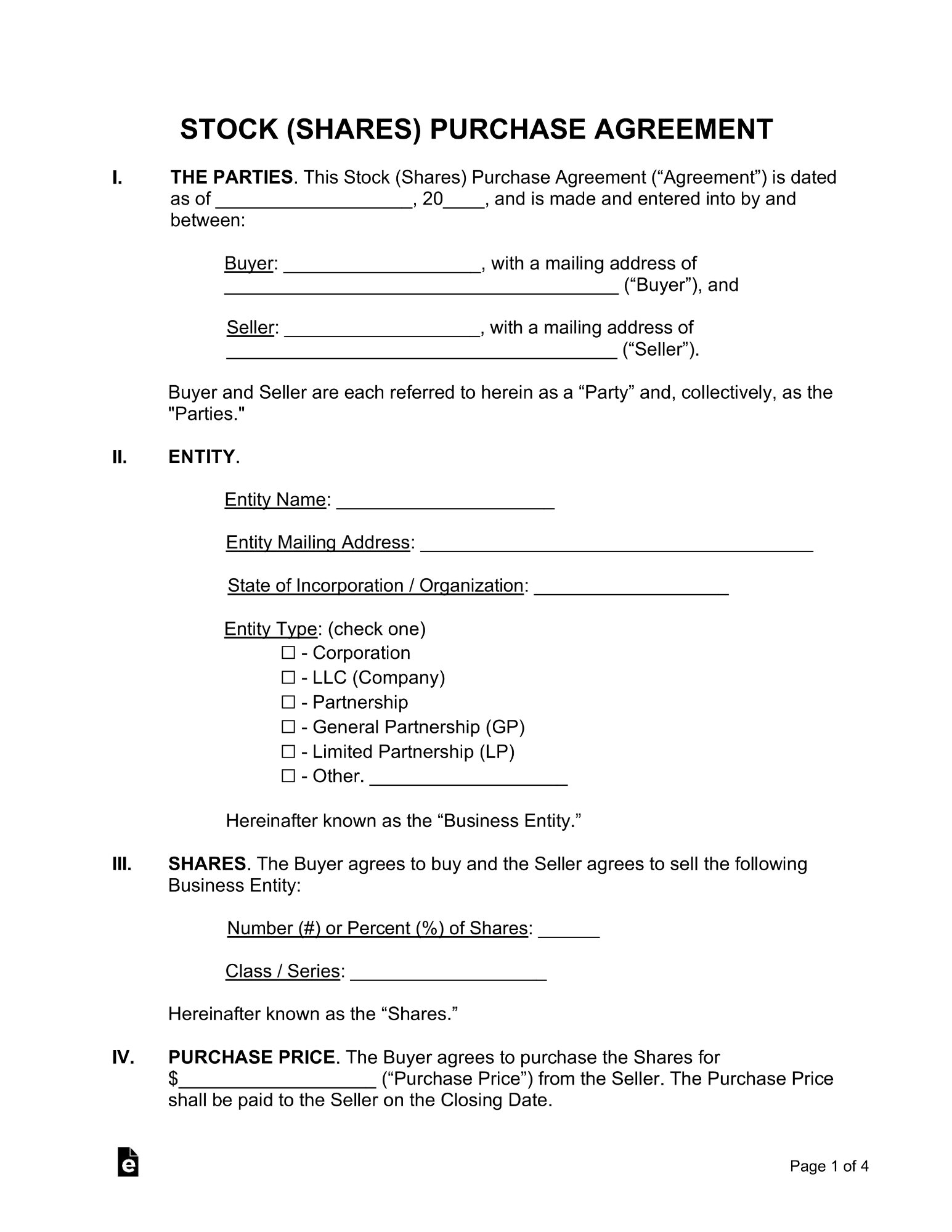
Stock (Shares) Purchase Agreement

Full Conversation


I have an existing document regarding a purchase and sale agreement for 100% of stocks.

Lexi

Lexi, Chatbot

I understand that dealing with stock purchase agreements can be complex. Can you tell me if you are looking to modify this existing agreement, or if you have specific concerns about it?

I need to know if I have covered all issues that should be considered in the same document. This document was done online. If it needs modification or revision, I want to be sure.

Lexi

Lexi, Chatbot

Are there any particular issues or disputes related to the agreement that you need assistance with?

Terms of payment are spread over a period of 15 months. The purchase price is $300,000.00, with a 50% down payment ($150,000.00) upon signing of the contract, and the remaining balance payable over 15 months. I want to include that taxes or any fees related to the sale shall be the responsibility of the seller.

TJ, Esq.

TJ, Esq.

Hello! My name is TJ, and I’m an attorney. Thanks so much for the opportunity to assist you. I understand how important your legal question is, and I’m giving it my full attention. I’ll share my initial thoughts shortly, and I may also ask for a few additional details. That information will help me understand your situation more clearly so I can offer a more complete and helpful answer.

VERY IMPORTANT INFORMATION: If you don’t hear from me right away, please know I will always get back to you. I may be researching, preparing your answer, or occasionally dealing with a technical issue, so there can be a short wait between messages. However, your message will stay right where it is, and you’ll be notified as soon as I reply.

This is general legal information only. Unfortunately, I can’t represent you or form an attorney-client relationship. This also means there is no attorney-client privilege or confidentiality.

TJ, Esq.

TJ, Esq.

A stock purchase agreement should include representations and warranties from the seller about the company's legal status, finances, and liabilities. Payment terms, tax responsibility allocation, and indemnification clauses are essential. You'll also want non-compete provisions and details about what happens if the seller breaches obligations after closing.

What state is this transaction occurring in, and does the agreement currently address representations and warranties from the seller?

Thanks again for reaching out with your question.

Not the tax responsibility allocation, which is the seller's responsibility. No indemnification clause, non-compete provisions, or details about what happens if the seller breaches obligations after closing. This transaction is in California, but the stocks of the company are registered in the state of Nevada.

TJ, Esq.

TJ, Esq.

Those are important gaps to address. Since the seller is responsible for all taxes and fees, your agreement should explicitly state that the seller will pay all transfer taxes, capital gains taxes, stock transfer taxes, and any other transaction-related fees. This protects you from unexpected liability after closing.

The missing indemnification clause is significant. This is what protects you if problems arise after you've paid for and taken ownership of the company. For example, if the company faces a lawsuit over something that happened before you bought it, or if there are hidden debts or liabilities, indemnification lets you recover money from the seller. Without it, you're stuck with those problems.

A non-compete agreement keeps the seller from starting a competing business or working for competitors after the sale. This protects your investment and the company's value. The breach of obligations clause is also critical because it spells out what happens if the seller doesn't live up to their promises or if payment installments are missed.

Given the spread-out payment schedule over 15 months, you need clear terms about what triggers the seller's obligation to repay if problems emerge, and what happens if they default on their obligations to you.

Are there any known liabilities, pending lawsuits, or other issues with the company that you're aware of that should be addressed in the agreement?

No known liabilities, pending lawsuits, or other issues.

TJ, Esq.

TJ, Esq.

Since there are no known liabilities or pending issues, that actually simplifies things a bit. However, you still need to build in protections in case something unexpected comes up after you've paid for the company. Here's what you should focus on:

First, your indemnification clause needs to cover breaches of the seller's representations and warranties. Basically, the seller is promising that certain things about the company are true (like that all debts are paid, all contracts are valid, no hidden liabilities exist, etc.). If any of those promises turn out to be false after closing, indemnification lets you get your money back from the seller. This is especially important when you're paying in installments over 15 months, because you want assurance that problems won't pop up after you've already paid part of the purchase price. (CA Civ Code § 1710)

Second, you need a clear non-compete provision. This prevents the seller from competing with the company or working for a competitor for a set period (usually one to five years, depending on the industry and what makes sense). Without this, the seller could walk away with knowledge of your customers and business operations, then start a competing business. That would undermine your investment. (CA Bus & Prof Code § 16601)

Third, add specific language about what happens if the seller breaches their obligations. For example, if they fail to properly transfer all stock documents, or if they misrepresented something about the company, the agreement should spell out your remedies. You might want to hold back part of the remaining installment payments as security until all obligations are satisfied. (CA Civ Code § 3300)

Here are some suggested next steps:

  1. Add a representations and warranties section where the seller confirms the company's financial status, ownership structure, and legal standing.
  2. Include an indemnification clause that allows you to recover from the seller for breaches discovered within a set period (like two years after closing).
  3. Create a non-compete clause that restricts the seller's activities for a reasonable time period.
  4. Add a clause about what happens if the seller defaults on their payment or other obligations, such as the right to accelerate remaining payments or recover attorney fees.
TJ, Esq.

TJ, Esq.

Did I completely answer your question about what should be included in this stock purchase agreement? Do you need clarification on any of these points, or do you have follow-up questions about how to add these provisions to your document?

Thanks again for using my service!

Will you be able to draft the entire document for us? If so, how much do you charge?

TJ, Esq.

TJ, Esq.

I appreciate you wanting to move forward with this. Unfortunately, I'm not able to draft or review documents through this platform. I know that's probably not what you wanted to hear, and I'm sorry about that.

However, I can absolutely continue helping you think through what needs to be in the agreement and how to structure it. Based on everything we've discussed, you have a solid foundation with the eForms document. What you really need to do is layer in the provisions we talked about: the indemnification clause, non-compete language, representations and warranties from the seller, and clear terms about what happens if the seller breaches after closing.

You have a couple of options. You could take the eForms document and work with a business attorney in California or Nevada to add those missing provisions and make sure everything is tailored to your specific transaction. They can review it, make revisions, and ensure it protects you properly. Alternatively, if you want to try adding some of this yourself, I can walk you through what each section should say and answer specific questions about language or structure as you work on it.

The stock purchase agreement is pretty important given the amount involved and the 15-month payment schedule, so getting it right from the start is worth the effort.

Did I completely answer your question about document drafting and review? Do you need clarification on your options, or do you have follow-up questions about how to proceed?

I will probably try adding it myself and seek your help with the verbiage for each section to make sure they are correct. Thank you for your assistance.

TJ, Esq.

TJ, Esq.

You’re very welcome, and I’m happy I could help!

TJ, Esq.

TJ, Esq.

17,778 satisfied customers

TJ, Esq.
Welcome! Have a similar question?

12 lawyers online now

0:00

By messaging AskALawyer, you agree to our Terms and Privacy Policy.

Disclaimer


By messaging AskaLawyer.com, you agree to our Terms and have read our Privacy Policy.

The information provided on AskaLawyer.com is for general informational purposes only and does not constitute legal advice. While we strive to ensure the accuracy and timeliness of the information presented, we make no guarantees regarding its completeness or applicability to your specific circumstances.

Use of this website does not create an attorney-client relationship between you and AskaLawyer.com or any of its attorneys. Communications through this website, including any responses from attorneys, are not privileged or confidential. For advice tailored to your individual situation, we recommend consulting a licensed attorney in your jurisdiction.

AskaLawyer.com disclaims any liability for actions taken or not taken based on the content of this site. We are not responsible for any third-party content that may be accessed through this website. Reliance on any information provided herein is solely at your own risk.

Ask a Lawyer Logo
Ask a Lawyer Logo
Intake Questions
Step  of 3
Loading...

Lexi, Chatbot

How would you like your legal question to be answered?

Online

Legal AI

Using ChatGPT 4o

Loading...

How do you like to pay?

By proceeding with payment, you agree to our Terms and Privacy Policy. You authorize us to charge $ today and $ thereafter until canceled. You may cancel anytime in the My Account section to stop future charges.

Total Due:

After purchasing, your chat will begin with an attorney.

By proceeding with payment, you agree to our Terms and Privacy Policy. You authorize us to charge $ today and $ thereafter until canceled. You may cancel anytime in the My Account section to stop future charges.

Total Due:

After purchasing, your chat will begin with an attorney.

After connecting, your chat will begin with an attorney.

After choosing, your chat will continue with Legal AI.

It looks like you already have an account with Ask a Lawyer.

We have sent you a magic link to . Click the link in your email to sign in and continue your chat.

spin

Step of 6 •

You'll receive an email at as soon as the lawyer joins the conversation 🙏🏻😊

Over 90% of lawyers connect within 5 minutes. If you're not online at that moment, don't worry — the lawyer will reply to your message while you're away.

You're also welcome to stay in the chat while waiting to be connected 💬✨

Waiting for lawyer

0:00