[NJ] Can I break my apartment lease if I am disabled and lost my job?

Richard
Richard

76,546 satisfied customers

View context
Solved

Yes. In New Jersey, disability and job loss by themselves do not automatically give a tenant the right to break a lease, but there are limited legal paths that may apply to your situation. (NJ Rev Stat § 46:8-9.2) Here is how New Jersey law treats this.

  1. No automatic right based on disability or unemployment alone. New Jersey does not have a statute that allows early lease termination solely because a tenant becomes disabled, loses a job, or applies for Social Security Disability. Financial hardship alone does not void a lease.
  2. Fair housing or reasonable accommodation, limited use. If your disability makes it impossible or unsafe to continue living in the unit, you may request a reasonable accommodation under federal and New Jersey fair housing laws. Examples where this can apply. The unit cannot be reasonably modified for your disability. Stairs or layout now make the unit unusable. Medical limitations prevent safe occupancy. If continuing the lease would effectively exclude you from housing due to disability, early termination can be a reasonable accommodation. This is fact specific. (42 U.S.C. § 3604)
  3. Landlord’s duty to mitigate damages, important. Even if you move out early, New Jersey law requires the landlord to mitigate damages. That means the landlord must make reasonable efforts to re-rent the unit. You are only responsible for rent until a new tenant is found, not automatically through July 2026. Once re-rented, your obligation ends. This significantly limits your exposure.
  4. If rent becomes unpaid. If you stop paying rent, the landlord may file for eviction for nonpayment. An eviction judgment does not automatically make you liable for the entire remaining lease term. Any money claim must still account for mitigation. (NJ Rev Stat § 2A:18-61.1)
  5. Security deposit. The landlord may apply your security deposit to unpaid rent or damages, but must still provide an itemized accounting within the statutory timeframe.

Bottom line: You cannot simply walk away with zero consequences. You are not automatically locked into paying rent through July 2026. Disability may support early termination if it affects habitability or access. The landlord must attempt to re-rent and cannot double collect rent. Given that you can cover February and possibly March, this situation is often resolved with limited financial exposure, not the full lease balance.

0

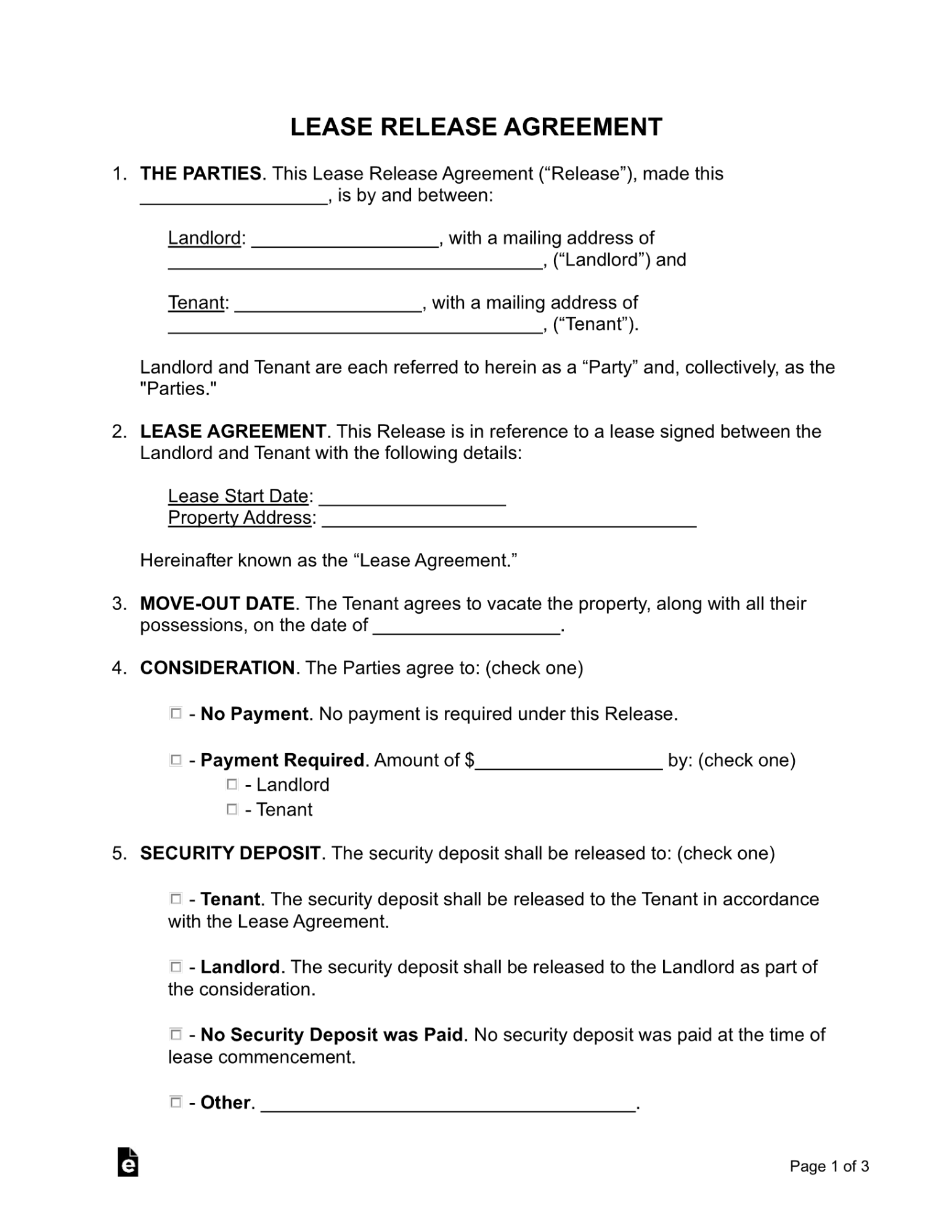
Lease Release Agreement

Full Conversation


Can I break my apartment lease if I am disabled and lost my job in New Jersey?

Lexi

Lexi, Chatbot

I'm sorry to hear about your situation; it must be challenging to navigate these circumstances. Have you already discussed your lease situation with your landlord?

No.

Lexi

Lexi, Chatbot

How long have you been living in the apartment, and when does your lease officially end?

Since 2022. Lease ends 7/31/26.

Lexi

Lexi, Chatbot

Is there anything else the Landlord-Tenant Lawyer should know before I connect you? Rest assured they'll be able to help with your lease termination.

No.

Lexi

Lexi, Chatbot

Thank you for providing the necessary information. In New Jersey, breaking a lease due to disability and job loss can be complex, but there are potential avenues you may explore.

  1. Review your lease agreement. Begin by reviewing your lease agreement to identify any clauses related to early termination. Some leases may include provisions for breaking the lease under specific circumstances.
  2. Negotiate with your landlord. It is advisable to communicate openly with your landlord about your situation. Landlords may be willing to negotiate an early termination agreement, especially if you can demonstrate financial hardship due to disability and job loss.
  3. Legal grounds for termination. While New Jersey does not have specific statutes allowing lease termination solely due to disability or job loss, you may argue that these circumstances create a significant hardship. However, this would typically require the landlord's agreement or a mutual understanding.
  4. Seek legal advice. Given the complexity of your situation, consulting with a local attorney specializing in landlord tenant law may provide you with tailored advice and potential legal strategies.
  5. Consider subletting. If permitted by your lease, subletting the apartment may be an option to mitigate financial obligations while you seek a more permanent solution.
  6. Document your circumstances. Keep thorough documentation of your disability, job loss, and any communications with your landlord. This documentation may be useful if legal proceedings become necessary.

For further assistance, you may want to consult with a legal professional who can provide guidance specific to your circumstances. Additionally, you might find this adverse action notice landlord document helpful if you need to formally communicate your situation to your landlord. Please ensure you take action promptly to avoid any potential legal or financial repercussions.

Richard

Richard

Hello. My name is Richard and I have been a licensed attorney for over 25 years and hope to be of assistance. I understand you're dealing with a situation where you need to break your apartment lease due to disability and job loss in New Jersey. Could you tell me more about any written communication or agreements you've had with your landlord regarding this issue? Disclaimer: Just a note - this conversation does not create an attorney-client relationship. I can answer your questions for educational purposes only.

I have not spoken to the landlord about this issue. I applied for Social Security Disability. I was in a car accident last year and lost my job.

Richard

Richard

Thanks for sharing your situation. It's important to understand all aspects of your lease agreement. Have you had a chance to review your lease to see if there are any clauses about early termination or hardship? This could be crucial in finding a solution.

I have the rent for February and might be able to pay for March. The lease says that I can request to break the lease by putting it in writing along with 2 months' rent of approximately $5,400. After 1 week, a decision will be made. Date must be at least 60 days out. I do not have $5,400 to pay them right now.

Richard

Richard

Yes. In New Jersey, disability and job loss by themselves do not automatically give a tenant the right to break a lease, but there are limited legal paths that may apply to your situation. (NJ Rev Stat § 46:8-9.2) Here is how New Jersey law treats this.

  1. No automatic right based on disability or unemployment alone. New Jersey does not have a statute that allows early lease termination solely because a tenant becomes disabled, loses a job, or applies for Social Security Disability. Financial hardship alone does not void a lease.
  2. Fair housing or reasonable accommodation, limited use. If your disability makes it impossible or unsafe to continue living in the unit, you may request a reasonable accommodation under federal and New Jersey fair housing laws. Examples where this can apply. The unit cannot be reasonably modified for your disability. Stairs or layout now make the unit unusable. Medical limitations prevent safe occupancy. If continuing the lease would effectively exclude you from housing due to disability, early termination can be a reasonable accommodation. This is fact specific. (42 U.S.C. § 3604)
  3. Landlord’s duty to mitigate damages, important. Even if you move out early, New Jersey law requires the landlord to mitigate damages. That means the landlord must make reasonable efforts to re-rent the unit. You are only responsible for rent until a new tenant is found, not automatically through July 2026. Once re-rented, your obligation ends. This significantly limits your exposure.
  4. If rent becomes unpaid. If you stop paying rent, the landlord may file for eviction for nonpayment. An eviction judgment does not automatically make you liable for the entire remaining lease term. Any money claim must still account for mitigation. (NJ Rev Stat § 2A:18-61.1)
  5. Security deposit. The landlord may apply your security deposit to unpaid rent or damages, but must still provide an itemized accounting within the statutory timeframe.

Bottom line: You cannot simply walk away with zero consequences. You are not automatically locked into paying rent through July 2026. Disability may support early termination if it affects habitability or access. The landlord must attempt to re-rent and cannot double collect rent. Given that you can cover February and possibly March, this situation is often resolved with limited financial exposure, not the full lease balance.

The only clause is for U.S. military members on official orders. Nothing regarding financial hardship, loss of job, or disability. What are my options?

Would a letter from an attorney help my situation?

Richard

Richard

Here are some options you can consider for your situation.

  1. Negotiate with your landlord. Start by having an open conversation with your landlord about your financial hardship due to disability and job loss. Explain your situation and see if they are willing to negotiate a more manageable solution, such as a payment plan or reduced termination fee.
  2. Request a reasonable accommodation. If your disability affects your ability to live in the apartment, you might request a reasonable accommodation under fair housing laws. This could potentially allow for early lease termination if your current living situation is untenable due to your disability.
  3. Subletting the apartment. Check if your lease allows subletting. If so, you could find someone to take over your lease temporarily, which might ease your financial burden while you sort out your situation.
  4. Legal assistance. Consulting with a local attorney who specializes in landlord tenant law can provide tailored advice. An attorney can help you understand your rights and obligations and may assist in negotiating with your landlord.
  5. Attorney’s letter. A letter from an attorney can sometimes add weight to your request for lease termination. It shows that you are serious and have sought legal counsel, which might encourage your landlord to consider your situation more sympathetically.
  6. Document everything. Keep detailed records of all communications with your landlord, as well as documentation of your disability and job loss. This information could be crucial if legal proceedings become necessary.

Please let me know if you have further questions.

Thank you.

Richard

Richard

I hope I was able to help resolve your issue! If you have any other questions, feel free to ask.

Richard

Richard

76,546 satisfied customers

Richard
Welcome! Have a similar question?

12 lawyers online now

0:00

By messaging AskALawyer, you agree to our Terms and Privacy Policy.

Disclaimer


By messaging AskaLawyer.com, you agree to our Terms and have read our Privacy Policy.

The information provided on AskaLawyer.com is for general informational purposes only and does not constitute legal advice. While we strive to ensure the accuracy and timeliness of the information presented, we make no guarantees regarding its completeness or applicability to your specific circumstances.

Use of this website does not create an attorney-client relationship between you and AskaLawyer.com or any of its attorneys. Communications through this website, including any responses from attorneys, are not privileged or confidential. For advice tailored to your individual situation, we recommend consulting a licensed attorney in your jurisdiction.

AskaLawyer.com disclaims any liability for actions taken or not taken based on the content of this site. We are not responsible for any third-party content that may be accessed through this website. Reliance on any information provided herein is solely at your own risk.

Ask a Lawyer Logo
Ask a Lawyer Logo
Intake Questions
Step  of 3
Loading...

Lexi, Chatbot

How would you like your legal question to be answered?

Online

Legal AI

Using ChatGPT 4o

Loading...

How do you like to pay?

By proceeding with payment, you agree to our Terms and Privacy Policy. You authorize us to charge $ today and $ thereafter until canceled. You may cancel anytime in the My Account section to stop future charges.

Total Due:

After purchasing, your chat will begin with an attorney.

By proceeding with payment, you agree to our Terms and Privacy Policy. You authorize us to charge $ today and $ thereafter until canceled. You may cancel anytime in the My Account section to stop future charges.

Total Due:

After purchasing, your chat will begin with an attorney.

After connecting, your chat will begin with an attorney.

After choosing, your chat will continue with Legal AI.

It looks like you already have an account with Ask a Lawyer.

We have sent you a magic link to . Click the link in your email to sign in and continue your chat.

spin

Step of 6 •

You'll receive an email at as soon as the lawyer joins the conversation 🙏🏻😊

Over 90% of lawyers connect within 5 minutes. If you're not online at that moment, don't worry — the lawyer will reply to your message while you're away.

You're also welcome to stay in the chat while waiting to be connected 💬✨

Waiting for lawyer

0:00